U.S. Treasury Department Unveils 'Domestic Content Bonus' Rule
Additional 10% Tax Credit for Solar and Wind Facilities Using Over 40% U.S.-Made Components
Renewable energy companies investing 10 billion KRW in the United States are expected to receive up to 4 billion KRW back. This is due to increased subsidy benefits following the release of follow-up measures related to the Inflation Reduction Act (IRA).
The U.S. Department of the Treasury recently announced the 'domestic content bonus' regulation related to the Inflation Reduction Act (IRA). This regulation states that when building solar and wind power facilities, using American-made steel and components can provide an additional tax credit benefit of up to 10%. To qualify for subsidies, steel must be manufactured in the U.S. For components, the ratio of mining, production, and manufacturing within the U.S. will increase to 40% by 2025 and 55% after 2026. Combined with the 30% tax credit provided for renewable energy facilities such as solar and wind power built in the U.S., companies can receive subsidy benefits of up to 40%. For example, domestic companies investing 10 billion KRW in solar and wind power can receive subsidies of up to 4 billion KRW.
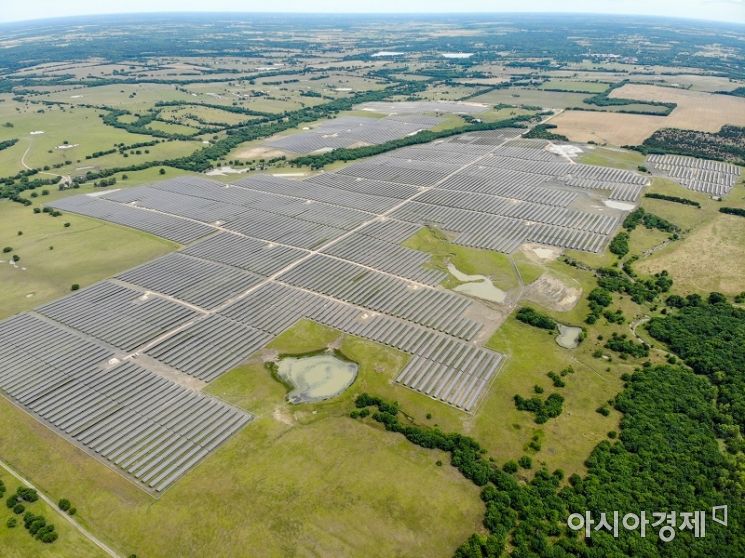
The core of the IRA is to provide direct financial support to companies. The IRA focuses on the Investment Tax Credit (ITC) and the Advanced Manufacturing Production Credit (AMPC). ITC applies when companies build eco-friendly factories in the U.S., and AMPC applies when eco-friendly products are produced in U.S. factories. For solar components, subsidies are set per component, such as $12 per square meter for solar wafers, 7 cents per watt for modules, and $3 per kilogram for polysilicon. Wind power also includes support for components across the supply chain, such as towers (3 cents per watt), blades (2 cents per watt), and nacelles (5 cents per watt). Previously, renewable energy companies received subsidies of about $31 per MWh of produced power, but with the new 'bonus regulation,' they will receive approximately an additional $3 in subsidies.
Domestic companies are already anticipating growth in the U.S. market and are making aggressive investments. Hanwha Solutions, a leading solar company (Q CELLS division), receives $119 million (about 160 billion KRW) when operating its Georgia factory's module production capacity (1.7 GW) at full capacity, and has announced plans to increase module production capacity to 5.1 GW by the end of this year. When fully operational in the future, the company can receive $357 million (about 470 billion KRW) annually in module tax credits alone.
Under the IRA, companies producing solar products locally in the U.S. from this year can receive various government supports, including tax credits. Accordingly, Hanwha Solutions included the expected IRA tax credit amount in its Q1 earnings. The operating profit for Q1 was 271.4 billion KRW, reflecting an estimated tax credit amount of about 22.9 billion KRW. Notably, the renewable energy division's operating profit from the solar business was 245 billion KRW, the highest since entering the solar business in 2011.
Hanwha Q CELLS is currently the number one company in the U.S. commercial and residential solar panel market. Industry insiders agree that Hanwha Q CELLS is the only company capable of stable mass production of solar cells before 2025.
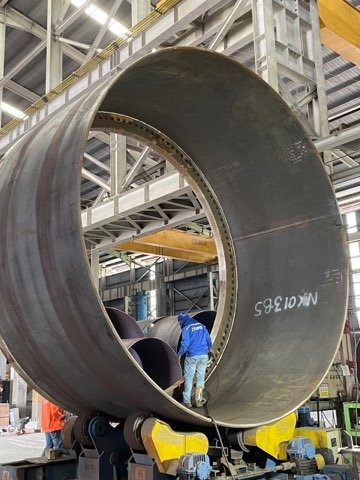
CS Wind, which currently manufactures 4.5 GW scale wind towers in the U.S., plans to expand its U.S. factory to produce 10 GW scale wind towers in 3 to 4 years. The advanced manufacturing tax credit subsidy alone is expected to increase from 80.1 billion KRW this year to 110.2 billion KRW in 2024, 143.8 billion KRW in 2025, and up to 275.4 billion KRW by 2029. (Eugene Investment & Securities)
© The Asia Business Daily(www.asiae.co.kr). All rights reserved.