As the Group of Seven (G7) leaders are reportedly set to adopt an 'economic security statement' targeting China, voices within China are criticizing it as a "Cold War mentality." At the same time, there are forecasts that the G7 will not reach an agreement on concrete joint measures such as tariff increases due to internal differences.
On the 15th, China's state-run Global Times (GT) reported, "Western media are exaggerating so-called Chinese 'economic coercion' in the forthcoming joint statement," adding, "Experts believe it will be difficult to reach an agreement considering the decline of U.S. power, increasing uncertainty in financial and economic systems, and more pragmatic and mutually beneficial China-European Union (EU) cooperation."
"The country to be accused of economic coercion is the United States"
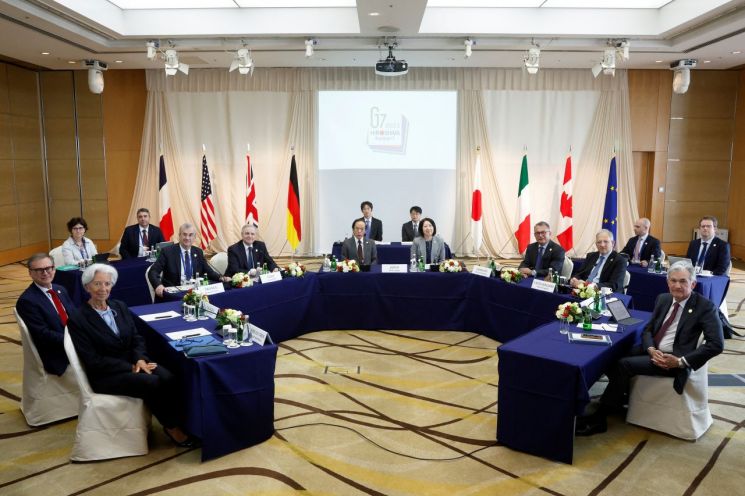
Earlier, major foreign media reported that at the G7 summit to be held from May 19 to 21 in Hiroshima, Japan, the leaders are expected to issue a statement expressing concern over China's economic coercion. A U.S. administration official stated, "(The G7 joint statement) will include sections related to China and mention 'cases of China's economic coercion,'" adding, "The document will also present G7 cooperation measures against economic coercion by China and other countries." Notably, this G7 summit is expected to adopt a separate economic security statement alongside the usual joint statement, containing specific response plans.
Regarding this, Li Yong, former Vice Minister of China's Ministry of Finance and Vice Chairman of the Expert Committee of the China Council for the Promotion of International Trade, said, "The act of slandering China in the G7 statement is a Cold War mentality," pointing out, "It misleads the world, shirks responsibility, and shows arrogant narrow-mindedness." He further argued, "Attempting to undermine China's credibility in the joint statement signals that the G7 is irresponsible and incompetent in addressing today's global issues such as debt defaults, global supply chain distortions, and technological coercion." Zhou Yongsheng, Deputy Director of the Japan Studies Center at the China Foreign Affairs University, also said, "The G7 is applying double standards by accusing China of so-called 'economic coercion.'"
Wang Wenbin, spokesperson for China's Ministry of Foreign Affairs, emphasized at last week's regular briefing, "If there is a country that should be accused of economic coercion, it is the United States," stating, "The U.S. excessively expands the concept of national security, abuses export controls, and imposes discriminatory and unfair measures on foreign companies." He added, "This seriously violates market economy principles." GT also highlighted that U.S. government sanctions increased by 933% between 2000 and 2021, with over 9,400 sanctions in effect by the 2021 fiscal year.
"Internal differences within G7... unlikely to agree on substantive joint measures"
GT forecasted that even if an economic security statement mentioning 'economic coercion' is issued, it will be difficult for the G7 to agree on substantive joint measures. Deputy Director Zhou said, "The U.S. and Japan are pushing for a strong response to China, but it will be difficult to reach an agreement on specific measures such as tariff increases," explaining, "G7 member countries like Germany, France, and Italy still prioritize their own economic interests and want to strengthen economic relations with China to boost their economies." He added, "Their foreign policies differ from the relatively extreme policies of the U.S. and Japan."
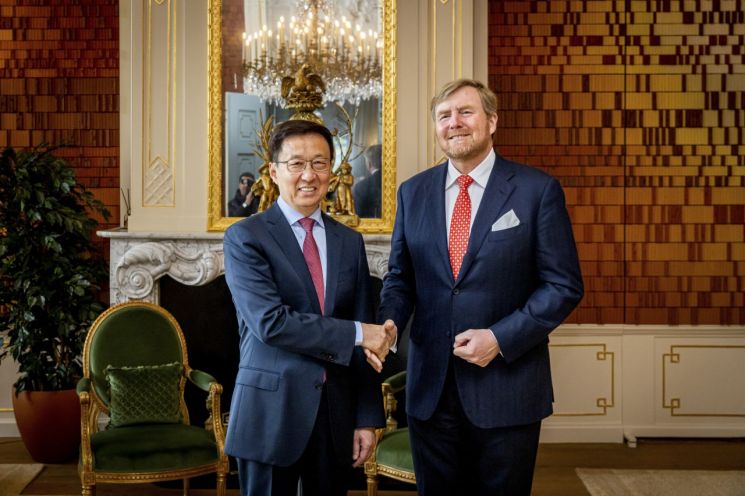
He also emphasized the recent active exchanges between China and the EU. On the 6th, Han Zheng, Vice Premier of China, attended the coronation of King Charles III of the United Kingdom as a special representative of President Xi Jinping, then visited Portugal and the Netherlands, meeting Dutch Prime Minister Mark Rutte on the 11th. State Councilor and Foreign Minister Qin Gang also visited Germany, France, and Norway last week.
Vice Chairman Li criticized the G7 for becoming a politicized group rather than a responsible stakeholder, raising the level of criticism particularly against Japan. GT predicted, "Compared to major EU countries like Germany, France, and Italy, which seek to maintain strategic autonomy, Japan will become much closer to the U.S. and more hostile toward China."
Professor Li Haidong of the Institute of International Relations at China Foreign Affairs University explained, "Going forward, the G7 will experience more division than integration, and some member countries that unconditionally obey the U.S. will pursue Cold War-style policies," adding, "However, major EU countries will not allow the G7 to become a group controlled by the superpower G1."
© The Asia Business Daily(www.asiae.co.kr). All rights reserved.
![Clutching a Stolen Dior Bag, Saying "I Hate Being Poor but Real"... The Grotesque Con of a "Human Knockoff" [Slate]](https://cwcontent.asiae.co.kr/asiaresize/183/2026021902243444107_1771435474.jpg)

















