Guangzhou and Shenzhen Greatly Affected by COVID-19
Shanghai and Beijing Control Urban Scale
The populations of four first-tier cities in China?Beijing, Shanghai, Guangzhou, and Shenzhen?all decreased last year. This is the first time since the current city classification system and related population statistics were established that the populations of first-tier cities have simultaneously declined. However, due to the significant impact of COVID-19 prevention policies, some cities are expected to see their population sizes recover this year.
According to regional statistical bureaus on the 14th, the populations of Beijing, Shanghai, Guangzhou, and Shenzhen, the major metropolitan centers of China, all decreased last year. China classifies its cities into five tiers for management purposes, with first-tier cities being those with the highest level of development and living standards. Only four cities fall into this category: Beijing, Shanghai, Guangzhou, and Shenzhen, collectively referred to as 'Beisangwangseon.'
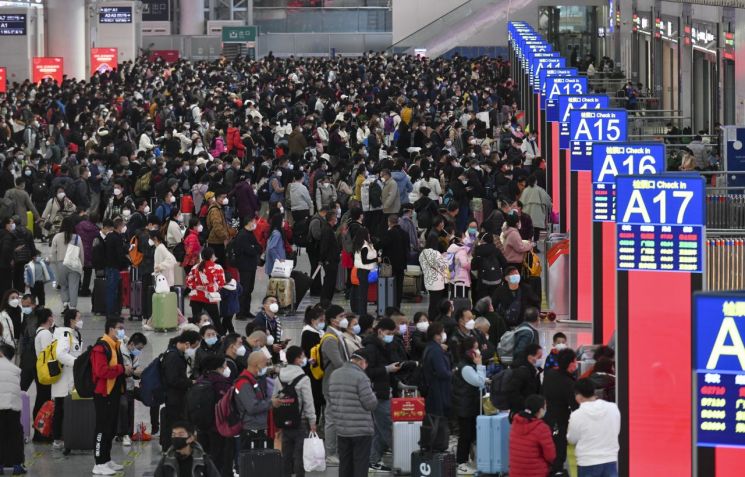
Among these, Shenzhen's resident population stood at 17,661,800 at the end of last year, down by 19,800 from the previous year, marking the first population decline since its inclusion as a first-tier city in 1979. The city with the largest decrease was Shanghai. Shanghai's population dropped sharply by 135,400 to 24,758,900. In addition, Beijing saw a decrease of 43,000, recording a population of 21,843,000. Beijing has experienced net population outflow for six consecutive years, totaling approximately 120,000 cumulatively. Guangzhou, known as China's 'manufacturing hub,' recorded a population decrease of 86,500 last year, totaling 18,734,100.
In the cases of Shanghai and Beijing, the government has encouraged a reduction in city size. In 2017, Beijing set an upper limit to keep its population under 23 million by 2020, and Shanghai announced a 'master plan' in January 2018 to control its population at 25 million by 2035. Both cities have already exceeded their population reduction targets.
Shenzhen and Guangzhou are generally considered to have been more affected by COVID-19. Shenzhen has implemented various preferential policies to attract foreign-invested enterprises and talented individuals, and the city itself is classified as a 'new city' with clean environments and well-developed infrastructure. The city's population grew rapidly from 10.42 million in 2010 to 17.56 million in 2020. However, after 2020, the spread of COVID-19 led to a decrease in labor demand from companies and a rapid return of migrant populations to their hometowns. Chinese demographer Dr. He Yafu diagnosed that the Shenzhen municipal government's tightening of subsidy conditions also played a significant role in slowing population growth after it had increased too rapidly. The Guangdong Provincial Bureau of Statistics stated, "People who left the city due to the epidemic are returning," and reported that 84% of the outflow population has returned.
© The Asia Business Daily(www.asiae.co.kr). All rights reserved.












