Lotte Mart, 32 Billion... 91.8%↑
Emart (Separate), 64.3 Billion... 29.8%↓
Challenge to Lead Consumers Accustomed to Online Shopping to Marts
Expand Stay Through Experience, Encourage Shopping While Visiting
The performance of major large-scale marts diverged in the first quarter of this year. Emart received results that fell significantly short of market expectations, while Lotte Mart showed a strong improvement in operating profit thanks to prior store and workforce efficiency efforts. However, large marts, which share the common challenge of attracting consumers accustomed to online shopping across generations after the COVID-19 pandemic, plan to strengthen their structural reforms this year by "increasing dwell time through experiential offerings." They intend to recognize the costs incurred in this process as mid- to long-term investments and accept them.
According to the distribution industry on the 11th, Lotte Mart's operating profit in the first quarter of this year was 32 billion KRW, up 91.8% compared to the same period last year. Sales decreased by 2.4% to 1.447 trillion KRW. The ongoing efforts over several years to improve store and workforce efficiency and reduce selling and administrative expenses yielded results, improving operating profit. However, prolonged trends of high interest rates and inflation slowed consumption among the core middle-class customer base, hampering sales. During this period, Lotte Super's operating profit improved by 234.8% to 8.4 billion KRW, while sales decreased by 6.7% to 326 billion KRW.
Emart's consolidated operating profit for the first quarter was 13.7 billion KRW, down 60.4% from the same period last year. Sales during the same period increased by 1.9% to 7.1354 trillion KRW. While online subsidiaries such as SSG.com and Gmarket, which had large deficits, managed to reduce losses and performed relatively well, the decline in Emart's first-quarter standalone operating profit, which includes discount stores (Emart), Traders, and No Brand specialty stores, affected the poor performance. Emart's standalone operating profit was 6.43 billion KRW, down 29.8% year-on-year. Total sales also decreased by 2.6% to 4.1099 trillion KRW.
The results were due to a combination of factors: early Lunar New Year gift set pre-order sales recorded at the end of last year, three fewer public holidays, increased shopping basket burdens due to the recession, and a base effect from high growth during the COVID-19 period. In particular, early commencement of renovation work at major stores such as Yeonsu and Kintex led to related investments and operational downtime, which analysts say contributed to the poor performance. Emart explained that "these factors acted together as part of the structural reform process for the future."
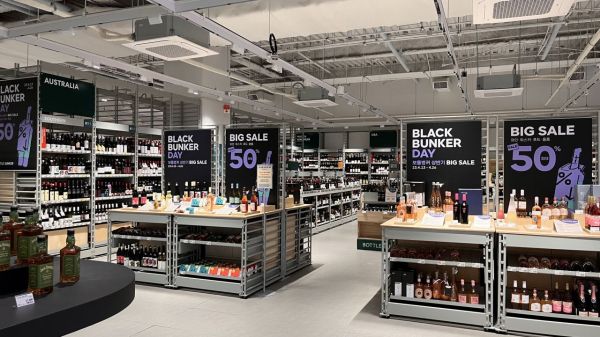
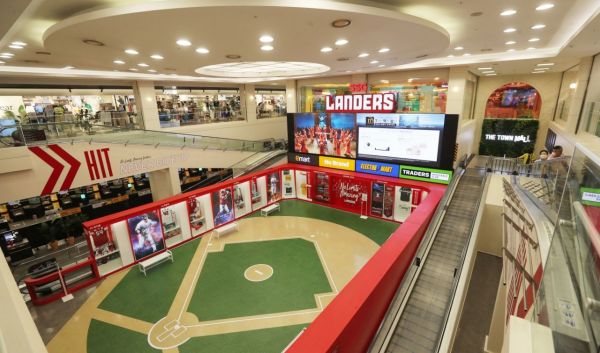
Although the first-quarter results differed, both companies agreed that these outcomes appeared during the transition to "future-oriented stores." Large marts have been sequentially introducing a "role reversal operation strategy" at major stores nationwide, as not only younger generations but also middle-aged and older loyal customers have become accustomed to online grocery shopping after COVID-19. Breaking the mold of "large marts = grocery shopping," they are introducing famous restaurants and cafes nationwide, kids' cafes where families with young children can spend time, swimming pools, and futsal courts, turning the mart into a destination for a "one-day outing." They embed various experiential elements throughout the mart to encourage customers to stay as long as possible. Grocery shopping, the original purpose of marts, has shifted to a "bonus" concept for customers who visit to spend time.
Large marts plan to continue renovating major stores this year to support these changes. Starting with Wolgye store in 2020, Emart has renovated 36 stores up to last year and plans to carry out major and minor renovations at 16 stores this year as well. The Emart Yeonsu store, which reopened after renovation on March 30, saw sales increase by 18% and visitor numbers rise by 23% compared to the same period last year during the first month after reopening.
Lotte Mart, which has completed renovations at 23 stores since 2021, will continue this renovation trend. Lotte Mart presented its vision for future-oriented stores with the sophisticated experiential store "Zeta Plex," unveiled after renovating the Jamsil store, and is reviewing the conversion of major stores nationwide, including Seoul Station, to Zeta Plex. In particular, Lotte Mart aims to innovate its grocery business this year through full-fledged synergy with Lotte Super. A Lotte Mart official said, "We have already established an integrated sourcing organization for marts and supers and are in the process of unifying product codes," adding, "Once completed, sourcing efficiency and profit and loss improvement effects are expected to expand."
© The Asia Business Daily(www.asiae.co.kr). All rights reserved.


















