April CPI Increase Limited to 0.1%
Below Expectations, Raising Concerns of Deflation
Last month, China's inflation rate remained at 0.1%, raising concerns about deflation (a decline in prices). Weak domestic and international demand has failed to quickly drive up prices, showing little sign of economic vitality recovering.
According to the National Bureau of Statistics of China on the 11th, China's CPI inflation rate in April was 0.1%, falling short of both the previous month's figure (0.7%) and the expected rate (0.3% according to Caixin). This is also the lowest figure in 2 years and 2 months since February 2021 (-0.2%).
Food prices rose by 0.4%, while non-food prices increased by only 0.1%. Consumer goods prices fell by 0.4%, whereas service prices rose by 1.0%. The average CPI from January to April recorded a 1.0% increase compared to last year.
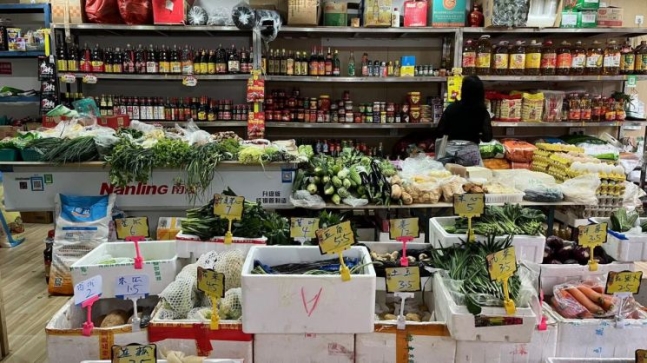
Looking at the items, prices of food, tobacco, and alcohol rose by 0.8%, with fresh fruit prices leading the increase at 5.3%. Livestock product prices rose by 2.2%, with pork prices increasing by 4.0%. Egg and grain prices rose by 1.2% and 1.1%, respectively. On the other hand, fresh vegetable prices fell by 13.5%, and seafood prices dropped by 0.9%. Other price increases included education, culture, and entertainment at 1.9%, healthcare at 1.0%, clothing at 0.9%, and household goods and services at 0.1%. Transportation and communication costs and housing costs fell by 3.3% and 0.2%, respectively.
The Producer Price Index (PPI) in April saw a larger decline. It fell 3.6% year-on-year, missing both the previous month's figure (-2.5%) and the expected rate (-3.3% according to Caixin). The PPI fluctuation was the lowest in 2 years and 11 months since May 2020 (-3.7%).
Among these, producer material prices fell by 4.7%, while living material prices rose by 0.4%. Among major industries, the oil and gas extraction industry plunged 16.3%, leading the weakness, and the ferrous metal smelting and rolling processing industry also dropped 13.6%. Meanwhile, electronic equipment manufacturing (0.7%), automobile manufacturing (1.0%), sports and recreational goods manufacturing (4.5%), electric power and heat production and supply (1.6%), and agricultural food processing (1.1%) showed upward trends. Regarding the PPI decline, Chinese economic media Maeil Business Newspaper diagnosed it as "the impact of fluctuations in international commodity prices, overall weak domestic and international market demand, and the base effect compared to the same period last year."
Jangwi, chief macro analyst at Huachuang Securities, told economic media Caixin, "The recent price decline has sparked discussions and concerns about market deflation," adding, "April this year may be the lowest point for both CPI and PPI."
© The Asia Business Daily(www.asiae.co.kr). All rights reserved.
![User Who Sold Erroneously Deposited Bitcoins to Repay Debt and Fund Entertainment... What Did the Supreme Court Decide in 2021? [Legal Issue Check]](https://cwcontent.asiae.co.kr/asiaresize/183/2026020910431234020_1770601391.png)















