"Asbestos Pneumoconiosis Should Be Protected and Provided Benefits Like Pneumoconiosis Patients"
Asbestos Exposure in Korea Before 2009 Poses Risk of Asbestos Pneumoconiosis
The Supreme Court has made its first ruling that disability benefits must be paid to patients with asbestosis, a condition where the lungs harden due to exposure to asbestos, a Group 1 carcinogen, regardless of whether treatment is possible. In the past, pneumoconiosis, which commonly occurred among miners, received disability benefits even if treatment was not possible, and the court ruled that asbestosis should follow the same standard.
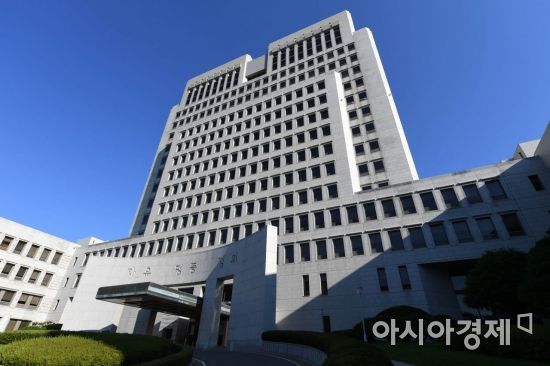
The Supreme Court's Second Division (Presiding Justice Min Yu-sook) announced on the 11th that it upheld the lower court's ruling in favor of the family of Mr. A, who died from asbestosis, in a lawsuit against the Korea Workers' Compensation and Welfare Service demanding disability benefits.
When asbestos fibers are inhaled during daily activities, they adhere to lung tissue and cause the lungs to harden through fibrosis, a condition known as asbestosis. According to data from the Korea Occupational Safety and Health Agency, workers who frequently develop asbestosis in Korea include automobile mechanics who replace asbestos friction materials, workers involved in the repair, maintenance, and demolition of buildings using asbestos, and ship repair workers at shipyards removing asbestos insulation materials.
People living in old buildings that used asbestos insulation materials are also considered high-risk groups. Both long-term low-concentration exposure and short-term high-concentration exposure can lead to fibrotic lung disease. Clinical symptoms appear 20 to 40 years after exposure, so individuals who were closely exposed to asbestos before its complete ban in Korea in 2009 remain at potential risk.
Mr. A contracted asbestosis while working at an automobile parts factory handling asbestos-containing components. Despite undergoing a lung transplant due to worsening symptoms, he ultimately passed away.
However, the Korea Workers' Compensation and Welfare Service's asbestos review committee classified Mr. A as having a 'severe disability grade' shortly before his death, and his family demanded that the Service pay disability benefits based on this classification.
But the Service refused, arguing that Mr. A's symptoms during his lifetime were not in a 'fixed' state, meaning 'no possibility of treatment,' which is required under the Industrial Accident Compensation Insurance Act for disability benefits to be paid only when symptoms are fully cured or fixed with residual disability. However, pneumoconiosis is an exception. Since it is incurable and the disease continuously worsens, disability benefits are paid without considering whether the condition is cured or fixed once a certain disability grade is assigned.
The family filed a lawsuit, and both the first and second trials ruled that "asbestosis should follow the pneumoconiosis standard, and disability benefits should be paid according to the assigned disability grade." The Supreme Court reached the same conclusion. The Court recognized that asbestosis is similar to pneumoconiosis in terms of pathogenesis and symptoms and that workers with asbestosis require protection equivalent to those with pneumoconiosis.
© The Asia Business Daily(www.asiae.co.kr). All rights reserved.
![Clutching a Stolen Dior Bag, Saying "I Hate Being Poor but Real"... The Grotesque Con of a "Human Knockoff" [Slate]](https://cwcontent.asiae.co.kr/asiaresize/183/2026021902243444107_1771435474.jpg)











