KAIST Research Team "For High-Conductivity Bioelectronic Devices"
A high-performance bioelectronic material that is as soft and adhesive as skin and conducts electricity well has been developed.
KAIST announced on the 4th that a joint research team led by Professor Kang Ji-hyung from the Department of New Materials Engineering and Professor Park Sung-joon from the Department of Bio and Brain Engineering developed a new material called a highly conductive, tissue-adhesive hydrogel, which had not existed before, to realize high-performance bioelectronic devices.
Bioelectronic medical devices are used to read signals generated inside the body to detect biological activities or to stimulate tissues to treat diseases. However, electrode materials used in medical devices have rigid properties, which can cause inflammatory responses inside the body and lead to significant tissue damage. Therefore, research is actively being conducted on using conductive polymers with high biocompatibility as internal electrodes in soft materials like hydrogels that have soft properties similar to tissues and exhibit conductivity.
According to the principle that higher electrical conductivity increases the crystallinity of conductive domains, hydrogels with high conductivity tend to become rigid, while soft hydrogels inevitably have low conductivity. Consequently, among hydrogels using conductive polymers, there had been no reports of hydrogels that possess both high electrical conductivity (above 10 S/cm) and soft mechanical properties (below 100 kPa) until now.
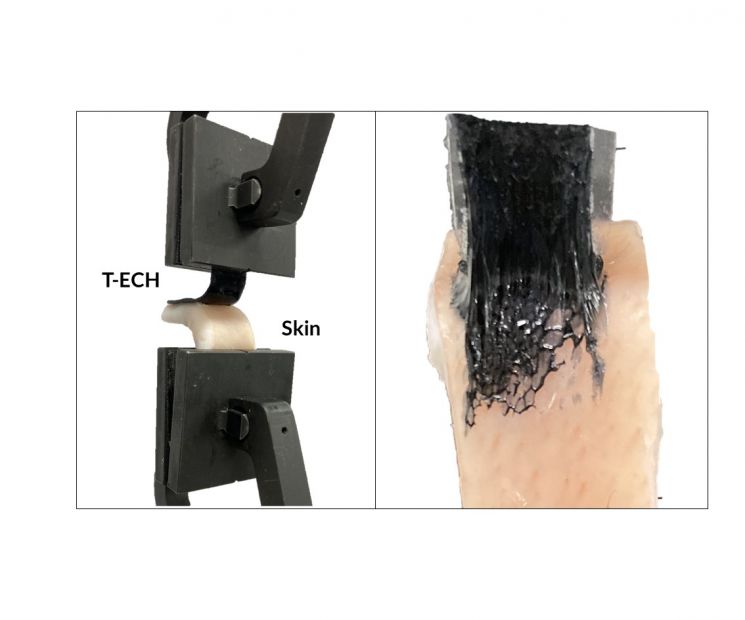
The research team developed a highly conductive, tissue-like hydrogel that had not existed before. This hydrogel exhibits the highest electrical conductivity (247 S/cm) among reported conductive polymer hydrogels and has mechanical properties similar to tissue (elastic modulus = 60 kPa, fracture strain = 410%). It also has the advantage of easily adhering to tissues, which is an essential condition for stable operation of devices in tissues such as the heart and stomach that undergo continuous movement, expansion, and contraction.
The team introduced a highly ordered polymer template network according to the mesh structure of molds adjusted to the desired biological tissue and shape. Therefore, the mesh network formed according to the mold shows electrical conductivity more than 100 times higher than conventional networks, while the soft characteristics of the template polymer give it mechanical properties similar to tissues. Its resistance does not change under deformation, providing optimal performance as a bioelectrode.
The research team fabricated various high-performance bioelectronic devices based on electrodes using the developed hydrogel and verified their functionality. Due to its high electrical conductivity, a device targeting sciatic nerve stimulation successfully induced leg muscle movement at a very low voltage (40 mV). Additionally, a device for electrocardiogram (ECG) measurement succeeded in measuring signals with a very high signal-to-noise ratio (61 dB), demonstrating the potential for developing soft devices for ultra-high-quality bio-signal measurement.
Professor Kang said, "This research is significant in that it newly proposed a synthetic direction for developing hydrogels with high conductivity and mechanical properties similar to biological tissues," adding, "The conductive hydrogel developed this time is expected to be a game changer in the rapidly growing electronic medicine market."
The research results were published on the 18th of last month in the international journal Nature Communications.
© The Asia Business Daily(www.asiae.co.kr). All rights reserved.

















