Kim Ye-won, a lawyer at the Disability Rights Law Center who has been dedicated to protecting children's rights (41 years old, Judicial Research and Training Institute class of 41), boarded a flight to the United States last summer. She is currently focusing on her studies at Duke University Law School in Durham, North Carolina.
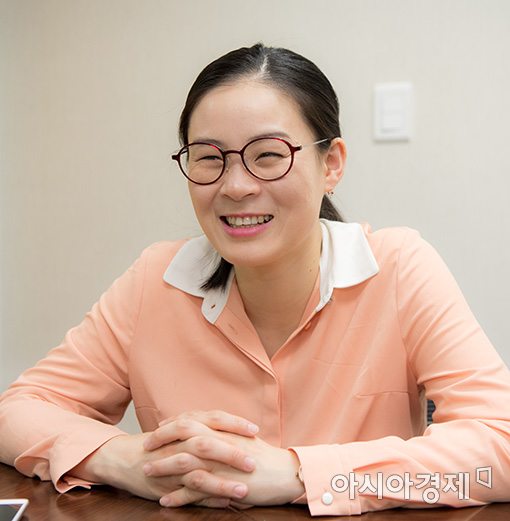 Attorney Kim Yewon / Reporter Yoon Dongju doso7@
In a phone interview with this paper on the 6th, she said, "I came as a visiting scholar to study the field of support for crime victims," adding, "I am studying how the United States supports vulnerable groups who live in poor conditions and have weak protection."
She believes that her studies in the U.S. will serve as nourishment for protecting children in Korea. Despite losing sight in her right eye due to a medical accident during her mother's childbirth, Kim overcame the difficulties and prejudices caused by her disability, passed the bar exam in 2009, and became a lawyer. Since then, she has mainly represented socially vulnerable groups, including children. At times, she provided support to them both materially and emotionally without charging fees. When the TV drama "Extraordinary Attorney Woo" caused a sensation in July last year, she was recognized as the "real-life Woo Young-woo." The Korean Bar Association acknowledged her contributions by selecting her as the recipient of the "Lawyer Public Interest Award" in January. This month, she was also named one of the four nominees in the adult category of the "Korea Children’s Awards," which are chosen by children's votes.
Kim identifies the most important issue for children as the "right to participate." She emphasizes that children must be able to voice their opinions in any field or situation, and adults must listen to them. Kim said, "There are still many places in our society where children's expressed thoughts are not recognized. This tendency seems to be stronger for children with physical or environmental limitations," adding, "There needs to be policy consideration to realize children's right to participate."
Some changes are already happening gradually. It has become common for children to be given the opportunity to choose one parent during a divorce process, and for judges to reflect this in their rulings. However, Kim stresses that even in critical moments when children's opinions must be sought beyond this level, we need to verify whether our children's voices are being properly conveyed. She explained, "In cases of abused children, there are times when we need to ask whether they want to live at home or in a care facility. In such processes, sufficient explanations about school, friendships, and other aspects that could mean everything to the child must be provided before seeking their opinion. This is still not perfectly improved," adding, "Sometimes, children who actively express their opinions are stigmatized as bold and become further distanced from protection. We need to gradually remove the prejudice that children must be obedient and stay within adults' boundaries."
Kim plans to continue working for the rights of children in various environments. She said, "When I defend children, I act based on the thoughts I had when I was young." She added, "What adults observe in children and what children feel as subjects are completely different. There are definitely points that children find unacceptable when being disciplined. I will continue to help children while paying attention to those feelings."
© The Asia Business Daily(www.asiae.co.kr). All rights reserved.
















