Preventing Commissioning Deferral Due to Overseas Training and Internships
The commissioning of ROTC candidates will increase to twice a year. This is to expand commissioning opportunities for those with commissioning restrictions and to enhance flexibility in officer personnel management, as the application rate for ROTC officers has declined.
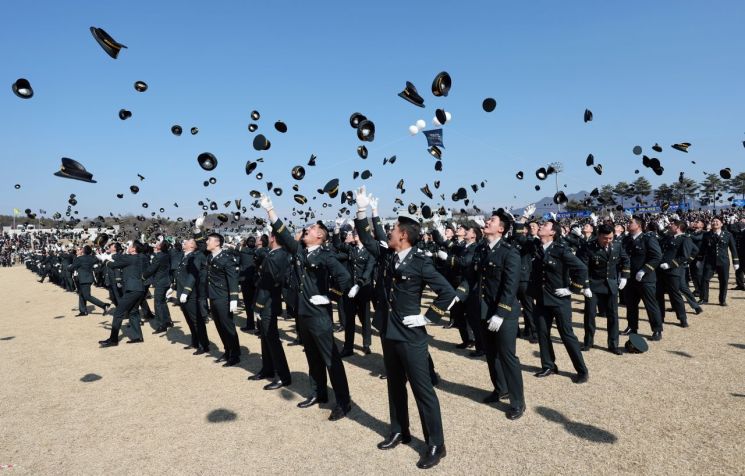
According to the Army on the 4th, from this year, the Army Cadet Military School will expand the commissioning of ROTC officers, which was previously held only in March each year, to also take place in July, making it twice a year. The 'July commissioning' will be implemented starting this year.
Under the existing commissioning system, if a candidate took a leave of absence for overseas training, internships, or did not complete all credits, commissioning was deferred or postponed. After fulfilling the required conditions, they were commissioned as officers in March of the following year. Although it generally takes only one semester to meet the missing requirements, commissioning is effectively delayed by one year compared to peers who became candidates in the same year.
Currently, the service period for enlisted soldiers is 18 months in the Army, but ROTC officers serve between 24 to 36 months depending on the branch. If commissioning is further delayed, the time of entering society is pushed back even more.
Accordingly, the Army Cadet Military School has prepared a plan to provide additional necessary on-campus education for those with commissioning restrictions from March to May, followed by enlistment training and comprehensive commissioning evaluation in June, so that commissioning can occur in July.
Earlier, the Navy also increased the number of ROTC candidate selections from once to twice a year, and changed the system so that if there are vacancies or the quota is not met among selected candidates, students who are not majoring in maritime studies can apply additionally in their second year. The Air Force is reportedly not currently considering any such measures.
The military has recently faced a red alert in maintaining its strength due to a sharp decline in applications for junior officers over the past few years. Defense Minister Lee Jong-seop said last month, "Due to population decline, available resources themselves are very limited," adding, "One reason for the low application rate for ROTC officers could be that their service period is longer than that of enlisted soldiers. We are reviewing shortening the ROTC officer service period."
According to data released in March by Kwon Hyun-jin, a senior researcher at the Korea Institute for Defense Analyses (KIDA), last year’s competition rate for ROTC and bachelor officers dropped to half of what it was in 2015. The competition rate for ROTC officers fell from 4.8 to 1 to 2.4 to 1 over seven years, and for bachelor officers from 5.8 to 1 to 2.6 to 1, respectively.
© The Asia Business Daily(www.asiae.co.kr). All rights reserved.

















