The U.S. central bank, the Federal Reserve (Fed), recently implemented a 'baby step' by raising the benchmark interest rate by 0.25 percentage points despite concerns over the spreading banking crisis and credit tightening. By removing the phrase "additional policy firming is appropriate" from the monetary policy statement, it also suggested that the year-long rate hike cycle is nearing its end. However, Fed Chair Jerome Powell drew a line on the market's expectations for a rate cut within the year.
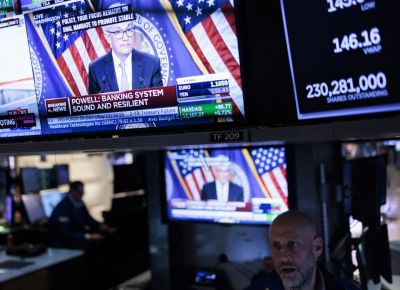
U.S. Fed Raises Benchmark Rate by 0.25% as Expected
On the 3rd (local time), following the May Federal Open Market Committee (FOMC) regular meeting, the Fed announced in its policy statement that it would raise the federal funds rate by 0.25 percentage points from the previous 4.75?5% range to 5?5.25%. This marks the 10th rate hike since the cycle began in March last year and the highest level since August 2007.
Chair Powell explained the rationale for the rate hike at the subsequent press conference, stating, "Inflation has somewhat eased since mid-last year, but there is still a long way to go," and "Overall, it will take time for prices to stabilize." As a result, the interest rate gap between the U.S. and South Korea widened to a record 1.75 percentage points.
The baby step on this day was largely seen as a foregone conclusion. Market attention had long focused not on the size of the hike but on whether this meeting would mark the final increase. In the policy statement, the FOMC removed the phrase "some additional policy firming may be appropriate to achieve a sufficiently restrictive monetary policy stance," signaling a dovish tone. This hinted that rates could be held steady as soon as the next meeting.
When asked whether this policy statement should be interpreted as a message of a rate hold in June, Powell said, "The decision to pause (rate hikes) was not made today," but also noted that removing the phrase "has significance." He mentioned that considering the credit tightening risks following the Silicon Valley Bank (SVB) incident and the ongoing balance sheet reduction, the policy rate may have already reached a sufficiently restrictive level. Although a hold was not discussed at this meeting, Powell's assessment suggested the end of the cycle might be near.
However, Powell also appeared cautious about the market's excessive dovish (monetary easing preference) expectations. He repeatedly gave the standard answer that decisions would depend on economic data in response to numerous questions about a hold, and even raised concerns about tightening by stating, "We are prepared to undertake more aggressive tightening if necessary," which heightened market caution during the session.
He drew a firmer line on the possibility of rate cuts within the year. Powell said, "We do not expect inflation to fall quickly," adding, "It will take more time, and if this forecast is correct, a pivot is not appropriate. We will not cut rates." This dashed market hopes for significant cuts within the year starting with a hold in June, causing the three major New York stock indices to close lower.
"Hawkish Pause" ? Wall Street Still Expects June Hold
Wall Street is flooded with assessments of a so-called 'hawkish pause.' While signaling a likely rate hold in June, the Fed strongly warned that it could tighten again at any time. According to the Chicago Mercantile Exchange (CME) FedWatch tool, the federal funds (FF) futures market currently prices in about an 85% chance that the Fed will hold rates at the June FOMC meeting. The probability of another baby step hike is around 15%, similar to the level before the FOMC announcement the previous day.
Jay Bryson, Chief Economist at Wells Fargo, said, "The Fed is sending a 'hawkish pause' signal in this tightening cycle," adding, "Given their repeated caution about inflation risks, they could raise rates again, but the threshold will be much higher than before. Future data will be critical." Michael Gapen, Chief Economist at Bank of America (BoA), also said the Fed appears to have reached its terminal rate and overall described the stance as a 'hawkish hold.'
Ed Moya, Senior Market Analyst at OANDA, said, "This looks like the last hike in this cycle," and expects the Fed to hold rates throughout the year unless labor and inflation data create a perfect storm far exceeding expectations. Ryan Sweet, U.S. Chief Economist at Oxford Economics, also supports a June hold, noting, "Tighter lending standards and banking sector stress will be a burden for the Fed."
During the press conference, Powell repeatedly expressed concerns about credit tightening risks following the SVB incident. He said, "I think the banking crisis has just ended," but predicted that credit conditions would tighten due to future lending regulations, inevitably impacting the economy negatively. Especially since this could worsen difficulties amid high inflation, he explained that the Fed would closely monitor credit conditions in its policy decisions. However, Powell also reaffirmed hopes for a soft landing. He said, "The current situation is different from the past. Despite raising rates by 5 percentage points, the unemployment rate remains at 3.5%, and jobs are plentiful," adding, "The likelihood of avoiding a recession is higher than the chance of one occurring. Even if a recession happens, it will be mild."
© The Asia Business Daily(www.asiae.co.kr). All rights reserved.


















