Criticism of Portraying the AV Industry Only Positively
Entertainment, Not Documentary... OTT, Not Terrestrial Broadcast
Production Team: "We Wanted to Open a Forum for Discussion"
Controversy is brewing around the Netflix original variety show "Sex+People: Japan Edition," which deals with individuals working in Japan's sex industry. Some critics argue that the show sexualizes women and highlights only the positive aspects of the sex industry, while others counter that since it is a variety show rather than a current affairs or educational program, there is no problem. The production team stated that they wanted to create a platform for discussion.
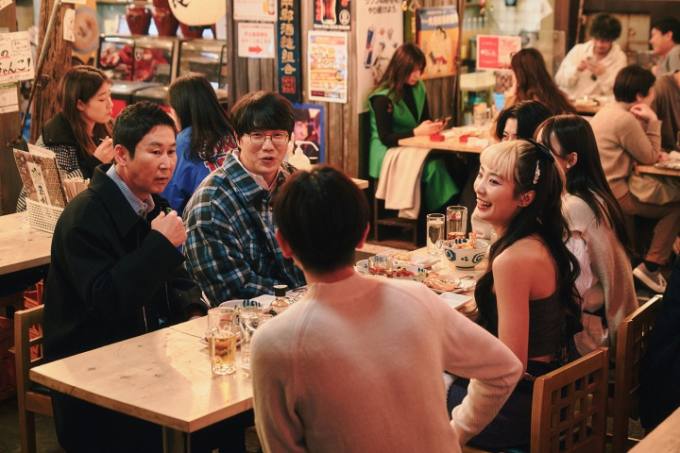
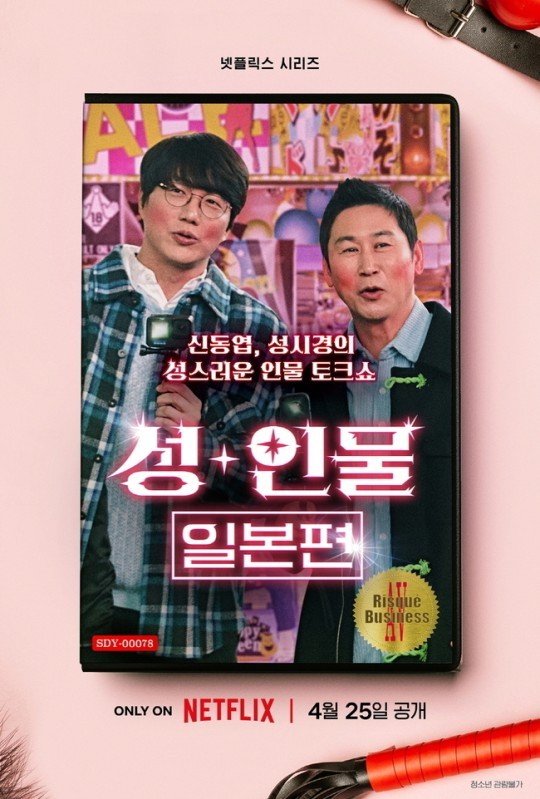
On the 25th of last month, Shin Dong-yup and Sung Si-kyung explored people involved in the sex and adult culture industry in the variety program "Sex+People," which was released on Netflix. The cast visited adult stores and adult VR (virtual reality) rooms in Japan, introducing these places and conversing with customers and staff. They also met AV (Adult Video, adult videos including actual sexual acts) actors and directors to learn about the industry.
Forced Filming in the AV Industry... Criticism of 'Light Consumption as Variety Show Material'
However, some critics argue that the dark side of the sex industry, which involves sexual exploitation controversies, was not properly addressed and that the show portrayed the industry only positively. The international human rights organization Human Rights Now (HRN) pointed out in its 2016 report titled "Investigation into Human Rights Violations against Women and Girls by the AV Industry" that the AV industry is one where crimes such as contract fraud, luring minors, threats, sexual assault, and forced filming occur. HRN stated, "Even when performers are injured or sexually assaulted during AV filming, it is often regarded as 'consent' or 'acting,' and rarely leads to punishment."
According to the report, AV producers approach women in their late teens to early twenties who admire the celebrity profession, offering them modeling contracts. The women only learn on the day before or the day of filming that they must appear in pornographic material involving actual sexual acts. Although the women express refusal, the companies threaten them with penalties for contract cancellation and to disclose their participation in pornography to their families, ultimately forcing them to appear, according to HRN's investigation. Due to such issues, in June 2022, Japan's House of Councillors passed the "AV Appearance Damage Prevention Relief Act" to protect performers from harm related to AV appearances and distribution. However, Japanese women's groups criticize the law's effectiveness, pointing out a clause stating that "necessary measures will be considered within two years after enforcement," which leads to criticism that the law is lukewarm in restoring victims of forced AV filming.
However, AV actors appearing in "Sex+People" emphasize that "(performers) can refuse if they do not want to participate." They also say, "Male actors do not perform acts not in the script or behave arbitrarily."
Since "Sex+People" is a variety show rather than a documentary, it may not mention women harmed by the AV industry, but some view this as a dangerous point. There is criticism that consuming the sex industry solely as entertainment without awareness of the issues is risky.
Jinrok Yu Meno, who runs the civic group "Collabo" in Tokyo for women who are victims of sexual exploitation and sexual violence, visited Korea in 2017 and criticized Japan's so-called JK business, saying that it has become entertainment within Japan, easily drawing children into danger. JK is the English abbreviation of "Joshikosei (女子高生)," meaning high school girls in Japan. It refers to the "high school girl cosplay business" that flourished mainly in Tokyo's Akihabara from the mid to late 2000s. The JK business, which carries serious social problems, has been reduced to a laughingstock by being consumed only as entertainment.
Production Team: "Not Glorifying AV... Wanted to Open a Forum for Discussion"
In interviews with some media outlets such as "The Fact" on the 2nd, the production team emphasized that this is not a documentary. Producers Jung Hyo-min and Kim In-sik explained, "'Sex+People' is a program that shows micro-level stories through each individual." They also stated that they wanted to "open a forum for discussion" as the purpose of the program. Regarding the criticism of "glorifying AV," they drew a clear line, saying, "We do not think it is glorification."
Producer Jung said, "Since the production team focused on individuals, we highlighted the difficulties each person feels. If it were a current affairs, educational, or news program, it would be possible to sufficiently address sexual exploitation issues, but we do not agree with asking a variety show why it did not mention such problems." He added, "We wanted to create a forum for discussion. The rest belongs to the realm of educational or documentary programs," and expressed hope that interest and discourse about this program would extend to educational programs and documentaries in the future.
Regarding the criticism that "AV often sexualizes women," they explained, "It is difficult to say 'AV is exploitation' alone because many countries have legalized AV production and distribution." They also said, "The reason we met male actors appearing in female-oriented content was to ask the question, 'Is AV only for men?'" When interviewing AV actors, they added, "We withheld value judgments and tried to listen respectfully as professionals."
Experts emphasized that unlike terrestrial broadcasting, "Sex+People" is not content that anyone can watch. They explained that while there may be controversy among viewers, there can be no absolute judgment.
Cultural critic Jung Deok-hyun said, "This content has not been fully explored as a documentary," emphasizing, "(The content genre) clearly made an entertainment choice." He added, "(Sex+People) is not a channel like terrestrial broadcasting that anyone can watch. It is a paid platform on OTT. Even within that, only adults can watch. Netflix has deliberately commercialized this aspect." He continued, "Therefore, while there may be likes and dislikes about the content, it is not a matter of saying the content is 'wrong' or 'incorrect.'"
© The Asia Business Daily(www.asiae.co.kr). All rights reserved.


















