"US Must Oversee Industrial Support via Subsidies"
"US Aid May Exceed $110 Billion"
China accused the United States' Semiconductor Support Act (CHIPS and Science Act) of disrupting the global supply chain at the World Trade Organization (WTO) regular meeting. It also urged the WTO to oversee the U.S. move to boost its domestic semiconductor industry through subsidies.
According to China's state-run Xinhua News Agency on the 3rd, at the WTO Subsidies and Countervailing Measures Committee regular meeting held on the 2nd (local time) in Geneva, Switzerland, the Chinese representative pointed out that the U.S. Semiconductor Support Act and the Inflation Reduction Act (IRA) contain discriminatory subsidy measures that distort trade.
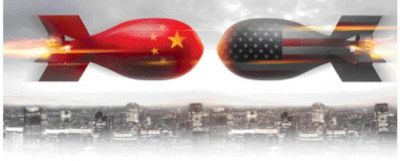
Signed by U.S. President Joe Biden in August last year, the Semiconductor Support Act allocated $53 billion (about 70 trillion won) to support domestic semiconductor production and research funding. China has criticized this U.S. move as an attempt to hinder China's technological development.
In his speech, the Chinese representative emphasized, "The (U.S.) subsidies show how America adopts a 'double standard' in this field," adding, "The combination of semiconductor subsidies and export control measures has seriously disrupted the global semiconductor supply chain, which is Cold War-like and hegemonic behavior." He further explained, "This has caused damage to China, the U.S., and its allies alike."
The Chinese representative also urged the WTO to strengthen oversight, stating that the total amount of industrial subsidies to be released under the U.S. Semiconductor Support Act could exceed $110 billion. Earlier this month, China also participated in the WTO Goods Council, arguing that the U.S. should investigate whether it is intentionally discriminating against China through semiconductor-related export controls. In December last year, China filed a lawsuit through the WTO dispute resolution process.
Hong Kong's South China Morning Post (SCMP) evaluated China's protest by saying, "It shows the widening gap between China and the U.S. in the semiconductor supply chain," and added, "It may also imply additional U.S. measures to suppress China's semiconductor development."
Even if the WTO sides with China in the related dispute, immediate substantial changes or adjustments are unlikely. The U.S. can effectively exercise a veto by appealing again, meaning dispute resolution could take years. During the Donald Trump administration, the U.S. boycotted the appointment of WTO Appellate Body members after their terms expired, leaving the Appellate Body nonfunctional at present.
© The Asia Business Daily(www.asiae.co.kr). All rights reserved.

















