Following the First Republic Bank crisis in the United States, concerns about regional banks have persisted, causing the stock prices of major U.S. banks to fall back to levels seen three years ago. With four regional banks having gone bankrupt in succession this year alone, the market is showing signs of caution against another crisis, leading to assessments that the U.S. banking sector crisis has entered a chronic phase.
On the 2nd (local time), the day First Republic entered bankruptcy and delisting procedures, major U.S. bank stocks plummeted simultaneously. PacWest Bancorp, based in Los Angeles (LA), California, dropped 27.78%, and Western Alliance, located in Phoenix, Arizona, fell 15.12%, highlighting the sharp declines among banks located in the western U.S. Metropolitan Bank, based in New York State, also plunged more than 20%.
The KBW Bank Index, which tracks 24 major U.S. bank stocks, fell 4.47% that day, while the regional bank index dropped 5.53%, reaching the lowest levels since the end of 2020.
The Wall Street Journal (WSJ) evaluated that "the stock price decline was most pronounced among banks that were hit hardest following the Silicon Valley Bank (SVB) bankruptcy in March." The analysis suggests that the banking crisis, which had recently entered a calming phase, reignited fears due to the First Republic incident, leading to the stock price declines.
The plunge in regional bank stocks spread to large bank stocks as well. On that day, Bank of America and Wells Fargo saw declines in the 3-4% range, while Goldman Sachs and Citibank fell by 2-3%. JP Morgan Chase, which announced the acquisition of First Republic Bank the previous day (1.61%), also dropped nearly 2%. John G. Afstrom of RBC Capital Markets, a global investment bank based in Canada, said, "(The sell-off that occurred that day) was driven more by existing negative sentiment toward banks than by new news."
First Republic, headquartered in San Francisco, experienced a bank run by customers who had deposits exceeding the insured limit, resulting in a 40% ($102 billion) drop in customer deposits in the first quarter alone. This led to a stock price collapse and the bank's eventual downfall.
The bankruptcy of First Republic is the second-largest bank failure in U.S. history, excluding large investment banks (IBs), following the collapse of Washington Mutual during the 2008 financial crisis. It is also the fourth bank failure this year, following SVB, Silvergate, and Signature Bank.
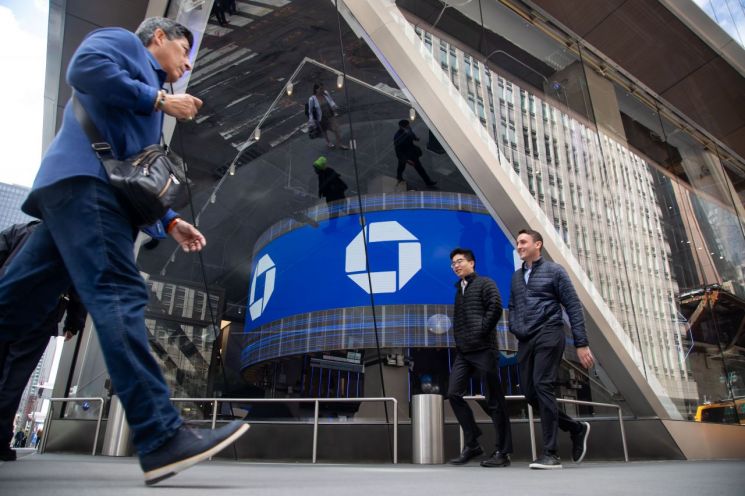
The key issue going forward is how long the crisis will continue to spread. The prevailing view in the market is that the sale of First Republic does not completely resolve the banking crisis. Jamie Dimon, chairman of JP Morgan, stated that "the acquisition of First Republic is the last of the bank run crises among small and medium-sized banks," but the market remains cautious. The potential deterioration of commercial real estate is also fueling risk spread to regional banks holding these loans.
Julian Welsley, vice president of Boston-based asset management firm Loomis Sayles and senior analyst covering global banks, warned, "The banking crisis is entering a chronic phase," adding, "Regional banks face a difficult outlook."
WSJ analyzed that the outflow of customer deposits continues, and as banks are expected to raise deposit interest rates to retain customers, profit forecasts are also declining. There are warnings that regional banks will face an even tougher business environment ahead. Steve Steinour, CEO of Huntington Bancshares, expressed concern that "(the failure of First Republic) has created a new inflection point in the banking industry."
© The Asia Business Daily(www.asiae.co.kr). All rights reserved.
![Clutching a Stolen Dior Bag, Saying "I Hate Being Poor but Real"... The Grotesque Con of a "Human Knockoff" [Slate]](https://cwcontent.asiae.co.kr/asiaresize/183/2026021902243444107_1771435474.jpg)
















