20% Depreciation of Japanese Yen and Australian Dollar, 8% of Euro
Impact of US Tightening Pause and Economic Slowdown
The dollar has been diagnosed as being overvalued by about 15% compared to its fair value. As the Federal Reserve's (Fed) rate hike cycle nears its end and concerns about a U.S. economic recession grow, there is a forecast that the bubble surrounding the dollar may deflate.
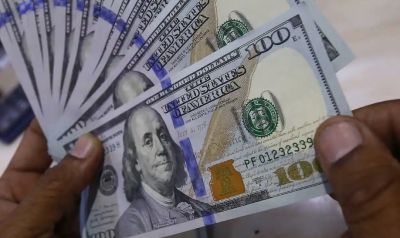
On the 1st (local time), the Wall Street Journal (WSJ) cited a report from the U.S. investment bank Goldman Sachs, analyzing that the dollar is overvalued and may decline further. Goldman Sachs estimated that the dollar's value is 5-15% higher than its fair value. Conversely, major currencies were seen as undervalued against the dollar. The euro was about 8% below its fair value, while the Japanese yen and Australian dollar were each depreciated by approximately 20%.
Goldman Sachs viewed the overvalued dollar as likely to fall in the future. It predicted that the Fed's pause in tightening would be the key to the dollar's decline. According to the Chicago Mercantile Exchange (CME) Group, investors expect the Fed to raise rates by 0.25 percentage points at the Federal Open Market Committee (FOMC) meeting on the 3rd and then halt the tightening cycle that has lasted over a year.
The slowdown in U.S. economic growth was also cited as a factor for the dollar's decline. In the first quarter of this year, the U.S. gross domestic product (GDP) growth rate was 1.1% (quarter-on-quarter annualized), falling short of both market expectations (2%) and the previous quarter's figure (2.6%). The International Monetary Fund (IMF) forecasted that U.S. growth would slow to 1.1% next year, while the Eurozone and China are expected to grow by 1.4% and 4.5%, respectively.
The banking crisis was also expected to pull down the dollar's value. On the same day, JP Morgan acquired First Republic Bank, signaling a potential end to the banking sector crisis that began in March, but the situation is not yet secure.
The variables are the extent of the recession and the dollar's status. WSJ noted, "The issue is that the dollar is a preferred (safe) asset during crises," adding, "If the global recession risk materializes and banking stress worsens significantly, the U.S. dollar may rebound." JP Morgan pointed out that looking back at the Fed's past four tightening cycles, the dollar weakened for 3-4 months immediately after the last rate hike before eventually strengthening, predicting a strong dollar.
Following the forecast of a dollar decline, market attention is shifting to the euro. The dollar value per euro rose from $0.9596 on September 27 last year to $1.0970 as of the 1st of this month. This represents a 14.3% increase in the euro against the dollar in just eight months. Amundi Asset Management predicted that the euro would rise more than 7% further this year, reaching $1.18 per euro.
Nick Wall, Global FX Strategist at JP Morgan Asset Management, said, "The U.S. is moving away from a period of remarkable performance," and added, "Other countries are starting to catch up (to the U.S. dollar)."
© The Asia Business Daily(www.asiae.co.kr). All rights reserved.
![User Who Sold Erroneously Deposited Bitcoins to Repay Debt and Fund Entertainment... What Did the Supreme Court Decide in 2021? [Legal Issue Check]](https://cwcontent.asiae.co.kr/asiaresize/183/2026020910431234020_1770601391.png)
















