Seocho-gu to Operate ‘Brain Oxygen Saturation’-Based Cognitive Screening Test for Dementia Prevention and Management Starting This Month
Utilizing Specialized Imaging Devices... Providing In-Depth Information for Dementia Prevention through ‘Cognitive Function and Cerebral Blood Flow Regulation Tests’
Post-Test AI Analysis Results and Brain Health Learning Materials Provided, Specialized Management Support for Those with Declining Brain Health
Seocho-gu (Mayor Jeon Seong-su) will officially operate the ‘Brain Oxygen Saturation Measurement-Based Cognitive Screening Test’ starting this month for residents aged 60 and over to prevent dementia through brain health checkups.
The ‘Brain Oxygen Saturation Test’ is newly introduced by the district using brain imaging devices and testing programs to provide comprehensive brain health management services and improve the accuracy of dementia screening, making it the first among Seoul’s autonomous districts to implement this.
The test features comprehensive evaluation of brain health status by measuring changes in oxygen saturation in brain blood, cerebral blood flow changes due to posture changes, and autonomic nervous system regulation functions of the cerebrum.
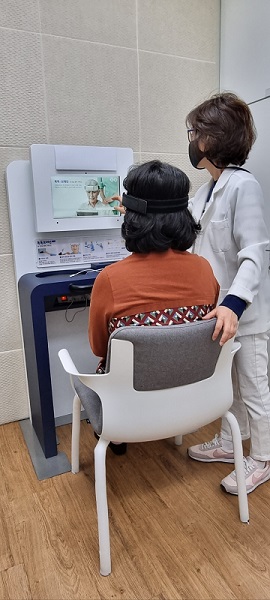
This provides more diverse and in-depth information for dementia counseling and prevention compared to the ‘simple EEG test,’ which is limited to brainwave pattern analysis.
The test consists of two components: the ‘Cognitive Function Test,’ which enables choices and judgments in daily life, and the ‘Cerebral Blood Flow Regulation Test,’ which indicates the robustness of cerebral blood vessels and the autonomic nervous system.
Additionally, a cognitive screening test evaluating memory, attention, and language functions through questionnaires is conducted simultaneously. The test is free of charge and takes a total of 40 minutes?20 minutes for the brain oxygen saturation test and 20 minutes for the cognitive screening test.
After the test, based on AI analysis results, participants receive learning materials on exercise methods, dietary therapy, and brain health programs to promote brain health. For those suspected of brain health decline, additional neuropsychological tests will be conducted, and professional management will be supported through consultations with psychiatrists at Seoul St. Mary’s Hospital and connections to medical institutions.
During the pilot operation in April, about 120 elderly participants took the test, receiving great response. One elderly participant said, “I trust the brain test because it uses specialized equipment,” and added, “I am very satisfied because I could receive counseling on the test results and learning materials helpful for dementia prevention.”
For advance reservations and detailed information about the ‘Brain Oxygen Saturation Measurement-Based Cognitive Screening Test,’ please contact the Seocho-gu Dementia Safety Center.
The district is making various efforts to create a dementia prevention environment. Since opening the ‘Seocho Dementia Safety House,’ a customized model house with dementia patient-friendly residential design, the first of its kind among local governments nationwide in 2017, it has supported customized residential environments in Yangjae 1-dong, selected as a Seoul dementia safety village last year, and plans to add and support Bangbae 2-dong as a dementia safety village this year.
Other projects include the ‘Dementia Safety Primary Care Physician’ program, which manages dementia prevention in cooperation with medical institutions, and the ‘Memory Enhancement School,’ which prevents dementia through cultural and leisure activities.
Seocho-gu Mayor Jeon Seong-su said, “We will continue to strive to create a differentiated dementia prevention system so that residents can enjoy a healthy old age and build ‘Seocho, a Dementia Safety City.’”
Jungnang-gu’s First Step in Dementia Prevention: ‘Visiting Early Dementia Screening’
‘Visiting Early Dementia Screening’ for Seniors Aged 75 and Over
Sequential Screening at 16 Dong Community Centers from May to September
Jungnang-gu (Mayor Ryu Gyeong-gi) will conduct the ‘Visiting Early Dementia Screening’ again this year and work to establish a dementia-safe community.
Dementia, if detected early and treated promptly, can have its progression slowed, and if the cause is identified, high treatment effectiveness can be expected, making early dementia screening even more important.
To this end, the district has been conducting the ‘Visiting Early Dementia Screening’ annually since 2012 to detect and treat dementia early. Free screening and accurate information about dementia are also provided.
The screening is conducted by visiting 16 dong community centers directly for seniors who find it difficult to visit the Dementia Safety Center, targeting residents of Jungnang-gu aged 75 and over.
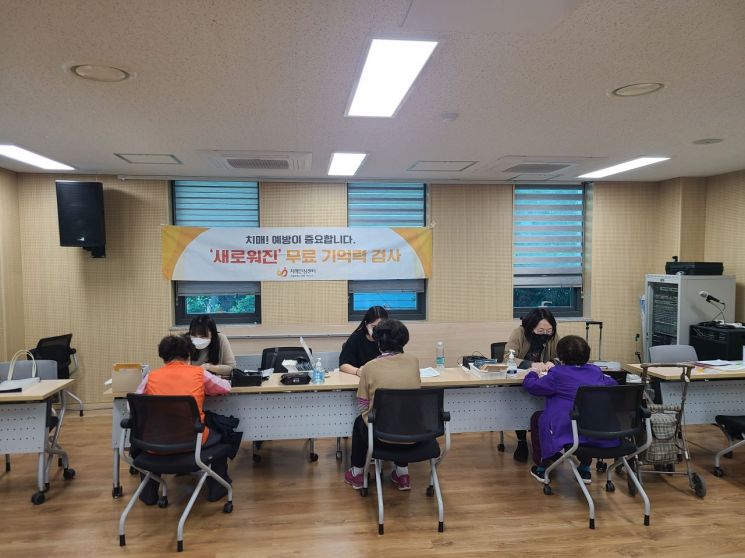
Starting from Sangbong 2-dong on May 2 and continuing sequentially until Muk 2-dong on September 26, the screening will cover the entire area. Detailed schedules can be found on the Jungnang-gu Dementia Safety Center website.
Last year, a total of 2,420 people were screened, enabling early detection of initial dementia and high-risk groups.
Jungnang-gu Mayor Ryu Gyeong-gi said, “Since early detection and prompt treatment are crucial for dementia, the ‘Visiting Early Dementia Screening’ project can greatly help in dementia prevention and management,” adding, “We will also focus on operating various programs for dementia prevention beyond screening.”
The Jungnang-gu Dementia Safety Center carries out various support projects for dementia prevention and patients, including education to improve correct awareness of dementia, support for dementia test and treatment costs, missing person prevention services, and dementia patient registration management.
“Strengthen Cognitive Function for a Happy Old Age Free from Dementia Worries”
Seodaemun-gu Namgajwa 1-dong Operates Free Dementia Prevention Education Program ‘Memory Recharge Station’
Seodaemun-gu (Mayor Lee Seong-heon) announced on the 1st that the Namgajwa 1-dong Community Security Council is operating the free dementia prevention education program ‘Memory Recharge Station’ in cooperation with the Seodaemun-gu Dementia Safety Center.
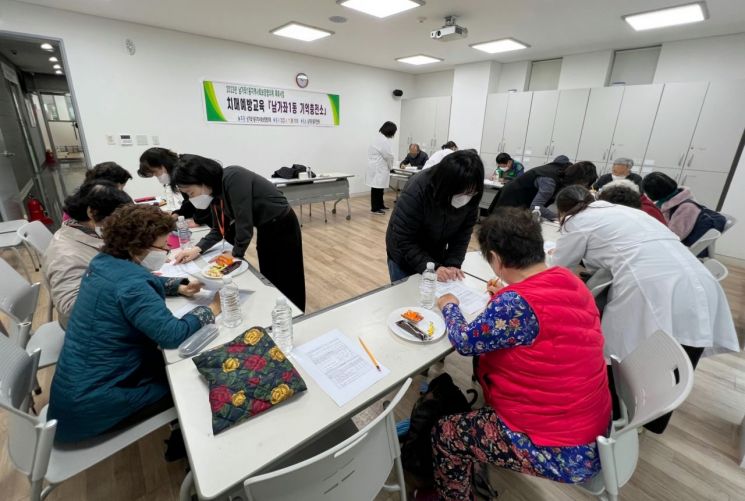
Fifteen low-income elderly living alone in the area participate in a total of 10 sessions held every Tuesday from 10 a.m. for two hours at the community center from April to June. The material cost of 25,000 KRW per person is supported by the council’s fund.
Various programs such as bead puzzles, initial consonant linking games, ‘Open the Word Warehouse,’ rhythm clapping, and sentence twisting are held to promote ‘a happy old age without dementia through cognitive function enhancement.’
The program is led by occupational therapist Kim Min-kyung from the Seodaemun-gu Dementia Safety Center. Cognitive screening tests are conducted before and after the course to monitor participants’ cognitive function improvement.
For this project, the center and the community center signed a ‘Dementia Safety Village Designation Agreement’ including dementia awareness improvement promotion and education, creation of a dementia-friendly environment, establishment of a dementia safety network, and operation of dementia prevention and family programs.
Participating seniors shared their thoughts, saying, “It’s comfortable to participate at a nearby community center,” “Even though my eyesight is dim, it’s still fun and good,” and “I wish the education lasted longer.”
Hong Gi-yoon, chairman of the Namgajwa 1-dong Community Security Council, said, “It is rewarding to contribute to the healthy old age of seniors through dementia prevention and early diagnosis.”
Namgajwa 1-dong Mayor Seok Do-hyeon said, “We will actively work with the Seodaemun-gu Dementia Safety Center to build a dementia safety network in the district and prevent dementia among seniors.”
The council also plans to promote cultural specialized projects such as drawing contests and museum visits for vulnerable elderly in the area.
© The Asia Business Daily(www.asiae.co.kr). All rights reserved.


















