Freeport and Amman Jeonggwang Export Possible Until May Next Year
Smelter Completion Delayed... Unable to Handle Production Volume for Export
Indonesia, which planned to ban the export of copper concentrate (copper ore with impurities removed) starting this June, has changed its policy to allow exports of certain items due to delays in the completion of domestic copper smelters.
According to major foreign media on the 29th (local time), Arifin Tasrif, Indonesia's Minister of Energy and Mineral Resources, told reporters the day before, "Copper concentrate exports will be banned from June, but some copper concentrate will be allowed to be exported until May 2024." The exportable items are two types of copper concentrate: one produced by the US mining giant Freeport-McMoRan at the Grasberg mine in Papua, Indonesia, and the other produced by the Indonesian mining company Amman Mineral in the West Nusa Tenggara region.
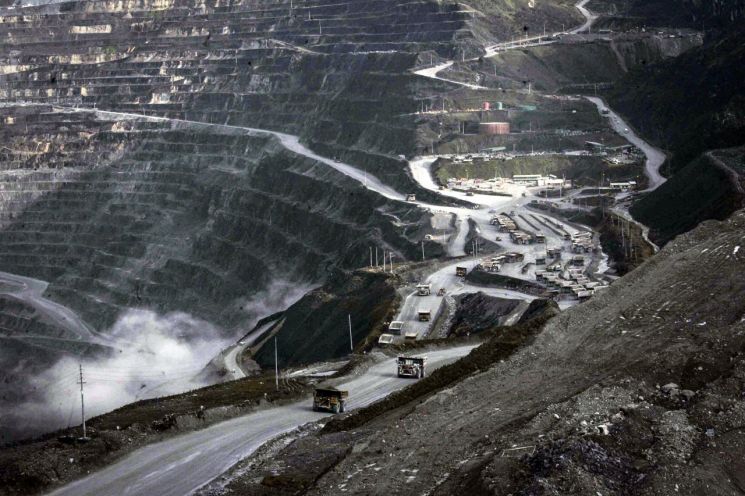
It is reported that this is because the completion of large-scale copper smelters under construction by the two companies has been delayed due to the impact of the COVID-19 pandemic, and these companies requested a temporary exception to the copper export ban. Freeport-McMoRan is constructing a smelter in East Java with an investment of $3 billion (about 4.02 trillion KRW) capable of processing 1.7 million tons of copper concentrate annually. Amman Mineral is also building a facility in Nusa Tenggara to process 900,000 tons of copper concentrate per year. Both companies originally planned to complete the facilities within this year, but the current completion rate is about 60%, and the target completion date has been postponed to May next year.
Minister Arifin has also begun discussions on extending Freeport-McMoRan's operating rights for the Grasberg mine, which expire in 2041. Freeport-McMoRan currently holds a 51% stake in the Grasberg mine.
Indonesia, rich in various raw materials, banned the export of nickel ore, a key material for vehicle batteries, in 2020, aiming to increase the added value of its exports and foster related industries. Since then, Indonesia has heavily invested in nickel refining and smelting facilities to export nickel in product form. As a result, nickel-related export revenue has increased approximately 26 times, from 17 trillion rupiah (about 1.6 trillion KRW) annually to 450 trillion rupiah (about 41 trillion KRW) currently.
Having benefited from the nickel ore export ban, Indonesia plans to ban the export of copper, bauxite, and tin in ore or concentrate form starting this June. Mining companies are requesting a grace period for the export ban, stating, "If exports are blocked first while domestic ore processing facilities are insufficient, mining companies will have to reduce production, resulting in significant losses."
© The Asia Business Daily(www.asiae.co.kr). All rights reserved.

















