US-White House Nuclear Sharing Perception Gap Revealed at Summit
'Nuclear Self-Reliance Advocate' Jeong Seong-jang: "Result of Strengthened Nuclear Shackles"
As a result of the Korea-US summit, the 'Washington Declaration' has led to evaluations that the 'independent nuclear armament' advocated by some within the ruling party is virtually off the table. While some in the ruling party claimed the Washington Declaration was a 'de facto nuclear sharing,' the White House firmly stated that it is 'not nuclear sharing,' putting them in an awkward position. There are also points that the possibility of independent nuclear armament was never high to begin with.
On the 28th, Ha Tae-kyung, a member of the People Power Party, stated on his social media (SNS), "From the start, independent nuclear armament for our country is a path to national ruin," emphasizing, "It means the dissolution of the Korea-US alliance and a fast train to becoming a developing country."
He made this remark in response to criticism that the path to 'independent nuclear armament' was blocked by the Korea-US summit.
Yong Hye-in, co-representative of the Basic Income Party, pointed out on YTN's 'News King Park Ji-hoon' that "This Korea-US summit practically blocked independent nuclear armament, effectively recognized North Korea as a nuclear-armed state, and resulted in the US's tacit rejection of many of South Korea's demands. It can only be evaluated as a summit without substantial content."
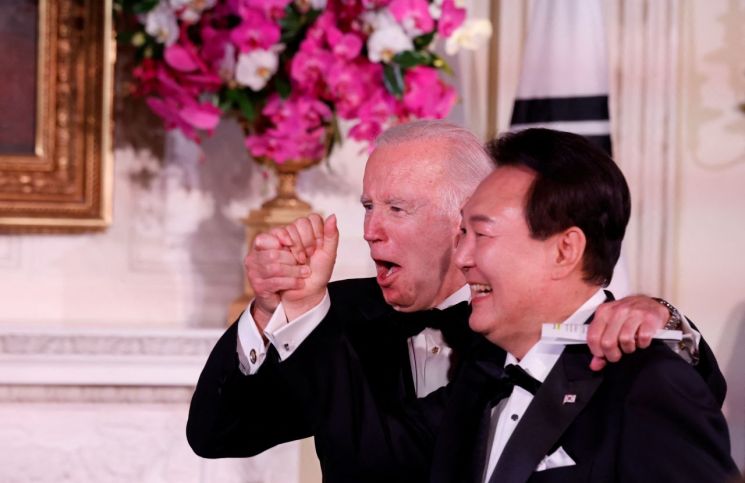
Jung Sung-jang, head of the Unification Strategy Research Office at the Sejong Institute and an advocate of 'nuclear self-reliance' in academia, also pointed out, "At this Korea-US summit, by publicly renouncing even the right to withdraw from the Nuclear Non-Proliferation Treaty (NPT), we have brought about a result that strengthens our own ‘nuclear shackles’."
However, Rep. Ha said, "The criticism that independent nuclear armament was abandoned is completely misplaced," adding, "The core of Korean-style nuclear sharing is the regular deployment of strategic assets and the establishment of a nuclear consultation group, which is groundbreaking compared to the existing nuclear umbrella promises or extended deterrence." He argued that instead of independent nuclear armament, which is a 'path to national ruin,' South Korea should move toward Korean-style nuclear sharing.
This controversy largely stems from the ruling party itself. The public opinion for independent nuclear possession was mainly raised by figures within the ruling party and the ruling coalition, and President Yoon Suk-yeol also mentioned the possibility of independent nuclear armament during the Ministry of National Defense and Ministry of Foreign Affairs New Year briefing in January.
The government and the People Power Party also interpreted the summit results as 'de facto nuclear sharing.' Kim Tae-hyo, the first deputy director of the National Security Office, told reporters asking about the meaning of the Washington Declaration, "Our people will feel as if they are effectively sharing nuclear weapons with the US," and Park Dae-chul, chairman of the People Power Party Policy Committee, called the Washington Declaration "the first de facto nuclear sharing declaration." Shin Won-sik, a ruling party member of the National Defense Committee, also wrote on his SNS, "The Washington Declaration is a clear message that by sharing even the most precious nuclear weapons the US possesses, it will not sacrifice Seoul for the safety of New York."
In response, the White House drew a clear line, stating it does not consider this 'de facto nuclear sharing,' leaving the government and ruling party in an awkward position. Ed Keegan, senior director for East Asia and Oceania at the White House National Security Council, said at a briefing for Korean correspondents held at the State Department in Washington DC, when asked, "The South Korean government explains the Washington Declaration as de facto nuclear sharing. Do you agree with this explanation?" he replied, "I will be very straightforward. We do not consider this declaration as de facto nuclear sharing."
© The Asia Business Daily(www.asiae.co.kr). All rights reserved.
!["The Woman Who Threw Herself into the Water Clutching a Stolen Dior Bag"...A Grotesque Success Story That Shakes the Korean Psyche [Slate]](https://cwcontent.asiae.co.kr/asiaresize/183/2026021902243444107_1771435474.jpg)
















