Dung beetle with no observation records since the 1970s
Extinct status... Currently breeding after being imported from Mongolia
The dung beetle, familiar to the public through textbooks, has been found to be extinct in South Korea since the 1970s.
The National Institute of Biological Resources under the Ministry of Environment announced on the 25th that it has published the National Biological Red Data Book Insects II (Coleoptera) and Insects III (Aquatic Insects) containing this information.
This data book includes a reassessment of 701 species, including 340 species of Coleoptera and 361 species of aquatic insects, based on the "Red Data Book of Endangered Wild Fauna and Flora of Korea" published by the National Institute of Biological Resources research team in 2012.
In particular, in this reassessment conducted after 10 years, the dung beetle was evaluated as having disappeared domestically. This means extinction. The extinction status of the dung beetle can be confirmed by searching the Ministry of Environment’s website.
Ministry of Environment once announced a reward of 1 million KRW per individual for extinct species
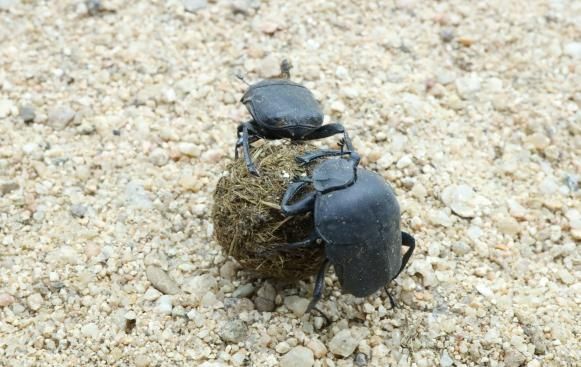 The dung beetle, familiar to the public through its appearance in textbooks, has been found to be extinct since the 1970s.
 [Photo by Asia Economy DB]
In December 2017, the Ministry of Environment posted a notice titled 'Animal (Dung Beetle) Purchase.' The bid price was 50 individuals at 1 million KRW per individual, totaling 50 million KRW. The delivery deadline was within 10 months from the contract date, and the delivery location was specified as a designated place within the Ministry of Environment’s National Endangered Species Restoration Center.
In September 2019, the Ministry of Environment also issued a card news titled 'We are looking for real dung beetles.'
This card news included the phrase "If you find a dung beetle, please catch it," along with a warning below stating, "Warning, catching dung beetles can result in a fine of up to 30 million KRW."
It also explained how to distinguish dung beetles and, on the last page, requested people to report any findings of real dung beetles to the Endangered Species Restoration Integrated Call Center.
As its name suggests, the dung beetle lives by eating dung. The dung consumed by dung beetles becomes nutrients for plants or bacteria. Because of this characteristic of feeding on dung, it has often been used as a subject in various stories. However, when antibiotics began to be fed to cattle, this insect also disappeared.
Having ultimately failed to find dung beetles domestically, the government is currently breeding 200 dung beetles brought from Mongolia.
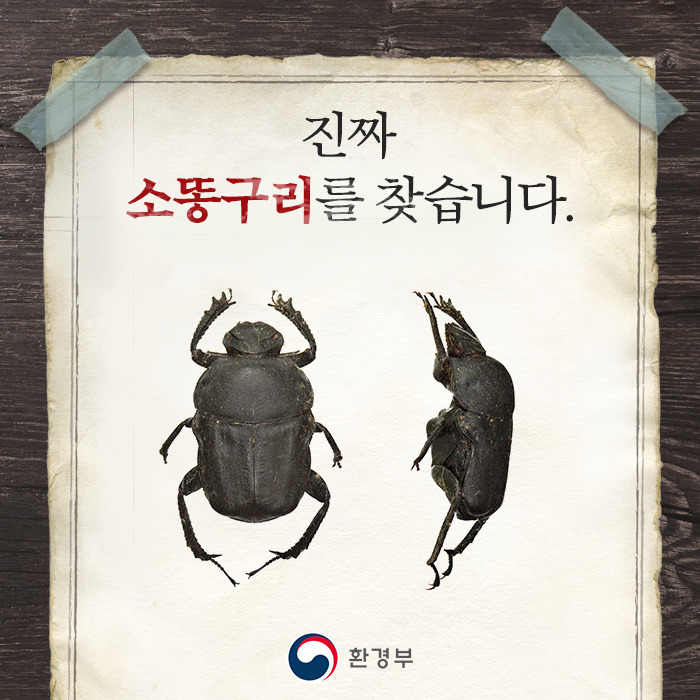 A card news released by the Ministry of Environment as it embarks on a search for the dung beetle.
 [Photo by Ministry of Environment]
Meanwhile, the number of endangered flora and fauna is gradually increasing. The tiger is a representative example. The last wild tiger observed in South Korea was over 100 years ago, in 1922 at Daedeok Mountain in Gyeongju. It is presumed extinct in South Korea. Although a small number are believed to exist in North Korea, this has not been confirmed.
It is not only tigers. Foxes, deer, wolves, wildcats, seals, cranes, eagles, hawks, owls, snakes, Korean fire-bellied toads, longhorn beetles, and others are all facing the threat of extinction.
© The Asia Business Daily(www.asiae.co.kr). All rights reserved.


















