OpenAI Registers GPT Trademark
Focus Shifts from Technology Sharing to Monetization
From now on, it will no longer be possible to attach 'GPT' to specific service names. This is because OpenAI, the American artificial intelligence (AI) startup that developed ChatGPT, has secured trademark rights. As competition to dominate generative AI intensifies, it is analyzed that they have moved beyond technological monopoly to filing for trademark rights.
On the 24th (local time), OpenAI posted brand guidelines on its company website. It specified how to use the company name and its AI model names such as ChatGPT, GPT-4, and DALL·E.
The most notable part is the prohibition of attaching GPT to specific service names. It is allowed to use phrases like "powered by GPT-4" or "built on GPT-4," but it is recommended not to use "GPT" or "ChatGPT-powered" together with service names. Additionally, expressions such as cooperation or partnership are restricted unless one is an official OpenAI partner.
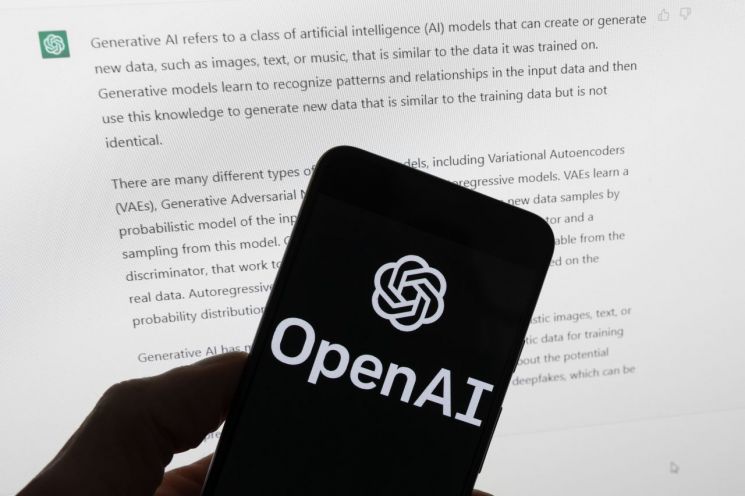
OpenAI restricted brand usage because it filed for trademark rights. In December last year, OpenAI applied for trademark rights with the United States Patent and Trademark Office (USPTO). The USPTO recognized this on the 13th, making GPT the property of OpenAI.
Public institutions and private companies that used GPT in their service names must change them. Since ChatGPT was launched in November last year, services based on it have flooded worldwide. Naver uses 'SearchGPT' as the project name for its next-generation search, and Kakao uses 'KoGPT' as a Korean language-specialized language model. In various fields, GPT is widely used, such as Mirae Asset Securities' market summary service 'Investment GPT' and PersonaAI's chatbot service 'KGPT.'
It is analyzed that OpenAI, which started as a non-profit company, has completely shifted to a for-profit company. This is because they have switched to keeping the latest AI model GPT-4 technology undisclosed and have also filed for trademark rights. As competition around generative AI intensifies and they have started making money with ChatGPT, they intend to focus more on monetization.
Opinions in the industry are divided. The question is whether the trademark rights for GPT, which is theoretically based on Google's Transformer model, can be recognized. GPT stands for 'Generative Pre-trained Transformer,' a pre-trained generative transformer. Transformer is a model proposed by Google in a 2017 paper. It became the backbone of generative AI technologies including ChatGPT. However, while Transformer is a theoretical model, OpenAI has commercialized it by releasing application programming interfaces (APIs) based on it. APIs are tools that can be combined like Lego blocks when creating programs. An industry insider said, "Monopolizing technology or brands contradicts the philosophy under which AI has developed so far, but it seems they intend to strengthen commerciality accordingly."
© The Asia Business Daily(www.asiae.co.kr). All rights reserved.

















