Grain Agreement Extension Deadline May 18
Termination Could Worsen Food Crisis in Middle East and Africa
At the upcoming Group of Seven (G7) summit scheduled for next month, a proposal to impose a complete ban on exports to Russia is expected to be discussed, amid which Russia has pushed back, warning that it may terminate the Black Sea grain agreement if additional sanctions are imposed. With global inflation issues persisting, there are growing concerns that if Russia weaponizes grain as a resource, the economic repercussions could be significant.
According to CNN on the 23rd (local time), Dmitry Medvedev, Deputy Chairman of Russia's Security Council, stated on his Telegram account, "The idea of a complete ban on Russian exports proposed at the G7 summit would be a very beautiful thing," adding, "In that case, we will ban exports of product groups that the G7 countries are most sensitive about, and the grain agreement, as well as many other things, will come to an end," he warned.
This remark appears to be in response to reports by Japanese media that, ahead of the G7 summit next month, a proposal to strengthen sanctions against Russia was raised at a recent G7 ministerial meeting. Earlier, Japan's Kyodo News reported that at a ministerial meeting held last week in Miyazaki Prefecture, Kyushu, agricultural ministers from G7 countries discussed a strong sanction plan that would ban exports of almost all items to Russia.
Currently, the United States, the European Union (EU), and G7 countries are prohibiting the export of major strategic goods to Russia, and regulations on Russia's key exports such as oil and gas imports continue. As sanctions against Russia prolong and its economic difficulties deepen, concerns are growing that Russia may weaponize food resources following its weaponization of energy resources.
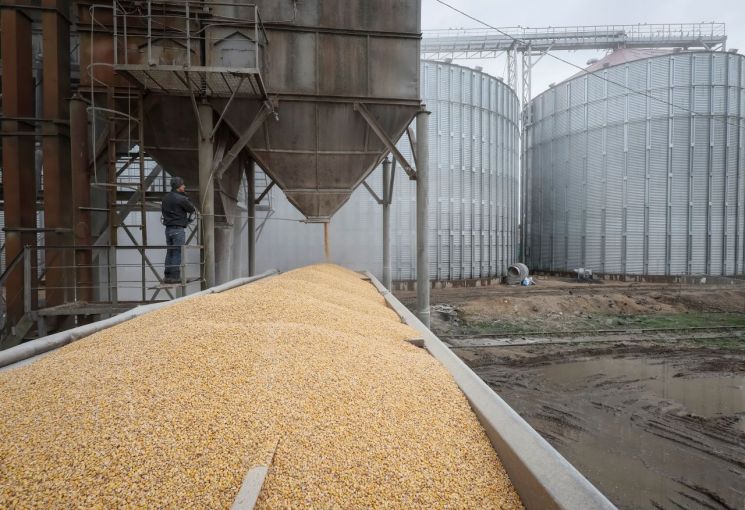
Previously, Russia signed a grain agreement with Ukraine, the United Nations, and T?rkiye (Turkey) to resume exports through the Black Sea grain supply chain, which was suspended after Russia's invasion of Ukraine in July last year. The agreement was initially set for four months and was extended for another four months in November last year, with the next extension deadline on May 18.
Russia is currently pressuring that if the West does not lift restrictions on Russian agricultural and fertilizer exports, it will not seek to extend the grain agreement beyond May 18 and may terminate it. If the grain agreement is terminated and the supply chain is restricted again, there are concerns that food shortages in the Middle East and Africa, which heavily depend on Black Sea grain, will worsen further.
© The Asia Business Daily(www.asiae.co.kr). All rights reserved.

















