Microbial Food Waste Processor Manufacturer GL Plus
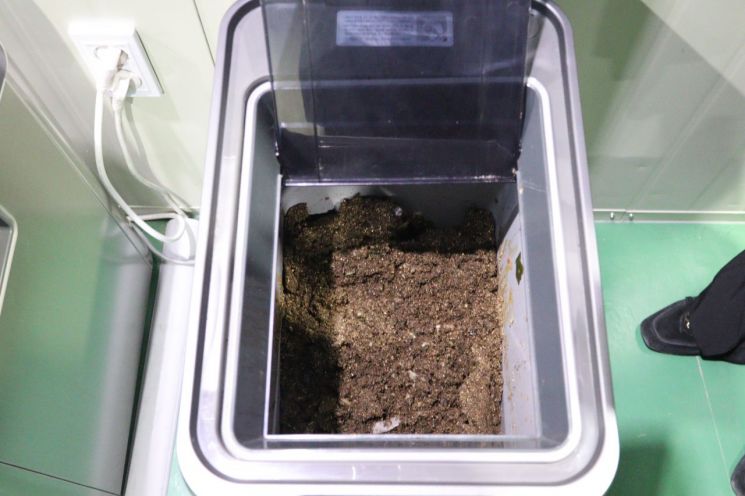
Dealing with leftover food waste is quite a hassle. If you wait until the designated waste bag is full, the odor and insects become a nuisance, but throwing it away after every meal is exhausting. Many couples even argue over who should take out the food waste after dinner. This is why automatic food waste transfer systems have become essential infrastructure in newly built apartments. Recently, food waste disposers have become a household essential as an alternative.
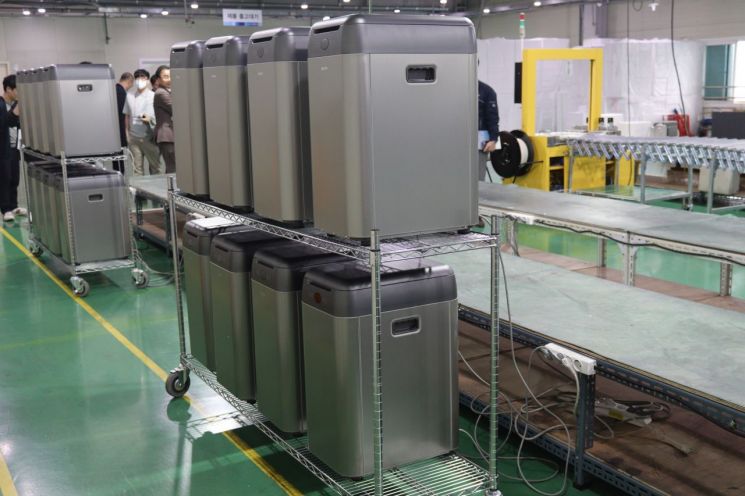
GL Plus is a small and medium-sized enterprise that manufactures food waste disposers using microbial decomposition methods. At the GL Plus factory located in Bucheon, Gyeonggi Province, CEO Kim Wanjae said, "We have established an eco-friendly resource circulation system that decomposes food waste with microbes and uses the remaining residue as fertilizer," adding, "Try raising microbes like you would a pet."
GL Plus’s food waste disposers specialize in decomposition and elimination functions using microbes. When food waste is put into the device, about 95% is decomposed after approximately 24 hours. Any odors generated during this process are controlled by a four-stage hybrid deodorization system. This system removes odor-causing bacteria and harmful gases, adsorbs residual smells, and then purifies the air. Since there is no exhaust hose, no separate installation work is needed, and it can be used simply by plugging in the power cord.
The product lineup ranges from 500g (maximum daily input), mainly used by single-person households, to 20kg models used by small and medium-sized restaurants. The average amount of food waste disposed of daily by a four-person household in Korea is about 580g. Recently, they introduced a new IoT-based "smart food waste disposer" that operates via smartphone control or voice recognition. It also includes more detailed decomposition functions tailored to the characteristics of the food waste.
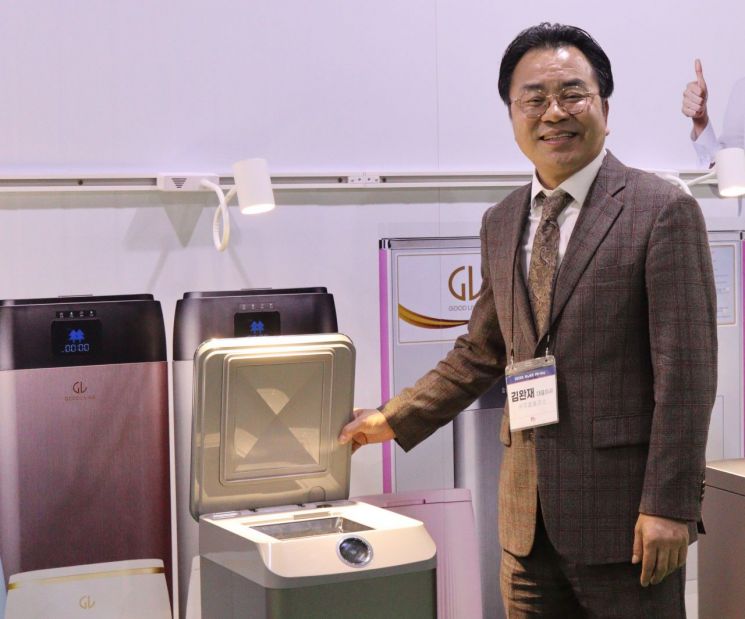
While developing its food waste disposer business, GL Plus established the "Eco Payback System." Users of the food waste disposer can collect the 5% residue left after microbial decomposition in an Eco Bag and send it by courier to receive "Eco Pay." Eco Pay is a point system that can be used to purchase agricultural products at the mall operated by GL Plus. The farms selling these agricultural products use the residue sent from households as compost to cultivate healthy crops. CEO Kim said, "If you fill a 5kg Eco Bag, you receive 20,000 Eco Pay points, equivalent to 20,000 KRW in cash," adding, "We created this system to contribute to the environment by establishing a circular economy system using waste."
In addition to its own brand "Barimi," GL Plus also operates an ODM (Original Design Manufacturer) business. Major clients include Samsung Electronics, Carrier, Cuckoo Homesys, Noroo Paint, and Lotte Aluminum. ODM accounts for 90% of its sales. GL Plus recorded sales of 14.1 billion KRW last year and aims for 30 billion KRW this year.
GL Plus obtained the Inno-Biz certification in 2021, awarded by the Ministry of SMEs and Startups. The Inno-Biz certification combines Innovation and Business and provides various preferential benefits such as financial and tax incentives to companies with technological competitiveness.
GL Plus plans to continue leading eco-friendly businesses and transform into a "carbon-neutral platform" company. CEO Kim said, "We are researching ways to apply microbes not only to food waste but also to biodegradable plastics to contribute to the environment," adding, "We will take the lead in carbon neutrality through continuous research and development (R&D), including establishing the industry's first microbial research institute in 2021."
© The Asia Business Daily(www.asiae.co.kr). All rights reserved.



















