Japan "Children do not line up, free pass for entry"
Prime Minister Kishida "Think from the children's perspective"
Controversy in Korea over 'Magic Pass' allowing skipping lines by paying
The Japanese government, which is considering measures to address low birth rates, is promoting the 'Children Fast Track' system with the goal of implementing it this summer. This system allows families with children and pregnant women to enter public facilities such as museums and art galleries without waiting in line, giving them priority access. As Japan introduces this bold measure to raise its birth rate, there are calls for South Korea to benchmark this approach as well.
'Children Fast Track' promoted by Japan: "We will realize a child-centered society"
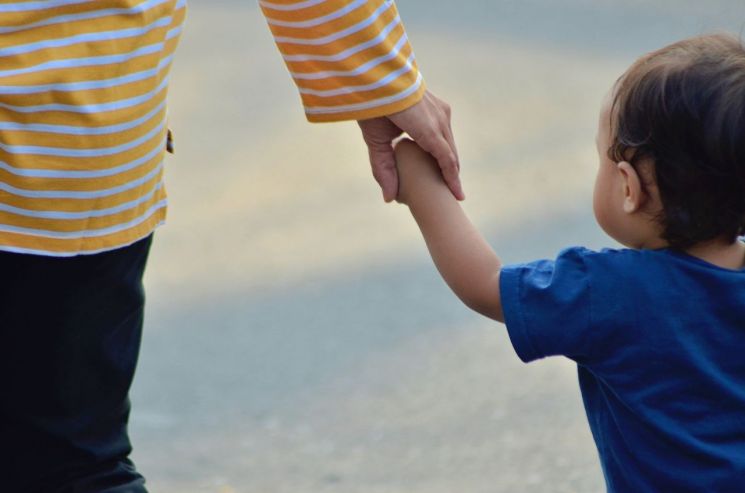
According to foreign media including the Asahi Shimbun on the 20th, the Japanese government held a joint meeting of related ministries on the 18th to discuss the introduction of the 'Children Fast Track' system. This system is one of the 'unprecedented low birth rate measures' identified as an important policy by the Japanese government this year, aiming to create a child-friendly environment to increase the birth rate.
The Japanese government plans to expand the system to include civil service counters operated by local governments, parks, and other private facilities. It is also considering applying it to sports event admissions.
Masanobu Ogura, Minister in charge of Children's Policy, said, "I hope it will be introduced focusing not on places convenient administratively, but places where children and families really want to go."
Previously, the Japanese government, which has long been concerned about the low birth rate issue, launched the 'Children and Families Agency' directly under the Prime Minister on the 1st of this month. On the 31st of last month, it announced a basic plan for low birth rate measures, including ▲expansion of child allowances to high school students ▲application of medical insurance to childbirth costs ▲introduction of deferred tuition payment system.
Japanese Prime Minister Fumio Kishida stated regarding this, "We will always realize a child-centered society that prioritizes the best interests of children and young people from their perspective."
South Korea ranks lowest in the world for birth rate... Issues with child-rearing environment too
South Korea is also struggling with the low birth rate problem. Last year, South Korea's total fertility rate (0.78) recorded one of the lowest levels in the world. Japan's total fertility rate was 1.3 in 2021, higher than South Korea's.
Compared to Japan, which is unveiling bold low birth rate measures, South Korea still faces problems with the child-rearing environment. Although maternity leave and parental leave are legally guaranteed, many people cannot use them in a timely manner, and even when used, concerns about supervisors' and colleagues' attitudes and disadvantages in promotion remain. In September last year, the family of a female developer in her 30s at Naver who died by suicide claimed she was bullied at work because she was a 'working mom.'
Meanwhile, psychological pressure on caregivers is not uncommon due to 'No Kids Zones' that restrict children's entry and hateful expressions criticizing mothers raising young children as 'mamchung.' 'No Kids Zones' refer to establishments that restrict entry of infants and young children. After a 2015 court ruling ordering partial compensation to a child who suffered burns at a restaurant, No Kids Zones began to appear one by one.
The National Human Rights Commission of Korea (NHRCK) judged in 2017 that operating No Kids Zones constitutes discrimination against children, but controversy over No Kids Zones continues. Some support No Kids Zones as the owner's freedom to designate their establishment, while others oppose them as discriminatory acts against children and customers accompanied by children. However, currently, public opinion favors allowing No Kids Zones. According to a survey by Korea Research in February, 73% of respondents aged 18 and over agreed with No Kids Zones.
Recently, some places have changed 'No Kids Zones' to 'Care Kids Zones' or 'No Bad Parents Zones' because of concerns that No Kids Zones may negatively affect childbirth and child-rearing. 'Care Kids Zones' require active care for children, and 'No Bad Parents Zones' mean that parents who neglect their children are not allowed.
Netizens: "We should also become a child-centered society"
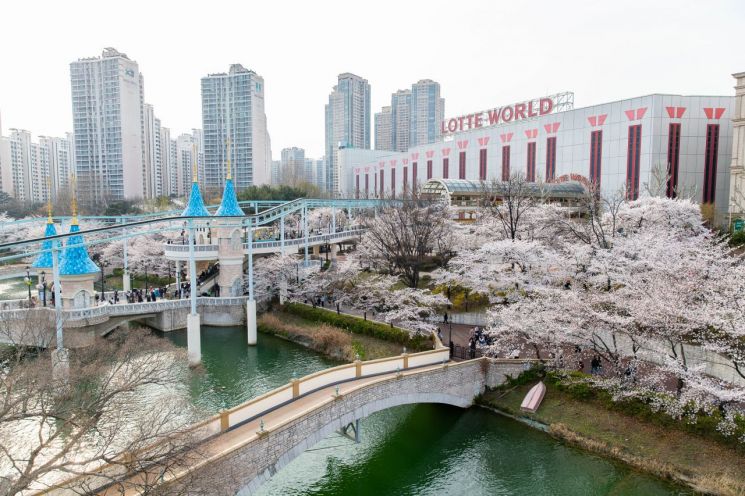
Meanwhile, recently in South Korea, the 'pass ticket controversy' has become a hot topic. A pass ticket is a premium ticket sold at amusement parks. Although more expensive than a general ticket, pass ticket holders can use facilities faster than general waiting customers. Some argue that the pass ticket is a legitimate right based on capitalist logic, but others claim that children may feel deprived because of the pass ticket.
Professor Jaeseung Jeong of KAIST's Department of Bio and Brain Engineering said on SBS's 'Master in the House' on the 2nd, "There are many situations in our society where people have to wait in line. Amusement parks are places where children mainly wait in line. What values do children learn by watching that when they are young? It is natural that those who come first receive services, but in this case, it gave the right to cut in line to those who paid more money."
In response, there are calls for South Korea to become a child-centered society like Japan. Netizens reacted with comments such as "South Korea also needs drastic measures to raise the birth rate," "Japan's 'Children Fast Track' system is not a costly project and I think it will help in real life," and "We need to create a world where children can live better than adults now."
© The Asia Business Daily(www.asiae.co.kr). All rights reserved.



















