WSJ "When Apple Calls, It's a Kiss of Death"
After Proposing Strategic Alliances, Technology and Talent Leakage Occurs
Apple, the iPhone manufacturer, is being spotlighted by The Wall Street Journal (WSJ) for allegedly stealing technology from small and medium-sized enterprises (SMEs), highlighting Apple's 'power abuse.'
On the 20th (local time), WSJ published an article titled "When Apple Calls, It's the Kiss of Death," citing executives and lawyers from SMEs, stating, "Apple pretends to discuss partnerships with SMEs that have technology but ultimately takes both their personnel and technology."
A company that made a blood oxygen monitor said Apple's collaboration proposal was "like a dream," but...
A representative story is that of Joe Kiani, founder of Masimo, who developed a blood oxygen monitor in 2018. Kiani thought Apple's proposal was like a dream and believed his technology was suitable for the Apple Watch.
However, after the two sides met, Apple began hiring Masimo's engineers and chief medical officer, offering salaries twice as high.
Later, in 2019, Apple released a sensor patent similar to Masimo's. The following year, Apple launched the Apple Watch capable of measuring blood oxygen levels.
Kiani pointed out, "When Apple shows interest, it's the kiss of death," adding, "At first, you get excited, but eventually, everything is taken away."
WSJ reported that Kiani is just one of over 20 executives, inventors, investors, and lawyers who have been affected by Apple.
In addition, in 2013, Apple discussed a partnership with Valencell, a company that had technology to monitor heart rate during movement.
According to Valencell, Apple repeatedly requested technical information and tested prototypes for several months. Licensing possibilities were also discussed. Then, suddenly, the discussions stopped.
Subsequently, in 2015, Apple released the Apple Watch with heart monitoring features.
Valencell filed four patent infringement lawsuits against Apple the following year. In response, Apple filed petitions to invalidate these four patents with the Patent Trial and Appeal Board. Additionally, Apple filed further invalidation petitions against seven other unrelated Valencell patents.
Eventually, exhausted by legal disputes with Apple, the company settled with Apple in 2019, though the terms of the settlement were not disclosed.
Apple takes technology and personnel after discussing technology integration... leading to major lawsuits
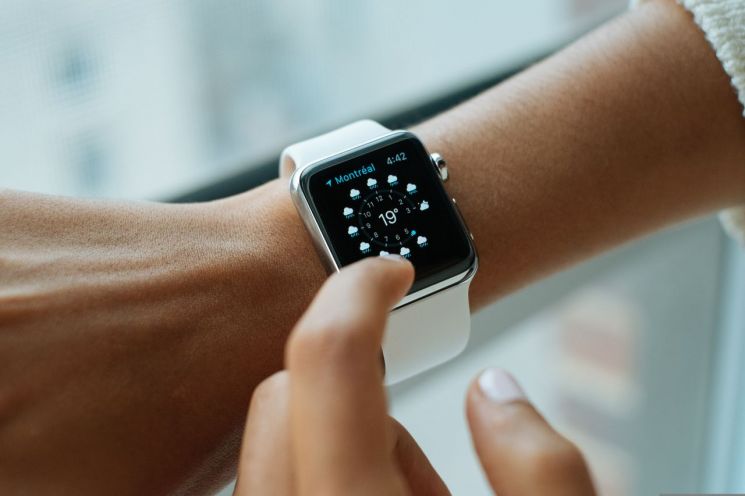
What these companies commonly claim is that Apple first proposes strategic alliances and discusses technology integration, but then the conversations stop, and shortly after, Apple releases devices with similar features.
Moreover, Apple has filed hundreds of patent invalidation lawsuits against companies that accused it of infringing their patents.
As in Valencell's case, Apple filed multiple lawsuits over a single patent and also filed lawsuits over unrelated patents, significantly escalating legal disputes.
According to Patexia, an intellectual property research firm, Apple has filed the most patent invalidation lawsuits with the Patent Trial and Appeal Board since 2012, WSJ reported.
The cost of one such lawsuit is about $500,000 (approximately 650 million KRW), which is a difficult expense for SMEs to bear, the article added.
Apple responded by saying, "We do not steal technology and respect others' intellectual property," adding, "Others are copying our technology, and we will fight in court."
Andrei Iancu, former director of the U.S. Patent and Trademark Office, said, "The current patent system is tilted in favor of established large corporations," adding, "This is no coincidence."
© The Asia Business Daily(www.asiae.co.kr). All rights reserved.
![From Bar Hostess to Organ Seller to High Society... The Grotesque Con of a "Human Counterfeit" [Slate]](https://cwcontent.asiae.co.kr/asiaresize/183/2026021902243444107_1771435474.jpg)

















