Italy to Pursue Income Tax Exemption for Households with Two or More Children
Second Lowest Total Fertility Rate After Korea Among OECD Countries
In Italy, which has the second-lowest birth rate among OECD (Organisation for Economic Co-operation and Development) member countries after South Korea, measures are being considered to exempt income tax for families with two or more children to address the low birth rate issue.
According to ANSA news agency and others on the 19th (local time), Giancarlo Giorgetti, Minister of Economy and Finance, is considering such low birth rate measures to encourage people to have children and to reverse the declining birth rate.

The system of reducing taxes for families with many children has been implemented in countries like France that have overcome low birth rates, but the plan to completely exempt families with two or more children from taxes is being seen as a groundbreaking approach.
The annual number of newborns in Italy has been declining for 14 consecutive years since 2009. According to the Italian National Institute of Statistics (ISTAT), last year the number of newborns was 392,600, marking the first time since the establishment of the unified state in 1861 that the figure fell below 400,000.
As of 2020, Italy’s total fertility rate was 1.24, ranking second to last among the 38 OECD member countries. The country with the lowest rate was South Korea, at 0.84.
"Low birth rate threatens national survival... Incentives must be provided"
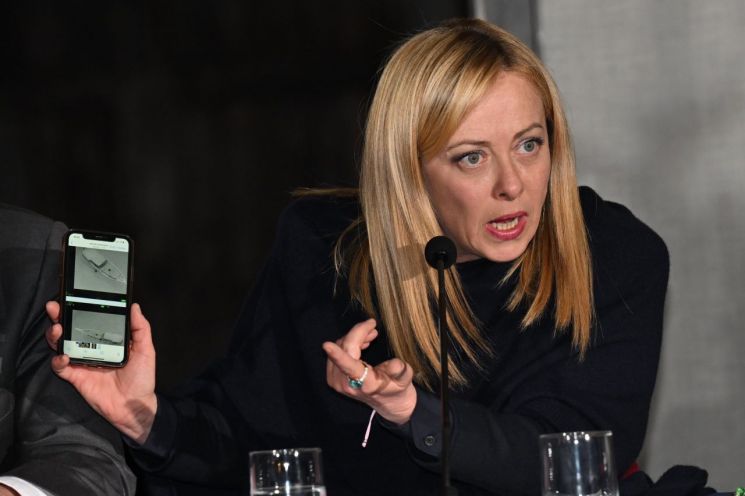
Earlier, Prime Minister Giorgia Meloni stated on the 17th that the government is seeking various birth promotion policies to raise Italy’s birth rate, which hit a historic low last year, and to increase the working population.
She emphasized that "the number of people needed to sustain Italy is increasing, but the number of working people is decreasing," calling the low birth rate an urgent issue threatening the nation’s survival.
She added, "This problem can be solved in various ways. We need to raise the enormous amount of female labor force to the European average, including immigrants," and said, "Incentives must be provided to bring children into the world."
Minister Giorgetti’s 'radical proposal' appears to be an extension of the government’s policy. Regarding this, a deputy minister of the Ministry of Industry said, “We can unconditionally accept the minister’s proposal,” and added, “It is necessary to reduce taxes for families with one or more dependent children to increase the birth rate.”
However, he also noted, “Completely exempting all taxes is not practically easy,” and “How to reduce taxes needs further discussion, but the idea itself is innovative.”
On the other hand, voices of criticism have been raised from the opposition. Laura Boldrini, a member of the center-left Democratic Party in Italy, opposed the plan, saying, "The government should first provide young men and women with stable jobs and adequate wages so they can plan their future."
© The Asia Business Daily(www.asiae.co.kr). All rights reserved.


















