The government will ease the requirements for adjusting contract amounts for construction materials during price increases to reduce excessive management burdens on construction companies. Additionally, the minimum bid rate for safety equipment in high-risk occupations such as firefighting, military, and police will be raised from the current 60% to 80%. The government plans to improve on-site difficulties in the public procurement system, which amounts to about 190 trillion won, enhancing fairness and reducing corporate management burdens.
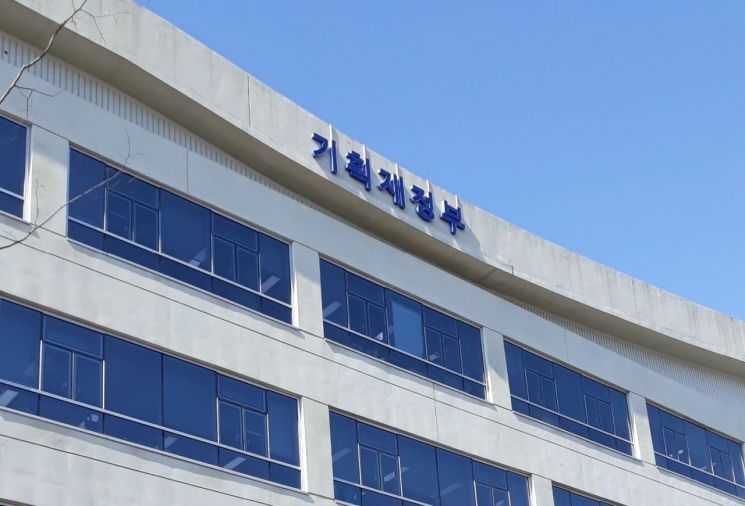
On the 19th, the Ministry of Economy and Finance held the 6th Economic Regulatory Innovation Task Force (TF) meeting at the Government Seoul Office, chaired by Deputy Prime Minister and Minister of Economy and Finance Choo Kyung-ho, and unveiled the "National Contract System Advancement Plan to Reduce Corporate Burdens."
This plan was prepared to modernize regulations and unreasonable market practices perceived by companies during the procurement process. The public procurement market size expanded by about 34% over the past four years, from 137 trillion won in 2017 to 184 trillion won in 2021. However, the national contract system requirements have been strict, and related regulations numerous, causing difficulties for corporate economic activities.
Preventing Low-Price Bidding in High-Risk Occupations such as Firefighting, Military, and Police
The government will first raise the minimum bid rates for negotiated contracts on goods and services and the comprehensive service evaluation system from the current 60% to 70%, a 10 percentage point increase. In particular, the minimum bid rate for safety equipment in high-risk occupations such as firefighting, military, and police will be increased from 60% to 80%. For high-risk occupations, securing high-quality safety equipment is essential, but concerns about low-quality and low-price bids have been consistently raised due to the same minimum bid rate as general goods. The government also plans to raise the minimum bid rate for qualification evaluations in electrical and information communication, firefighting, and cultural heritage construction from the current 87% to 88%, a 10 percentage point increase.
Requirements for adjusting contract amounts for construction materials during price increases will also be eased. This comes amid criticism that despite recent rises in building raw material prices, the conditions for increasing contract amounts for related materials are very strict, resulting in low utilization of the system. The government will lower the specific material ratio in construction costs (materials, labor, and expenses) from the current 1% to 0.5% to allow smoother adjustment of contract amounts during price increases. This is expected to reduce the cost burden on procurement companies caused by rapid raw material price hikes.
Expansion of Threshold Amounts for the Comprehensive Evaluation System in Construction Engineering
The burden of bidding and contract procedures will also be eased. The threshold amount for the comprehensive evaluation system in construction engineering will be raised from the current 1.5 to 2.5 billion won to 3 to 5 billion won. This aims to alleviate the bidding cost burden on small and medium-sized enterprises. The government will advance the timing for issuing bidding-related documents by the ordering agency and require mandatory posting on the electronic procurement system. The current timing for issuing bidding-related documents, from the bid announcement date to the bid registration deadline, will be improved to provide all information on the bid announcement date, securing time for document review. Only the successful bidder in the comprehensive evaluation system will be required to submit subcontracting plans, reducing the document submission burden on bidding companies.
Efforts will also be made to enhance project efficiency and flexibility. Basic design compensation will be paid early to those who fail turnkey bids (design and construction combined bidding), potentially shortening the period by about 6 to 8 months. The threshold amounts for designated competitive bidding in construction will be raised or rationalized. For comprehensive construction, the threshold will increase from 300 million won to 400 million won; for specialized construction, from 100 million won to 200 million won; and for other construction, from 100 million won to 160 million won, improving the appropriateness of competitive bidding standards. When changing the subcontracted portion in the subcontracting plan of the comprehensive evaluation system to direct construction, the allowable change rate will be relaxed from the current 10% to 20%. This is expected to reduce the burden on companies and expand autonomy when direct construction is necessary.
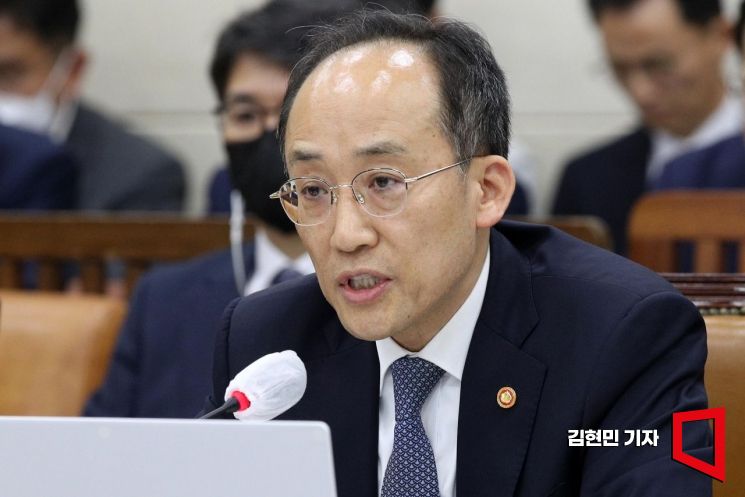 Deputy Prime Minister and Minister of Economy and Finance Choo Kyung-ho is speaking at the plenary meeting of the Planning and Finance Committee held at the National Assembly on the 17th. Photo by Hyunmin Kim kimhyun81@
Replacing Bid Participation Restrictions with Fines
Protection of company rights will also be strengthened. The reasons for replacing national bid participation restrictions with fines will be expanded from the current 9 to 12. This will allow fines to replace restrictions depending on the severity of violations, increasing opportunities for companies to participate in bids. Regarding public works ordered by public enterprises and quasi-governmental institutions, the government plans to introduce a "fine" system that allows companies committing minor violations to pay fines and still participate in bids.
Currently, for national and local governments, minor violations do not restrict bid participation when fines are imposed, but public enterprises and quasi-governmental institutions lack a fine system, resulting in bid participation restrictions. This creates inconsistency in sanctions depending on the ordering agency for the same violation. Going forward, the fine system will be introduced for contracts ordered by public enterprises and quasi-governmental institutions, allowing companies not to be disqualified from bidding depending on the level of violation. Additionally, the objection period for public institution contracts will be extended from the current 15 days to 20 days from the date of the cause and from 10 days to 15 days from the date the cause was known.
The government stated, "We plan to promptly promote institutional improvements, including related regulation amendments, to facilitate private economic activities based on industry requests and corporate burden reduction tasks," adding, "The contract regulations will be revised immediately upon announcement of the advancement plan, and institutional improvements will be completed within the first half of this year."
© The Asia Business Daily(www.asiae.co.kr). All rights reserved.


















