WSJ Introduces Study on US Banks' Interest Rate Risk Hedging
25% of Banks Reduced Interest Rate Swap Contracts Last Year
The U.S. Federal Reserve (Fed) has been implementing aggressive tightening steps since last year, but local banks have been found to have virtually no hedging against interest rate risks. Although they should have responded to rate hikes through derivative contracts, they instead reduced their hedging scale, leaving themselves defenseless against interest rate risks.
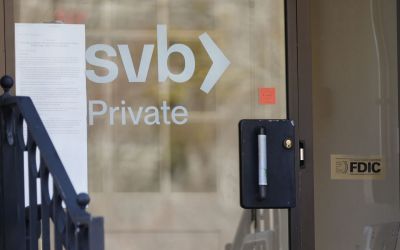
On the 18th (local time), The Wall Street Journal (WSJ) introduced a paper titled "Limited Hedging and Gambling for the Revival of U.S. Banks During the 2022 Monetary Tightening Period" containing these findings.
Analysis of U.S. banks' financial disclosure reports in this paper showed that interest rate swap contracts were executed for only 6% of total bank assets. Banks' assets and liabilities are mainly composed of bonds, making interest rate risk the most important and frequently occurring risk. Banks generally enter into derivative contracts such as interest rate swaps to hedge interest rate risk, but in reality, most bank assets were fully exposed to interest rate risk.
It was found that one in four U.S. banks actually reduced the scale of interest rate swap contracts last year when the Fed began full-scale rate hikes. In the case of Silicon Valley Bank (SVB), which went bankrupt last month, 12% of its securities portfolio was hedged at the end of 2021, but the hedge ratio sharply dropped to 0.4% by the end of 2022. Four co-authors of the paper, including Erica Chang, a professor at the Marshall Business School of the University of Southern California, criticized this as behavior akin to gambling.
The paper pointed out, "Banks were exposed to significant risks, and positively, this benefited bank shareholders," but added, "(As seen in the SVB case) the losses were borne by the Federal Deposit Insurance Corporation (FDIC)." It argued that if SVB had sufficiently hedged interest rate risk in advance, it would not have needed to incur large losses by selling U.S. Treasury securities to return deposits, nor would it have gone bankrupt, prompting the FDIC to implement full deposit protection measures.
WSJ reported, "During last year's Fed monetary tightening period, almost no U.S. banks protected themselves against interest rate hikes."
However, there are many opinions that banks' lack of separate preparation for rate hikes is a reasonable response. Banks typically earn substantial profits by raising loan interest rates during periods of rising rates. When the benchmark rate rises, banks have greater capacity to widen the loan interest rate increase, thereby expanding the net interest margin compared to when rates fall.
Stephen Biga, director at financial services research firm Augus Research, explained, "The increase in banks' income during rate hikes naturally hedges losses on stock portfolios and others," and said, "This is why many banks did not hedge (interest rate risk)."
© The Asia Business Daily(www.asiae.co.kr). All rights reserved.
![From Bar Hostess to Organ Seller to High Society... The Grotesque Con of a "Human Counterfeit" [Slate]](https://cwcontent.asiae.co.kr/asiaresize/183/2026021902243444107_1771435474.jpg)
















