Experts: "Fundraising Amounts Must Be Disclosed Before Announcing Grant Projects"
Need to Elicit Donor Sympathy... Lacking Strategy
Dong-gu, Gwangju Metropolitan City is being criticized for failing to leverage the 'art of management' by not disclosing the fundraising performance of the Hometown Love Donation Program.
While local governments engage in friendly competition to secure donations, they are reportedly rejecting opportunities to enhance citizens' autonomy by providing information on financial management.
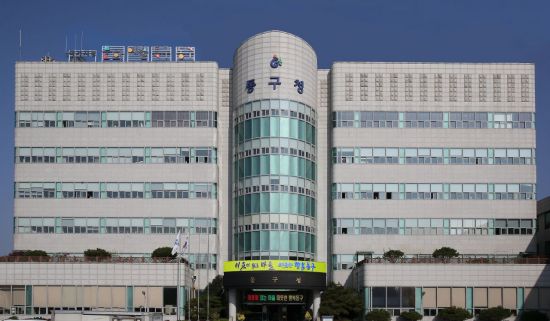
According to the district on the 26th, the Hometown Love Donation Program has been implemented nationwide since January 1 this year to expand finances, allowing individuals to donate up to 5 million KRW per year to regions other than their registered residence.
Donors receive a full tax deduction up to 100,000 KRW, and for amounts exceeding 100,000 KRW, a 16.5% tax credit along with 30% of the donation value in return gifts.
However, the fundraising performance remains undisclosed as Dong-gu maintains a non-disclosure policy citing concerns over overheated competition, making it difficult to ascertain the exact scale. Some experts say transparent disclosure of related information is essential for the successful establishment of the Hometown Love Donation Program.
They argue that the total amount raised should be disclosed, and plans for projects such as education and welfare should be actively communicated based on these funds. This would allow donors to have a clear sense of purpose and help cultivate a mature donation culture.
The original model of the Hometown Love Donation Program, Japan's Furusato Nozei system, allows donors to choose not only return gifts but also areas such as ▲community building and civic activities ▲sports and cultural promotion ▲health, medical care, and welfare ▲environment and sanitation, fostering a proactive sense of participation.
Some projects have been conducted in a 'crowdfunding' style, increasing the significance of the fund projects. By setting donation periods and allowing real-time tracking of achievement rates (%), as well as including the project's meaning and interviews with related figures, they have generated interest and empathy.
In 2020, Tsubame City in Niigata Prefecture set a target of approximately 19.7 billion KRW under the project name "Support 11 economic measures to protect hometown Tsubame against COVID-19," and the results exceeded the goal, achieving what is called a big hit.
Other successful cases include Okayama Prefecture's Kibichuo Town's "Rice Farmer Support Project," as well as projects in Daiki Town, Hokkaido, "Rocket Development Project of the Space Village," and Omihachiman City, Shiga Prefecture, "Protecting the Future of Omiu's Producing Farms," all of which surpassed their target amounts.
Jiho Park, a researcher at the Hope Institute, said, "Many citizens still do not know about the Hometown Love Donation Program," emphasizing, "It is necessary to disclose related information such as fundraising amounts from the early stages of policy implementation and to strategically appeal."
He added, "Going beyond simple promotion of achievements, sharing plans on how the funds will be used to elicit donors' empathy is the key to success."
Professor Jaewook Cho of Gyeongnam National University also analyzed, "The Love Thermometer rises by one degree for every 1% of the fundraising goal achieved. Citizens see this and develop a charitable spirit," adding, "Similarly, disclosing fundraising information of the Hometown Love Donation Program can induce active participation."
Contrary to these expert opinions, some view Dong-gu's concealment of performance as an intention to hide modest results.
In fact, Dong-gu's average monthly donation count is in the tens, with an average donation amount per person also in the tens of thousands of KRW, and the scale is reported to have recently declined.
Regarding this, researcher Park emphasized, "When performance is poor, it is necessary to shift perspectives to highlight the urgent need for donations," adding, "The program was introduced to respond to local extinction due to population decline and financial deterioration."
A district official explained, "According to current law, donation receipts and usage details must be disclosed by February next year," adding, "For now, we decided to keep it confidential due to concerns about triggering overheated competition."
However, the official stated, "We plan to promote a roadmap for fund projects based on the Hometown Love Donation Program through various channels including the media within the first half of this year."
© The Asia Business Daily(www.asiae.co.kr). All rights reserved.
![User Who Sold Erroneously Deposited Bitcoins to Repay Debt and Fund Entertainment... What Did the Supreme Court Decide in 2021? [Legal Issue Check]](https://cwcontent.asiae.co.kr/asiaresize/183/2026020910431234020_1770601391.png)















