The Chinese government has expressed strong dissatisfaction, calling it "reckless interference in internal affairs," in response to the joint statement by the foreign ministers of the Group of Seven (G7) expressing concerns over issues related to China, including Taiwan, Xinjiang, Tibet, Hong Kong, and nuclear capabilities.
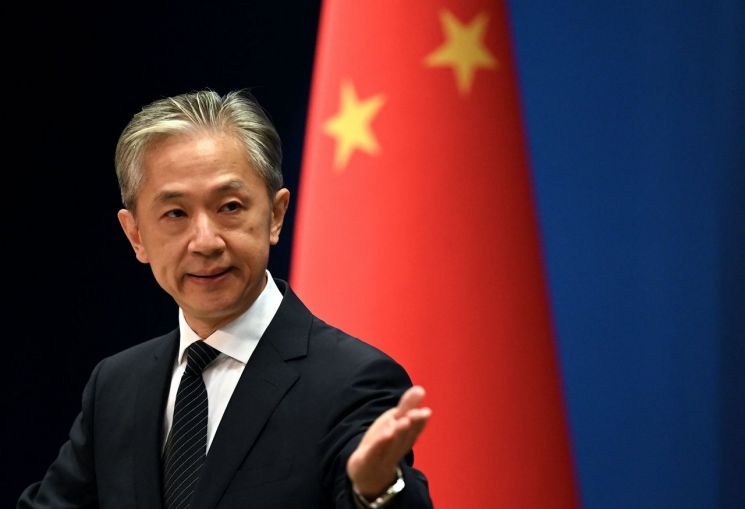
Wang Wenbin, spokesperson for the Chinese Ministry of Foreign Affairs, strongly protested the G7 joint statement at a regular briefing on the 18th, saying it "recklessly interferes in China's internal affairs, maliciously insults and smears China, ignoring China's firm stance and objective facts." Wang stated, "The 'One China' principle is the magic wand that safeguards peace and stability in the Taiwan Strait," adding, "To truly maintain peace in the Taiwan Strait, all acts of Taiwan independence must be clearly opposed and restrained."
He further rebutted the G7 statement's call for increased transparency regarding China's nuclear capabilities by mentioning that the United States and the United Kingdom, both G7 members, have agreed to provide Australia with nuclear-powered submarines, which he said "violates the purpose and intent of the Nuclear Non-Proliferation Treaty (NPT)." Regarding Japan, the G7 chair this year and the driving force behind the adoption of the joint statement, he criticized, "Japan has long claimed to be a victim of nuclear weapons and advocates for a 'world without nuclear weapons,' yet in reality enjoys the U.S. nuclear umbrella and opposes and obstructs the U.S. policy of no first use of nuclear weapons."
The joint statement adopted on the final day of the G7 Foreign Ministers' Meeting held in Japan from the 16th to the 18th reaffirmed "the importance of peace and stability in the Taiwan Strait and called for the peaceful resolution of cross-strait (China and Taiwan) issues." It also expressed "serious concern about the situations in the East China Sea and the South China Sea," emphasizing "strong opposition to any unilateral attempts to change the status quo by force or coercion."
Additionally, the statement "strongly calls for increased transparency regarding China's nuclear weapons policies, plans, and capabilities to promote stability," and raised concerns about "human rights violations in Xinjiang and Tibet," as well as "the continued erosion of Hong Kong's autonomy and freedoms," thereby addressing various issues related to China.
© The Asia Business Daily(www.asiae.co.kr). All rights reserved.

















