Filing Lawsuit Against the State for Failing to Meet Eligibility for the Senate Election
District Court Dismisses, Appeals Filed... High Court Verdict Expected Next Month
Analysis suggests that Ryuji Kimura, the suspect arrested for throwing an explosive device at an election speech venue attended by Japanese Prime Minister Fumio Kishida, committed the crime out of dissatisfaction with the election system. It is known that he previously attempted to run in the House of Councillors election but was unable to register due to age restrictions, which he deemed unfair and subsequently filed a lawsuit against the state.
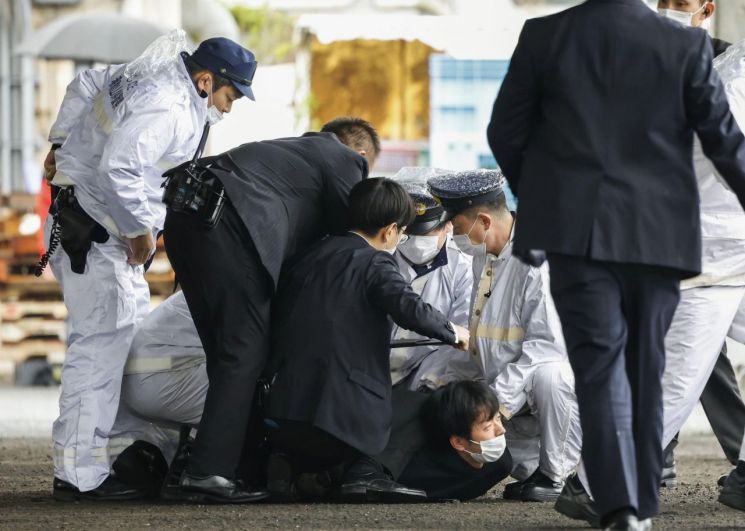
According to NHK on the 18th, Kimura tried to run in the House of Councillors election last June. Japan’s Public Offices Election Law stipulates that the eligibility age for the House of Councillors is 30 years or older, and candidates must deposit 3 million yen (29.4 million KRW). Currently 24 years old, Kimura did not meet either condition.
He claimed that the relevant provisions of the Public Offices Election Law were unconstitutional due to inequality and that he suffered mental damages from being unable to run, filing a lawsuit against the state seeking 100,000 yen (980,000 KRW) in damages. It is reported that he proceeded with the lawsuit personally without hiring a lawyer.
However, in November last year, the Kobe District Court dismissed the case. The court stated in its ruling, “The House of Councillors requires discernment based on extensive social experience, so having a higher age requirement than the House of Representatives is justified,” and “The deposit system is rational as it prevents the proliferation of candidates, which could hinder fair elections.”
This ruling stems from the characteristics of Japan’s bicameral system. The Japanese National Diet is divided into the House of Councillors and the House of Representatives, each holding separate elections. The House of Representatives, with a four-year term, grants candidacy rights from age 25, while the House of Councillors, with a six-year term, grants candidacy rights from age 30. Although the House of Representatives holds stronger powers in budget approval, prime minister designation, and legislation, the House of Councillors must consent in certain matters, thus serving as a check.
Additionally, the House of Representatives can be dissolved before the term ends, but the House of Councillors cannot. Therefore, the Japanese Constitution sets a higher candidacy age for the House of Councillors, which is tasked with reviewing political situations fairly and checking and correcting the House of Representatives.
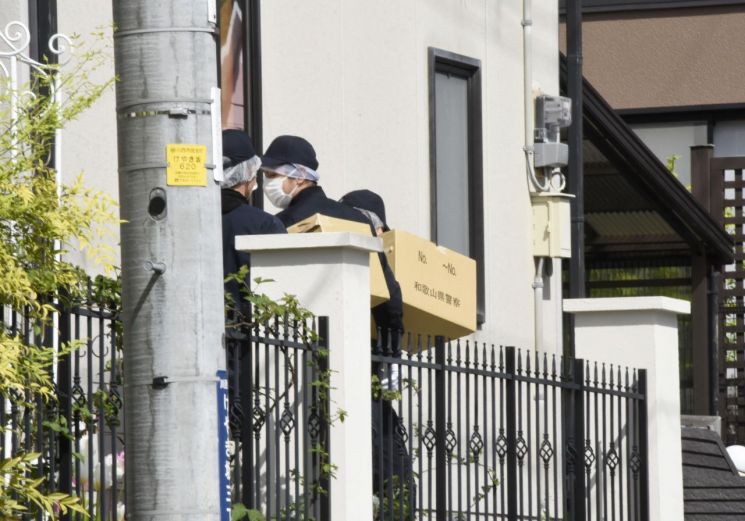
Meanwhile, Kimura appealed this ruling to the Osaka High Court in December last year, and NHK reported that a verdict is expected next month.
However, since Kimura continues to exercise his right to remain silent, investigative authorities stated they will conduct an investigation into the circumstances of the incident, including the connection with the lawsuit records. At the Wakayama City fish market, where the incident occurred, search operations related to the explosive device have been ongoing since the morning.
An investigator said, “Fragments appear to have flown about 40 meters from the scene.” Authorities are investigating the lethality of the explosive device based on witness statements that “nuts were scattered at the site where the explosive was thrown.”
© The Asia Business Daily(www.asiae.co.kr). All rights reserved.