As the government is in the final stages of reviewing whether to extend the fuel tax reduction measure scheduled to end later this month, there is growing support for maintaining the fuel tax cut to alleviate the burden on the public. Initially, the government was inclined to gradually normalize the fuel tax to recover the shortfall in tax revenue, but recent rising international oil prices have shifted the priority to stabilizing the unstable inflation.
According to the government and political circles on the 18th, the Ministry of Economy and Finance will announce the operation plan for the flexible fuel tax rate for the second half of the year this afternoon. The announcement is expected to extend the fuel tax reduction but reduce the rate of the cut.
Previously, the government had been reducing the fuel tax since November 2021 in response to international oil prices. Starting with a 20% reduction, the cut was expanded to 30% in May last year, and from July of the same year, the reduction rate was increased to 37% through a flexible tax rate. Considering the stable gasoline prices this year, the gasoline fuel tax reduction rate was reduced to 25%, while the 37% reduction rate was extended for diesel and liquefied petroleum gas (LPG) butane. The reduction effect is approximately 205 KRW and 212 KRW per liter (ℓ), respectively.
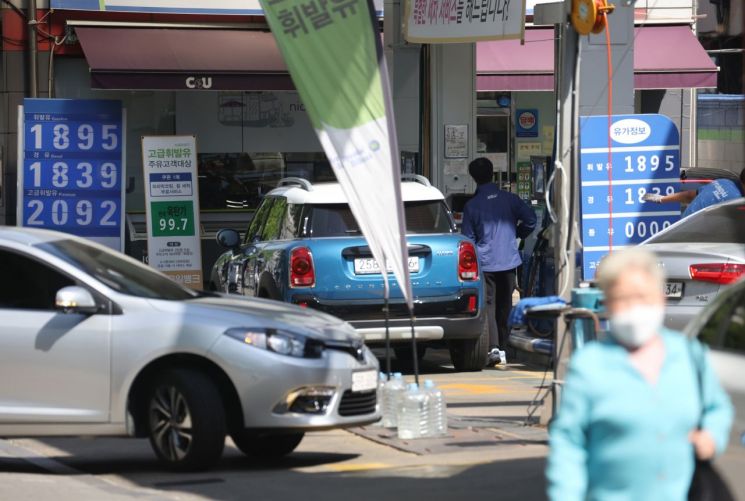
The government estimates that the related tax revenue lost due to the fuel tax reduction amounts to 5.5 trillion KRW. This is because the fuel tax cut directly impacts tax revenue reduction by compensating for fuel prices.
The decisive reason the government is seriously considering extending the fuel tax reduction despite the tax revenue shortfall is concern over the public's financial burden. According to the Korea National Oil Corporation's oil price information system, Opinet, the gasoline sales price in the second week of this month rose by 30.2 KRW from the previous week, reaching 1,631.1 KRW per liter. There is concern that if the fuel tax reduction ends as scheduled at the end of this month, gasoline prices could surge above 1,800 KRW per liter.
Park Dae-chul, the Policy Committee Chairman of the People Power Party, also urged at the Supreme Council meeting held at the National Assembly the day before, "Considering the trends in inflation and oil prices and the burden on the people, the government should consider extending the (fuel tax reduction) measure for the time being." In response, Deputy Prime Minister and Minister of Economy and Finance Choo Kyung-ho said at the National Assembly's Planning and Finance Committee plenary session that "we will consider it proactively from the perspective of alleviating the public's burden."
The problem is the growing concern over a worsening tax revenue shortfall crisis as a result. This year’s tax revenue situation is challenging due to large-scale tax cuts from last year’s tax law revisions. According to the Ministry of Economy and Finance, cumulative national tax revenue from January to February this year was 54.2 trillion KRW, a decrease of 15.7 trillion KRW compared to last year. Statistics Korea announced last month that consumer prices rose 4.2% year-on-year, but if the decline in fuel prices is not reflected, the inflation rate is estimated to reach the 5% range. This is because the contribution of petroleum prices to last month’s consumer price index was calculated at -0.76 percentage points.
© The Asia Business Daily(www.asiae.co.kr). All rights reserved.

















