The European Union (EU) has announced that some member states will temporarily ban imports of Ukrainian grain, citing the protection of their own agriculture, and has begun seeking solutions such as financial support. This move is aimed at preventing the unilateral actions of some member states from causing fractures in the EU's unified front in response to Russia's invasion of Ukraine.
A spokesperson for the European Commission stated at a regular briefing held in Brussels, Belgium, on the 17th (local time) that a second support package is being considered for member states affected by the surge in Ukrainian grain imports.
Earlier, on the 20th of last month, the European Commission proposed a plan to provide 56.3 million euros (approximately 81.2 billion KRW) from the EU budget to support farmers in Poland, Bulgaria, and Romania. About ten days later, with the consent of the 27 EU countries, the first support package was finalized.
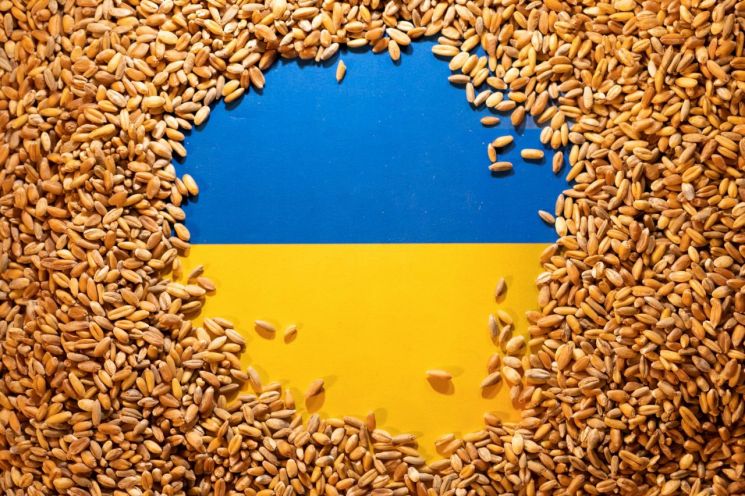
The reason the EU announced this policy is that market prices in various countries have plummeted due to the influx of Ukrainian agricultural products. Ukraine, one of the world's largest agricultural exporters before the Russia-Ukraine war, saw its main export routes through Black Sea ports effectively blocked following Russia's invasion in February last year. As a result, a significant portion of its agricultural exports was rerouted through neighboring EU member states such as Poland. In response, the EU supported Ukraine by exempting tariffs on Ukrainian grain.
However, contrary to the original intent, a large amount of agricultural products began to accumulate in the markets of Eastern and Central Europe. Furthermore, the European Commission proposed extending the tariff exemption, which was initially set to expire in June this year, for an additional year, which increased dissatisfaction among some member states.
In response, Poland, which had been at the forefront of military support for Ukraine, was the first to announce a temporary complete ban on imports of Ukrainian agricultural products until the end of June. Given that Poland is facing a general election this year, it appears the government judged that widespread farmer opposition could negatively impact the ruling party's approval ratings.
Subsequently, Hungary and Slovakia also announced temporary import bans. Bulgaria, which has continuously voiced concerns about farmer damages, is reportedly considering similar measures.
The European Commission warned, "Trade policy is an exclusive competence of the EU, and unilateral actions by individual member states cannot be tolerated."
However, the EU refrained from making specific remarks about the unilateral actions of member states, which could be interpreted as violations of EU regulations, as it believes a hardline response might provoke the affected countries.
The Commission spokesperson emphasized that countries like Poland "are doing their best to help Ukraine" and stated, "This issue is not about sanctions against countries violating regulations, but about finding solutions based on EU regulations that serve the interests of both Ukraine and the EU."
© The Asia Business Daily(www.asiae.co.kr). All rights reserved.
![Clutching a Stolen Dior Bag, Saying "I Hate Being Poor but Real"... The Grotesque Con of a "Human Knockoff" [Slate]](https://cwcontent.asiae.co.kr/asiaresize/183/2026021902243444107_1771435474.jpg)
















