From the 17th to May 2nd, all Seoul citizens can participate
Select part of the underground space at Noksapyeong Station and submit indoor garden design
Excellent works awarded the District Mayor’s Prize, reflected in detailed design and construction... Completion scheduled for September
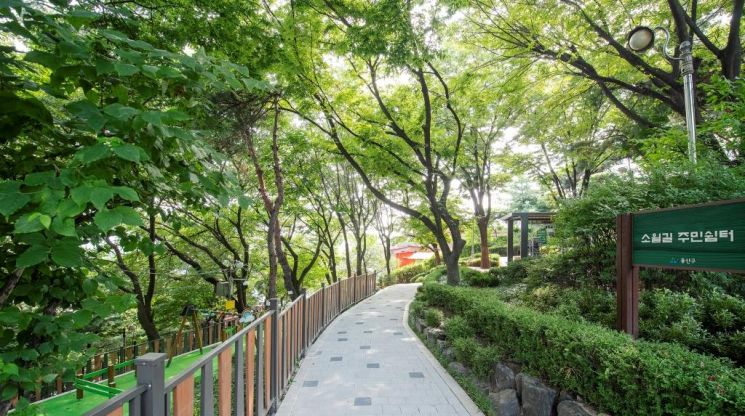
Noksapyeong Station is a popular spot for young people and foreign tourists visiting hot places such as Haebangchon, Itaewon, and Gyeongridan-gil, featuring a dome-shaped ceiling that allows excellent natural lighting down to the 4th basement floor.
Yongsan-gu is promoting the ‘Seoul Underground Forest Path Creation Contest’ to create green spaces at Noksapyeong Station.
The contest theme is ‘Everyday Green Path and Healing Indoor Garden’. The submission period is from April 17 to May 2 at 4 PM. Participants select part of the underground space inside Noksapyeong Station on Subway Line 6 and submit an indoor garden design.
Any Seoul citizen interested in landscaping, horticulture, gardening, architecture, urban planning, industrial design, etc., can participate. Teams of up to 5 members are allowed, with one representative appointed.
Applications can be submitted by visiting the Parks and Greenery Division on the 7th floor of Yongsan-gu Office or by email, including the application form, consent form for personal information collection and use, and a description of the work.
The district will announce the results on May 12 after evaluation by four experts in related fields. The top 1% (Grand Prize), 5% (Excellence), and 20% (Encouragement) of submissions will be selected and awarded the District Mayor’s Prize.
Detailed information can be found in the announcement posted on the district’s official website under Notices/Announcements.
The district plans to finalize the detailed design reflecting the excellent designs by May, issue construction orders in June, start construction in July, and complete the indoor garden at Noksapyeong Station by September.
Kim Seonsu, Acting Mayor of Yongsan-gu, said, “Creating new green spaces in the city is like a treasure hunt. We hope many citizens participate in this contest designed to allow them to create green-friendly spaces using the areas discovered by the district.”
The Seoul Underground Forest Path project identifies urban green space sites and promotes wall greening, rest area creation, lighting, and irrigation facility installation. Last year, the district secured a budget of 500 million KRW (city funds) for indoor garden creation sites at Samgakji and Noksapyeong stations.
Gwangjin-gu conducts ‘Urban Clearing’ along Cheonho-daero… Joint inspection by district and neighborhood offices
On the 13th, from Achasan Station Exit 1 to Gunja Station Intersection… to improve street environment
Checking unnecessary facilities and cleanliness on pedestrian paths, related departments designated on site
Reconsidering roadside green belts, plans to widen sidewalks and create rest areas for residents’ convenience
Gwangjin-gu (Mayor Kim Kyungho) conducted a joint inspection on the 13th focusing on urban clearing along Cheonho-daero.
Since last year, Gwangjin-gu has been focusing on ‘Urban Clearing,’ one of the key projects of the 8th local government. The project removes elements that cause inconvenience or threaten pedestrian safety, repairs old facilities, improves walking environments, and enhances urban aesthetics.
This joint inspection targeted the area along Cheonho-daero from Achasan Station Exit 1 through Gunja Station Intersection to the rear gate of Children’s Grand Park. Given the wide scope of street environment improvement, six related departments including Street Scenery, Parks and Greenery, and Cleaning, along with neighborhood offices of Junggok 1, 2, and 4-dong, Neungdong, and Gunja-dong resident centers, participated in the inspection.
First, the Deputy Mayor and the joint inspection team checked unnecessary facilities on pedestrian paths and cleanliness along the main road. They directly examined whether obstacles such as ▲illegal street storage ▲bicycle racks ▲movable facilities were placed on sidewalks, and discussed the necessity and replacement of old or deformed ▲traffic signs ▲fences ▲pavement blocks.
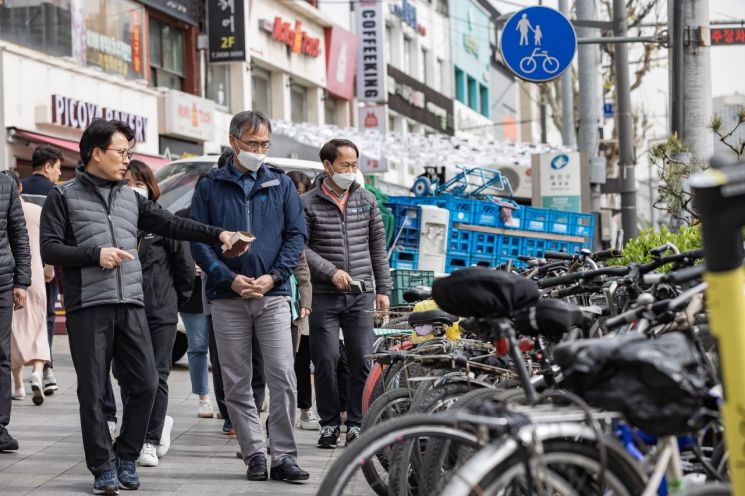
If any issues requiring immediate action were found on site, the responsible department and neighborhood office were designated immediately. These designated offices will submit action plans and results later and conduct continuous monitoring.
Next, they reviewed the roadside green belts created for urban greening. Some green belts caused inconvenience to pedestrians or were misused as illegal dumping sites, failing to effectively reduce fine dust or block road pollutants.
The district and neighborhood offices plan to remove unnecessary green belts, widen sidewalks to create pedestrian-friendly streets, and establish rest areas for vulnerable pedestrians and residents where green belts are removed. Remaining green belts will be simplified in species and maintained at a consistent height to improve urban aesthetics.
A resident living in Neungdong commented while watching the joint inspection, “The sidewalks here are narrow, so it would be good if they could be expanded,” expressing support for the ‘Urban Clearing’ project.
Kim Kyungho, Mayor of Gwangjin-gu, said, “Although we have been continuously promoting the ‘Urban Clearing’ project since last year, we still feel many shortcomings. Since urban cleanliness and safety are directly related to residents’ lives, we will continue to maintain and clear to make Gwangjin-gu a better place to live.”
Since July last year, Gwangjin-gu has steadily promoted the ‘Urban Clearing’ project, starting with creating ‘streets without banners,’ followed by ▲street flowerpot maintenance ▲illegal street storage management ▲removal of pedestrian obstacles ▲undergrounding of overhead lines ▲rapid collection of illegally dumped trash ▲alley cleaning by neighborhood, etc.
Jungnang-gu holds a farming commencement ritual on the 12th to mark the start of farming and pray for a good harvest... Jungnang Happiness Farms 2 and 3 open on the 13th
Jungnang-gu (Mayor Ryu Kyunggi) held a farming commencement ritual on the 12th at Jungnang Happiness Farm 1 to mark the start of the year’s farming and pray for a bountiful harvest.
The event also included seedling distribution and garden management education for farm plot lessees.
Hosted by the Jungnang Urban Agriculture Cooperative, the event was attended by about 250 people including Mayor Ryu Kyunggi, cooperative members, farm plot lessees, children, and volunteers. The program included seedling distribution, garden management education, opening ceremony with proclamation and reading of a ritual text, seedling planting, and smart farm strawberry experience.
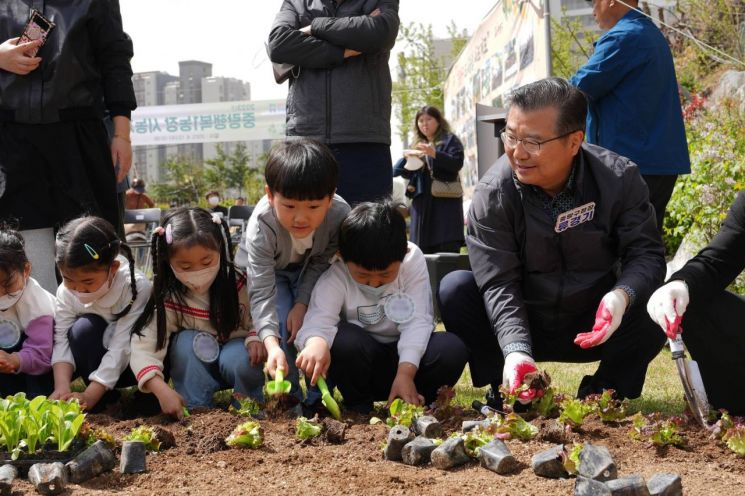
On the 13th, Jungnang Happiness Farms 2 and 3 will open, accompanied by garden management education.
Mayor Ryu Kyunggi said, “I hope that children growing plants in the garden plots will learn about the natural environment and that families and neighbors will grow closer. We will continue to do our best to provide administrative and financial support so that more residents can heal through urban agriculture.”
Since opening Jungnang Happiness Farm 1 (Sinnae 1) in 2019, Jungnang-gu currently operates four Happiness Farms and is planning to expand urban agriculture by creating Jungnang Happiness Farm 5 and the Jungnang Happiness Urban Agriculture Center, scheduled to open on May 4.
© The Asia Business Daily(www.asiae.co.kr). All rights reserved.

![Clutching a Stolen Dior Bag, Saying "I Hate Being Poor but Real"... The Grotesque Con of a "Human Knockoff" [Slate]](https://cwcontent.asiae.co.kr/asiaresize/183/2026021902243444107_1771435474.jpg)

















