Energy Demand Reduction Must Be Induced by Normalizing Rates
Trade Balance Worsens Due to Hesitation, Concerns Over Lawsuits from Overseas Investors
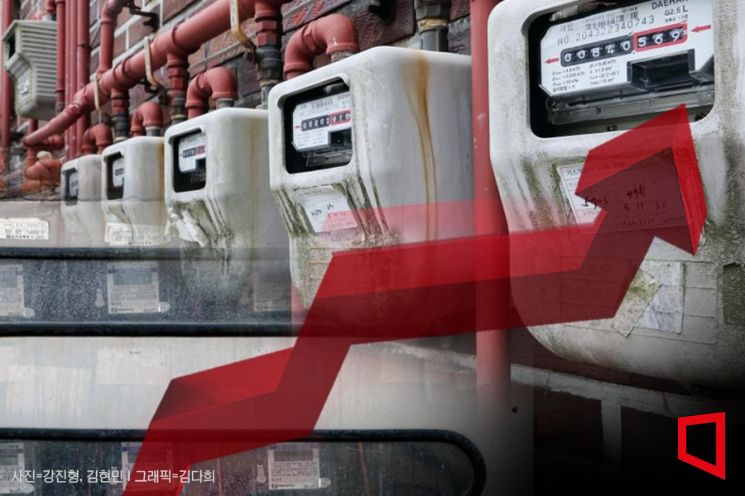
The electricity rate increase for the second quarter of this year, expected to be announced as early as next week, is projected to be around 5 won. According to industry insiders, the government and ruling party plan to raise electricity rates by about 5 won per kWh, with a detailed announcement to be made once additional self-rescue measures from Korea Electric Power Corporation (KEPCO) and Korea Gas Corporation are finalized.
The timing for reflecting the increase is likely to be immediately after the announcement. Electricity rates are usually adjusted quarterly, and since the standard fuel cost, one of the components that make up the rate unit price, will be raised, it means the new rates could be applied starting the day after the announcement.
However, criticism that the rate hike is insufficient seems inevitable. Since energy imports are cited as the main cause of the trade deficit, a slight increase is unlikely to be a solution. After the Korea Customs Service released export-import statistics on the 11th, Professor Kang In-soo of Sookmyung Women's University’s Department of Economics expressed concern in a phone interview with Asia Economy, saying, "With no momentum for a significant increase in export volume, if international energy prices rise sharply, the trade balance will worsen."
Last September, Chang Young-jin, the first vice minister of the Ministry of Trade, Industry and Energy, mentioned at a press briefing that "raising electricity rates by 30 won per kWh would improve the trade balance by 2.5 billion dollars over three months." Experts agree that to improve the trade balance and cover deficits of energy public enterprises, market price normalization is necessary. At a seminar titled ‘Energy War, What Should Be Done in the Next Three Years’ held at the National Assembly on the 12th, Lee Yoo-soo, head of the Energy and Carbon Neutrality Research Division at the Korea Energy Economics Institute, added, "Even if the Russia-Ukraine war ends, volatility in overseas fossil fuel prices is expected to remain high. Domestic energy supply and demand will likely be influenced by external energy market changes, and since carbon neutrality must also be pursued, the two most important tasks are normalizing energy market prices and stable operation of the power grid."
Experts also say that raising electricity and gas rates can reduce consumption itself. According to the Ministry of Trade, Industry and Energy, despite the surge in international energy prices, energy consumption in Korea’s residential and commercial sectors increased by 1.9% and 4.4% respectively in 2022 compared to the previous year. However, early this year, city gas usage dropped sharply, with winter sales of residential city gas nationwide decreasing by 2.7% (120,000 tons) compared to the same period last year. Professor Yoo Seung-hoon of Seoul National University of Science and Technology explained, "This is the result of people voluntarily reducing usage after the heating bill shock issue in January." Although the government has been running campaigns such as the 'Energy Diet 10' and the 'Reducing Household Electricity Consumption by 1 kWh per Day' public campaign since last year, the most effective way to promote energy saving ultimately is through rate hikes. Professor Yoo noted, "Energy demand reductions in European countries are also due to dramatically increased prices," adding, "In Germany, heating fees have risen up to eightfold."
Moreover, since KEPCO and Korea Gas Corporation are not state-owned enterprises, failing to reach normal rates could provoke shareholder backlash. Korea Gas Corporation decided not to pay dividends for the first time since its listing last year as unpaid receivables approached 9 trillion won, facing protests from minority shareholders. KEPCO, listed on the New York Stock Exchange (NYSE), faces concerns about being embroiled in investor-state dispute settlement (ISD) lawsuits by foreign institutional investors.
In France, losses from the electricity price cap led to the nationalization of the power company EDF. Originally, the government held 84% of EDF shares, but after EDF sued the government for compensation of 11 trillion won in losses due to the price cap, the French government gradually acquired the remaining shares. As of February, the French government owns about 96% of EDF shares.
Han Mu-kyung, a member of the National Assembly and the People Power Party’s ranking member of the Industry, Trade, Energy, Small and Medium Enterprises Committee, who hosted the seminar, said, "Since most countries that import energy have already paid the price, and we import all our natural gas, we cannot avoid the huge trend of rate hikes. It is now necessary to partially realize the factors behind energy rate increases."
© The Asia Business Daily(www.asiae.co.kr). All rights reserved.


















