Energy Exports Plummet
Ruble Also Weakens
Bloomberg reported on the 12th (local time) that Russia's current account surplus has sharply declined as its "lifeline" dries up due to Western crude oil export sanctions.
On the same day, the Central Bank of Russia announced that Russia's current account surplus for the first quarter of this year was $18.6 billion, down $51 billion compared to the same period last year. This is the smallest first-quarter current account surplus since 2016.
The significant impact came from reduced oil and gas exports to Europe due to international economic sanctions. The Central Bank of Russia explained, "The trade balance decreased mainly because export revenues fell due to (energy) price declines." Dollar income earned overseas has decreased, and with worsening fiscal conditions, the value of the ruble is also falling. As a result, the Russian government and companies are in a situation where they must seek new energy export markets to replace Europe.
The Central Bank of Russia expects the annual current account surplus this year to be $66 billion, a significant decrease compared to last year's $227.4 billion. This is less than one-third of last year's level.
The West has been strengthening crude oil sanctions against Russia, which invaded Ukraine last year. The United States and the European Union (EU) banned imports of Russian crude oil immediately after the war began, and in December last year, the Group of Seven (G7) countries introduced a price cap on crude oil. Due to these sanctions, Russian Urals crude oil is trading at prices much lower than North Sea Brent crude on the market. Having lost traditional sales channels, Russia is focusing on finding alternative markets in Europe such as India and China. As a result, Russia has surpassed Saudi Arabia to become China's largest crude oil supplier this year.
Alexander Isakov, a Russian economist at Bloomberg, said, "(Imports) have fully recovered to last year's level, but the money (the government) earns is insufficient due to sanctions on energy exports to Russia," adding, "The reduction in the current account surplus leads to currency depreciation, and this ruble weakness could worsen consumer sentiment, which has been recovering recently."
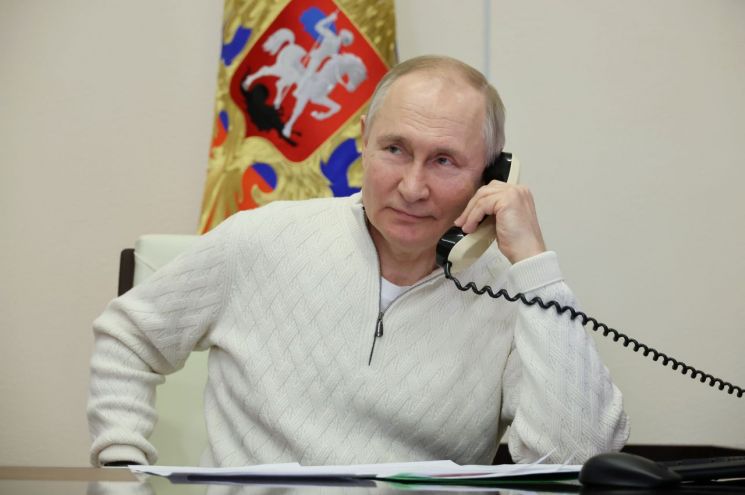
Moreover, with the prolonged Ukraine war, Russia has increased its defense spending, further worsening its fiscal condition. Amid Western sanctions tightening the noose around the Russian economy, President Vladimir Putin is striving to ease public anxiety about the domestic economy. In a TV address on the 11th, President Putin stated, "Russia's energy income (earnings) could turn around by the end of the second quarter this year," and explained, "Oil price increases will further boost oil and gas revenues."
If the deterioration of Russia's current account continues, the ruble's value is expected to keep falling. The ruble traded at around 73 rubles per dollar at the end of last year but was trading around 82 rubles per dollar as of the 12th, a decline of more than 12%. Bloomberg pointed out that this is the largest drop among major emerging market currencies.
Sophia Donets, an economist at Renaissance Capital, predicted, "Russia's current account surplus in the second quarter of this year will decrease further compared to the first quarter," and added, "The volatility of the ruble's value will continue going forward."
© The Asia Business Daily(www.asiae.co.kr). All rights reserved.
![User Who Sold Erroneously Deposited Bitcoins to Repay Debt and Fund Entertainment... What Did the Supreme Court Decide in 2021? [Legal Issue Check]](https://cwcontent.asiae.co.kr/asiaresize/183/2026020910431234020_1770601391.png)
















