Jeju-do Health and Environment Research Institute Analyzes Yellow Dust Days in Jeju Region from 2013 to 2023
Fine Dust Concentration During Yellow Dust Periods Increases Up to 5 Times Compared to Normal... Urges Wearing Masks
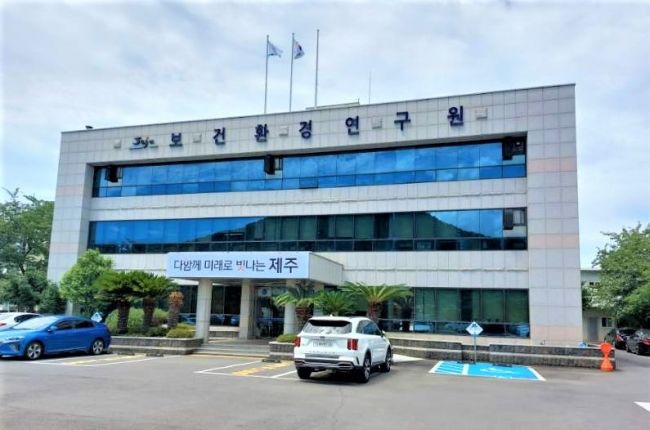
The Jeju Special Self-Governing Province Health and Environment Research Institute (Director Hyun Geun-tak) announced on the 12th that an analysis of the number of yellow dust days in the Jeju area over the past 10 years since 2013 showed an average of 6 yellow dust days per year.
The main sources of yellow dust affecting the Jeju area are the Gobi Desert, Inner Mongolian Plateau, and Northeast China region, accounting for more than 80% of the total yellow dust occurrences.
The three yellow dust events observed from January to the end of March this year were also found to have originated from these regions.
Over the past 10 years, the nationwide average number of yellow dust observation days was 14, with the highest number being 22 days in both 2015 and 2021.
Jeju recorded the highest number of yellow dust days in 2021, with 13 days observed.
The period when yellow dust mainly occurs is from March to May, with 38 days (59%) out of the total 64 yellow dust observation days in Jeju over 10 years occurring during this period. No yellow dust was observed from July to September.
Yellow dust mainly causes an increase in fine dust (PM-10) concentration. During yellow dust periods over the past 10 years, the highest daily average concentration of fine dust (PM-10) was 158㎍/㎥ in 2020-21, about five times higher than the annual average concentration of 32㎍/㎥ in the same year.
During the yellow dust period (3 days) observed this year, the fine dust (PM-10) concentration was 78㎍/㎥, approximately twice the average concentration of 41㎍/㎥.
Since the implementation of the air pollution warning system in 2015, advisories for fine dust (PM-10) during yellow dust periods were issued on 33 out of 50 observed days (66%), and all three advisories issued this year occurred during yellow dust periods.
Hyun Geun-tak, Director of the Jeju Health and Environment Research Institute, stated, “As yellow dust is increasing due to desertification in the Mongolian region, we will continuously monitor air quality to protect the health of residents.”
He added, “When an air pollution warning is issued due to high concentrations of air pollution, people should refrain from outdoor activities as much as possible, and if going outside is unavoidable, they must wear masks to protect their personal health.”
Jeju = Asia Economy Honam Reporting Headquarters, Reporter Park Chang-won baekok@asiae.co.kr
© The Asia Business Daily(www.asiae.co.kr). All rights reserved.
![Clutching a Stolen Dior Bag, Saying "I Hate Being Poor but Real"... The Grotesque Con of a "Human Knockoff" [Slate]](https://cwcontent.asiae.co.kr/asiaresize/183/2026021902243444107_1771435474.jpg)
















