Statistics Korea, March Employment Trends
Last Month Employment Increased by 469,000
Last month, the number of employed people increased by nearly 470,000, marking the largest growth in 10 months. Despite sluggish exports, the increase in outdoor activities led to a larger rise in employment, particularly in face-to-face industries, according to Statistics Korea.
According to the March employment trends released by Statistics Korea on the 12th, the number of employed persons aged 15 and over reached 28,223,000 last month, up 469,000 (1.7%) compared to the same month last year. The growth rate had been slowing for nine consecutive months since peaking at 841,000 in June last year, but rebounded after 10 months.
The employment rate for those aged 15 to 64 (OECD comparison standard) also rose by 0.9 percentage points to 68.7%. This is the highest figure recorded for March since the related statistics began.
The expansion in employment growth in March was driven by face-to-face sectors. Employment in accommodation and food services increased by 177,000 (8.5%) from 2,087,000 in March last year to 2,264,000 this March. Employment also rose in health and social welfare services (186,000; 6.9%) and information and communication (65,000; 6.8%) compared to the same period last year. Notably, among non-wage workers, self-employed persons with employees increased by 81,000 (6.0%), and self-employed persons without employees also rose by 10,000 (0.2%) year-on-year. Additionally, with increases in employment in accommodation, food services, and agriculture, forestry, and fisheries, daily workers also grew by 11,000 (1.0%).
Seo Woon-ju, Director of the Social Statistics Bureau at Statistics Korea, explained, "Employment growth continues mainly in health and welfare and accommodation and food services. Despite the economic slowdown, the increase in outdoor activities and care demand has expanded the employment growth compared to the previous month."
Earlier, retail sales in February rose by 5.3% month-on-month due to large-scale discount events, with increases in sales of non-durable goods such as food and beverages, as well as passenger cars and clothing.
However, due to semiconductor sluggishness and continued export decline, manufacturing employment decreased for the third consecutive month. Employment in manufacturing fell by 49,000 from 4,512,000 in March last year to 4,463,000. Employment in wholesale and retail trade (-66,000; -2.0%) and construction (-20,000; -1.0%) also continued to decline.
The youth employment market remained challenging. Looking at employment changes by age group compared to the same month last year, employment increased by 547,000 among those aged 60 and over, 50,000 in their 50s, and 24,000 in their 30s, but decreased by 63,000 in their 40s and especially by 86,000 in their 20s. Employment among youth (aged 15?29) fell by 89,000, causing the employment rate to drop by 0.1 percentage points.
Director Seo said, "As seen in March, the recovery of daily life can have a positive impact, and with institutional support for the increase in foreign tourists and measures to revitalize domestic demand, employment growth centered on face-to-face industries is expected. However, since there are mixed factors of slowdown mainly in manufacturing and wholesale and retail sectors affected by inflation and export conditions, uncertainties remain."
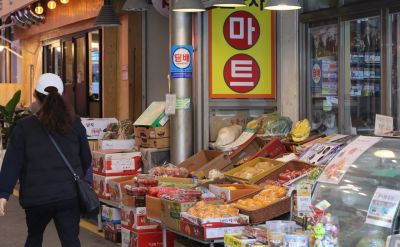 On the 4th, Statistics Korea reported that the Consumer Price Index in March rose by 4.2% compared to the same month last year, marking the smallest increase in one year. Consumer prices remained in the 4% range for two consecutive months following February's 4.8% increase, raising expectations of disinflation as the rate of increase slows. The photo shows a traditional market in Seoul. Photo by Dongju Yoon doso7@
© The Asia Business Daily(www.asiae.co.kr). All rights reserved.

















