A domestic surgical treatment guideline has been established for 'pancreatic cancer,' a representative cancer type with an extremely poor prognosis.
The Pancreatic Cancer Surgery Guideline Development Committee, including Professor Seung Eun Lee of the Department of Hepatobiliary and Pancreatic Surgery at Chung-Ang University Hospital, announced on the 12th that they published a guideline paper titled "Pancreatic Cancer Surgery Clinical Practice Guideline: Evidence-Based Surgical Approaches" in the "Korean Journal of Hepatobiliary Pancreatic Surgery."
Pancreatic cancer occurs about 7,000 times annually in Korea, ranking as the eighth most common cancer, and is known for its very poor prognosis, ranking fifth in cancer-related mortality. According to the 2020 annual report of the Korea Central Cancer Registry, the 5-year relative survival rate for pancreatic cancer is 12.2%, the lowest among the surveyed cancer types.
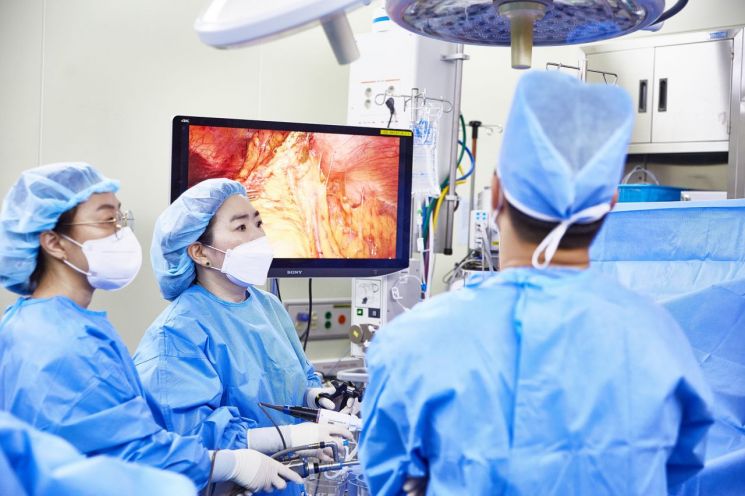 Professor Lee Seung-eun of the Department of Hepatobiliary and Pancreatic Surgery at Chung-Ang University Hospital is performing laparoscopic surgery for pancreatic cancer.
 [Photo by Chung-Ang University Hospital]
However, until now, there has been no appropriate surgical treatment guideline for pancreatic cancer. Accordingly, the Guideline Development Committee, composed of 10 top domestic experts in pancreatic cancer surgery and members of the Korean Pancreatic Surgery Society, developed the pancreatic cancer surgical treatment guideline by synthesizing domestic and international research results known to date and integrating expert opinions.
This guideline contains 15 recommendations addressing 13 questions that every pancreatic cancer surgeon faces. It features detailed standard recommendations depending on conditions, including diagnostic examination methods for pancreatic cancer, staging, and surgical methods according to the site of occurrence.
In particular, while preparing this guideline, the research team conducted a survey on surgical method preferences among patients scheduled for pancreatic cancer surgery. When asked which surgical method they would choose if given the option, 40% selected open surgery, and 60% chose laparoscopic surgery, indicating a higher preference for laparoscopic surgery.
However, the guideline recommends that laparoscopic surgery be selectively performed under the judgment of experienced surgeons, as there is currently no research on long-term oncological outcomes comparing laparoscopic and open surgery for pancreatic cancer based on the synthesized research results to date.
Professor Seung Eun Lee stated, "With the development of this standard surgical treatment guideline for pancreatic cancer, we expect the standardization of surgical treatment and improvement of surgical outcomes in Korea, which will help in treating actual pancreatic cancer patients." He added, "We will do our best to continuously reflect new clinical evidence on surgical methods in the guideline to further advance the standardization of pancreatic cancer surgical treatment and contribute to extending the lives and improving the quality of life of pancreatic cancer patients."
© The Asia Business Daily(www.asiae.co.kr). All rights reserved.

















