Gangseo-gu, Seoul, Cultural Groundbreaking Ceremony with Residents on the 12th Successfully Held with Over 400 Attendees Including Seoul Mayor Oh Se-hoon and Residents
Integrated New Government Building Centered on Gangseo Residents for Administration, Living, and Culture, Targeted for Completion in 2026
"The Gangseo-gu integrated new government building will be the beginning of the 100-year Gangseo Renaissance and an open building communicating with residents, becoming a proud space centered on the residents."
Gangseo-gu, Seoul (Mayor Kim Tae-woo) held a 'Cultural Groundbreaking Ceremony with Residents' on the 12th at the site of the Magok-dong integrated new government building, attended by about 400 people including Mayor Kim Tae-woo, Seoul Mayor Oh Se-hoon, local members of the National Assembly, party committee chairpersons, city and district council members, and residents.
The event proceeded in the order of ▲opening performance ▲declaration of opening ▲introduction of guests ▲promotional video screening ▲celebratory performance ▲commemorative speech ▲safety and groundbreaking performance.
In his commemorative speech, Mayor Kim Tae-woo expressed that this was a precious occasion to directly communicate with many who have awaited the construction of the integrated new government building and introduced the project’s progress and visible achievements.
The 'Daebuk Performance' by the Cheongmyeong Theater Company, a children's musical congratulatory performance, and a block stacking safety performance, all performed in front of numerous residents, enriched the 'Cultural Groundbreaking Ceremony with Residents'.
 Kim Tae-woo, Mayor of Gangseo-gu, Seoul (third from the left), and Oh Se-hoon, Mayor of Seoul (fourth from the left), are attending the 'Cultural Groundbreaking Ceremony with Residents' held on the afternoon of the 12th at the new city hall site in Magok-dong, posing for a commemorative photo after the groundbreaking performance.
The integrated new government building will be located in the Magok district, the transportation hub of southwestern Seoul. It will be built on a 20,244㎡ site at 745-3 Magok-dong, with two basement floors and eight above-ground floors, totaling a gross floor area of 59,377㎡, aiming for completion in 2026.
Once completed, the integrated new government building, which will house the district office, district council, and health center in one place for one-stop administration, is expected to create synergy with the Magok MICE complex, LG Arts Center, and Seoul Botanic Park, becoming the central axis of Gangseo’s development as a representative cultural and future city of Seoul.
Mayor Kim Tae-woo said, "Since my inauguration, due to rising prices, the project cost increased by over 50 billion KRW, causing delays, but by adopting a fast-track method, we reduced costs and shortened the groundbreaking by more than 10 months. The integrated new government building will include cultural rest areas, open plazas, and kids cafes for families to relax, creating a Gangseo full of culture and arts."
He added, "By working tirelessly day and night like a field officer, we achieved visible results such as the long-awaited 'Banghwa-dong depot and Line 5 vehicle base relocation agreement' after 27 years. The Gangseo Renaissance’s beginning, the Gangseo-gu integrated new government building, will raise the pride of Gangseo residents and the value of Gangseo-gu, becoming the first step toward a city where everyone wants to live."
After the groundbreaking ceremony, Mayor Kim Tae-woo and Mayor Oh Se-hoon, who visited Gangseo-gu Office, took selfies with staff in a casual atmosphere, encouraged employees working in the civil service office, and discussed local issues.
Eunpyeong-gu, 16 Consecutive Years as Seoul’s Top Autonomous District in Red Cross Membership Fee Collection
Achieved 26.1% Payment Rate Despite Poor Financial Independence
Focused Fundraising from December Last Year to March This Year
Mayor Kim Mi-kyung: "A Great Achievement Thanks to Residents’ Warm Interest in Living Together with Neighbors"
Eunpyeong-gu (Mayor Kim Mi-kyung) announced that it achieved a 26.1% payment rate in the 2023 Red Cross membership fee collection, maintaining its position as the top autonomous district in Seoul for 16 consecutive years.
This figure significantly exceeds the Seoul city average collection rate of 18.4%, with Eunpyeong-gu ranking first among Seoul’s autonomous districts in both overall payment rate and head-of-household payment rate.
The 2023 Red Cross membership fee collection was intensively conducted from December last year to March this year. Eunpyeong-gu collected a total of 238,421,000 KRW, achieving a 26.1% payment rate. Based on head-of-household criteria, a total of 206,950,000 KRW was collected, recording a payment rate of 51.4%, more than half.
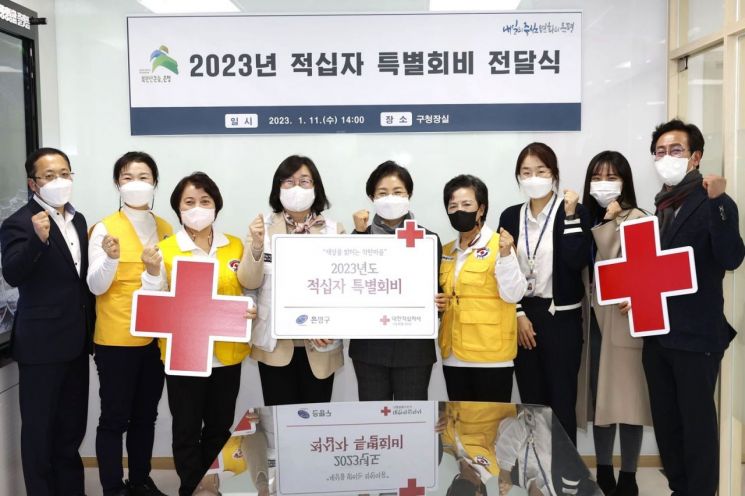
Despite a continuous decline in participation in Red Cross membership fee collection recently, Eunpyeong-gu was able to achieve a high collection rate this year thanks to the active interest of its residents. This is especially meaningful considering the district ranks 23rd out of 25 Seoul autonomous districts in financial independence.
The funds collected through voluntary donations from residents are used for disaster relief from wildfires and typhoons, support for vulnerable groups, national health projects, and humanitarian activities to protect the lives and safety of the people.
Red Cross membership fees can be paid via the Red Cross website, mobile phones, ARS, and other methods. Donations to the Red Cross membership fee are eligible for tax deductions up to 100% of income during personal year-end tax settlements.
Mayor Kim Mi-kyung of Eunpyeong-gu said, "This achievement was made possible by the warm interest of residents who want to live together with neighbors in need," and added, "Year-round fundraising continues until the end of November, so we ask for active participation."
Dongdaemun-gu Launches ‘Doodream Day’ to Address Welfare Blind Spots
Dongdaemun Neighborhood Doodream Activity Group Began Full-Scale Activities with ‘Doodream Day’ on the 5th
‘Doodream Day’ Operated on the First Wednesday of Every Month... Continuous Reporting of At-Risk Households via District Welfare Nuri Talk
"I will continue to participate actively in activities with affection and a sense of mission as a member of the local community to help neighbors facing difficulties."
This was the sentiment shared by a member of the Dongdaemun Neighborhood Doodream Activity Group after completing the ‘Doodream Day’ activities on the 5th.
Dongdaemun-gu (Mayor Lee Pil-hyung) announced that the Dongdaemun Neighborhood Doodream (do dream) Activity Group, launched in March to identify welfare blind spots, began full-scale activities by operating ‘Doodream Day’ on the 5th.
‘Doodream Day,’ held on the first Wednesday of every month, involves the Dongdaemun Neighborhood Doodream Activity Group patrolling residential areas to identify at-risk households.
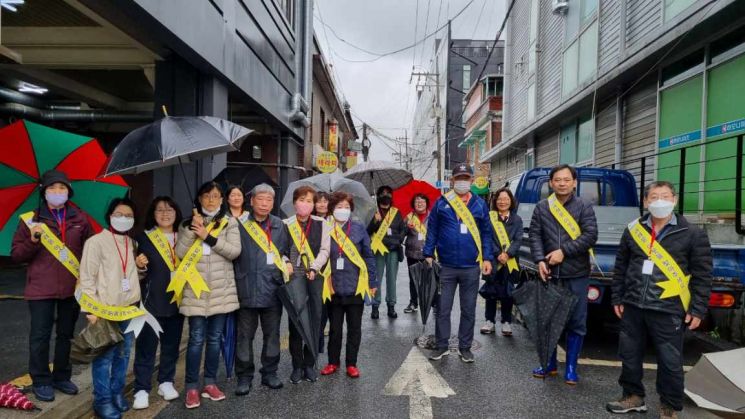
On ‘Doodream Day,’ the activity group conducts patrols, carefully checking for accumulated overdue notices and flyers in mailboxes and doors, or households with notices of electricity or gas disconnection, and reports detected crisis situations to the local community service center for prompt response.
Additionally, the group continuously reports at-risk households found during regular patrols through the district’s Welfare Nuri Talk (KakaoTalk) system.
The first ‘Doodream Day’ held on the 5th also included promotional activities targeting densely populated areas such as subway station surroundings and daily life-related businesses, tailored to each neighborhood’s situation.
Mayor Lee Pil-hyung of Dongdaemun-gu said, "We expect the Dongdaemun Neighborhood Doodream Activity Group to be a great help in proactively identifying at-risk households that the welfare blind spot detection system may have missed," and added, "We will continue to carefully monitor every corner of the district to create a warm Dongdaemun-gu where no neighbors are left behind."
Dongdaemun-gu organized the Dongdaemun Neighborhood Doodream Activity Group with 351 members, including local welfare communities and neighborhood leaders who know the neighborhood well, and conducted capacity-building training for them before starting full-scale activities at the end of March.
Yeongdeungpo-gu Recruiting 20 Households for ‘Green Parking Project’ to Create Parking Lots by Removing Fences
Recruitment on a First-Come, First-Served Basis for 20 Single and Multi-Family Households from March to November
KRW 9 Million Support per Parking Space per Household... Installation of Security Cameras Inside and Outside Homes
High Resident Satisfaction by Resolving Parking Shortages, Improving Residential Environment, and Sharing Parking Spaces
Yeongdeungpo-gu (Mayor Choi Ho-kwon) announced that it has been promoting the ‘2023 Green Parking Project’ since March, which secures insufficient parking spaces in residential areas by removing fences and gates of houses.
The ‘Green Parking Project’ is a city-district cooperative project initiated in 2004, with a total of 1,795 households participating so far, securing 3,064 parking spaces. It has been highly evaluated for resolving parking shortages and improving residential environments in a short time and at low cost. It also established a parking space sharing system among neighbors and enhanced openness in narrow alleys, increasing resident satisfaction.
This year, the district is investing 180 million KRW to implement the Green Parking Project for 20 households (20 parking spaces) including single-family, multi-family, and multiplex houses. Each household receives 9 million KRW per parking space. An additional 1.5 million KRW is provided for each extra parking space, up to a maximum of 28 million KRW. Furthermore, up to 300,000 KRW per IoT sensor installation is additionally supported, and in cases of difficult construction, support can increase by up to 30%.
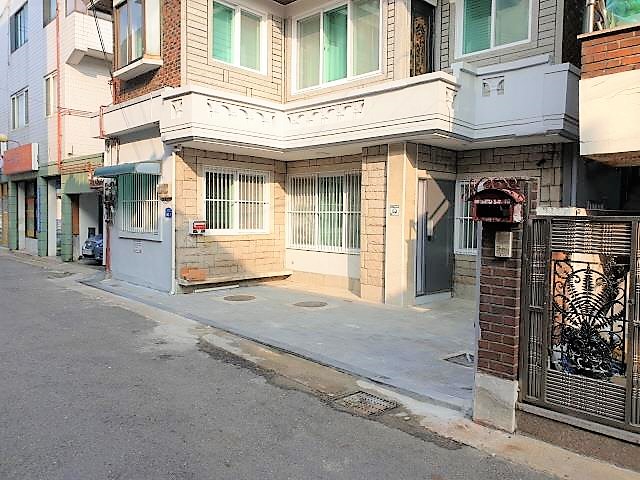
The district installs unmanned self-security cameras inside and outside Green Parking homes to enhance security against outsiders. The internal cameras automatically notify homeowners of external intrusions. When an intruder is detected, a siren sounds, photos are taken, and images are sent to the homeowner’s phone via text message. External cameras are used for video surveillance to monitor illegal parking and unauthorized garbage dumping.
The Green Parking Project runs from March to November this year until the budget is exhausted. Residents wishing to apply can contact the Parking Culture Division by phone or email the person in charge.
Additionally, the district is making various efforts to maintain and manage the Green Parking Project. Twice a year (first and second half), it conducts inspections to check for changes in parking lot usage and facility damage, requiring homeowners to restore facilities if damaged. It also promptly repairs defects such as Green Parking signboards upon request through on-site visits to alleviate resident inconvenience and ensure safety.
Mayor Choi Ho-kwon of Yeongdeungpo-gu said, "The Green Parking Project is a win-win project that creates parking lots at home, resolving parking shortages in residential areas and improving the living environment," and added, "We hope many residents will show interest and participate in the Green Parking Project, which reduces conflicts caused by parking and enhances convenience in daily life."
© The Asia Business Daily(www.asiae.co.kr). All rights reserved.
![Clutching a Stolen Dior Bag, Saying "I Hate Being Poor but Real"... The Grotesque Con of a "Human Knockoff" [Slate]](https://cwcontent.asiae.co.kr/asiaresize/183/2026021902243444107_1771435474.jpg)


















