SH Corporation Plans to Purchase 3,450 Semi-Basement Units This Year
Oh: Part of 'Safe Housing' Initiative... Ultimately Aiming to Eliminate Semi-Basements
Negative Opinions on Budget Input from Ministry of Land and Seoul City
Seoul Housing and Communities Corporation (SH Corporation) will spend 800 billion won to purchase 3,450 semi-basement houses depicted in the movie "Parasite." This is part of the ‘Safe Housing’ policy promoted by Seoul Mayor Oh Se-hoon, aiming to eliminate semi-basement houses exposed to flooding during the rainy season and improve the living environment for low-income residents. However, concerns have also been raised that this might be enriching homeowners with taxpayers' money.
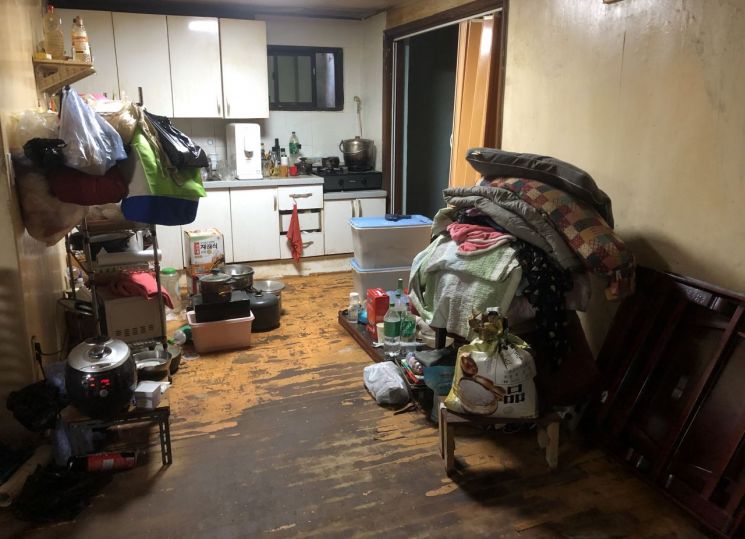 Basement housing in Bukahyeon-dong, Seodaemun-gu, selected as a pilot project for Seoul's residential environment improvement project
 [Image source=Yonhap News]
On the 11th, SH Corporation announced that it will purchase a total of 3,450 semi-basement houses this year. This purchase project is part of the Safe Housing policy announced by Mayor Oh last November. The city plans to gradually reduce semi-basement houses and goshiwon (small dormitory-style rooms) exposed to various risks such as flooding and fire by purchasing or renovating them. An SH Corporation official said, "This is in line with Seoul City's policy to gradually eliminate semi-basement houses, and it is expected to contribute to improving the living environment of disaster-vulnerable households."
Semi-basement houses are a product of the Korean War and rapid industrialization. In the 1970s, the government required basements in houses to be used as air-raid shelters in case of war. Initially, living in basements was illegal, but as the housing shortage worsened due to industrialization, people began renting and living in basements. Later, the Building Act was amended to allow basement residence and relaxed the height requirements for basement floors, establishing semi-basement houses as a type of low-income housing culture.
Ultimately, semi-basement houses became homes for those with limited means but suffered significant damage every year due to flooding caused by heavy rain. In August last year, following a series of fatal accidents in semi-basement houses caused by heavy rain, Seoul City initiated efforts to eliminate semi-basement houses.
Accordingly, SH Corporation decided to prioritize purchasing semi-basement houses with a history of flood damage, those located in seven districts designated as special disaster zones by Seoul City in 2022 (Guro-gu, Geumcheon-gu, Dongjak-gu, Gwanak-gu, Yeongdeungpo-gu, Seocho-gu, and Gaepo 1-dong in Gangnam-gu), and houses where two-thirds or more of the ground floor is buried underground.
SH Corporation plans to purchase entire multi-family, multi-unit, and row house buildings. Households previously living in semi-basement units will be relocated to SH Corporation’s purchased rental housing, and once the lease contracts for the above-ground units expire, the buildings will be reconstructed and supplied as rental housing.
Kim Heon-dong, President of SH Corporation, said, "By purchasing semi-basement and flood-prone houses and providing upgraded housing, we will support Seoul citizens to live in a safer and more comfortable environment. The corporation will continue to do its best to improve the living environment of disaster-vulnerable households."
However, some criticize SH Corporation’s direct purchase and elimination of semi-basement houses as a waste of tax money. One citizen pointed out, "Even homeowners who do not live in semi-basement houses are being enriched with taxpayers' money." In fact, this purchase involves a budget of 494.7 billion won from the Ministry of Land, Infrastructure and Transport and 311.4 billion won from Seoul City, totaling 806.1 billion won. For purchase amounts exceeding the Ministry’s budget, Seoul City and SH Corporation will share the cost equally.
There are also criticisms that considering relocation support and reconstruction costs, the project is not profitable. In response, an SH Corporation official explained, "After purchasing the buildings, rental income will be received from remaining above-ground tenants, and rental income will also be generated from newly constructed rental housing on the secured land, so it is not a loss-making project."
© The Asia Business Daily(www.asiae.co.kr). All rights reserved.

















