Imjeong Memorial Hall, 'Seolnihongjo' ... Exhibition Around the Anniversary of the Establishment of Imjeong
The book ‘Seolnihongjo’ (雪泥鴻爪) by Osan Lee Gang (1878?1964), who devoted his life to Korea's independence, is being revealed to the public for the first time. The expression Seolnihongjo, appearing in a poem by Song dynasty poet Su Shi, translates to ‘goose footprints on snow-melted mud’ and symbolizes the traces of life that disappear over time.
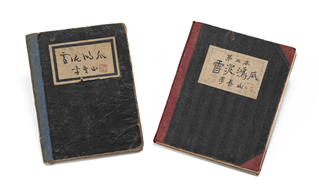
On the 5th, the Provisional Government Memorial Hall announced that it plans to exhibit ‘Seolnihongjo,’ acquired last year from Lee Gang’s descendants, around the Provisional Government Establishment Day on the 11th of this month.
Born in Yonggang, Pyeonganbuk-do, Lee Gang served as editor-in-chief of ‘Gongnip Sinbo’ and editor-in-charge of ‘Daedong Gongbo’ in San Francisco, Russia’s Primorsky Krai, Manchuria, and China, conducting anti-Japanese press activities. He also assisted in planning and executing An Jung-geun’s Harbin assassination. After being imprisoned in 1919 due to involvement in Kang Woo-gyu’s bombing incident, he moved to Shanghai, China, where he served as a member and vice-chairman of the Korean Provisional Assembly and became chairman in 1927.
He later participated as a member of the Dongji Branch of the Heungsadan and was arrested again in 1928 while giving a lecture at a Chinese church, serving another prison term. After his release in 1930, he settled in Quanzhou, Fujian Province, China, via his hometown Yonggang, where he trained Chinese disciples. Following the establishment of the Korean Liberation Army in 1941, he engaged in recruitment activities and witnessed Korea’s liberation.
‘Seolnihongjo’ consists of two notebooks compiling dedications from Chinese disciples and acquaintances, along with Lee Gang’s writings. In the preface of the first volume, written when he left Quanzhou in 1944, Lee reflected on his independence activities in China and expressed gratitude to the disciples and acquaintances who showed him kindness, stating that he created the commemorative book to never forget the memories shared. The first volume contains writings from Lee and 73 disciples. The Chinese disciples expressed the preciousness of their meetings in a distant land, the sorrow of parting, and their respect for Lee’s dedication to independence. Lee’s Chinese disciple Li Yi dedicated, “How great life is amid firm will and arduous struggle. Osan teacher, I deeply respect you.”
The second volume is composed of writings requested by Lee Gang from six figures, including Baekbeom Kim Gu and Seongjae Lee Si-young. Kim Gu transcribed a passage from the collected works of Song dynasty writer Fan Zun, and Lee Si-young wrote, “A noble person loves others with virtue and neither deceives oneself nor others.” The last part of the second volume includes Lee’s resume written in Korean-Chinese characters and English.
Kim Hee-gon, director of the National Provisional Government Memorial Hall, stated, “We will continue to actively discover and widely publicize the hidden independence activists of the Korean Provisional Government, sharing and spreading the spirit and values of the Provisional Government.”
© The Asia Business Daily(www.asiae.co.kr). All rights reserved.

















