"It could make the Federal Reserve's (Fed) job a bit more difficult."
With international oil prices surging over 6% following an unexpected production cut announcement by major oil-producing countries, the Fed's calculations have become more complicated. If oil prices soar to around $100 per barrel, it will inevitably become a new variable in the Fed's actions, which have so far prioritized the 'war against inflation.' James Bullard, President of the Federal Reserve Bank of St. Louis and a prominent hawk (favoring monetary tightening) within the Fed, also confirmed these concerns.
◆Oil prices surge over 6%...largest increase in about a year
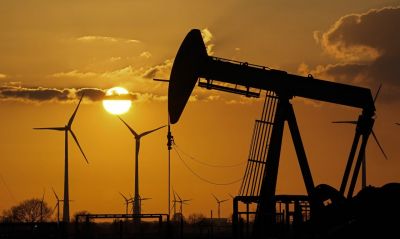
On the 3rd (local time), May delivery West Texas Intermediate (WTI) crude oil prices closed at $80.42 per barrel on the New York Mercantile Exchange, up 6.28% from the previous session. This is the largest daily increase since April 12 last year. On the London ICE Futures Exchange, June Brent crude also rose 5.7% ($4.56) to $84.45 per barrel. This is also the largest increase since late March last year. At one point during the session, both WTI and Brent crude surged over 8%.
This followed the announcement the previous day by OPEC+ member countries, including Saudi Arabia, to cut oil production by 1.16 million barrels per day starting in May. Including Russia's decision to extend its daily 500,000-barrel cut until the end of the year, the total production cut exceeds 1.6 million barrels per day.
As a result, some market observers predict Brent crude prices could soar to as high as $100 per barrel by the end of the year. Goldman Sachs raised its Brent crude price forecasts by $5 each to $95 per barrel at the end of this year and $100 per barrel at the end of next year. Tina Teng, an analyst at CMC Markets, said, "With OPEC+'s additional production cuts combined with China's economic reopening and Russia's cuts as retaliation against Western sanctions, oil prices could return to the $100 range."
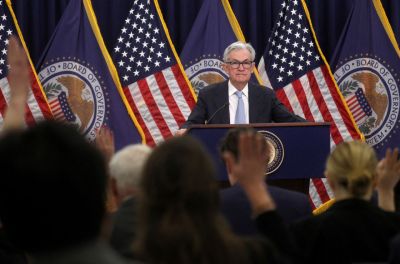
◆Growing inflation pressure concerns... Bullard: "Fed's job could become more difficult"
The sharp rise in oil prices raises concerns as it could reignite inflation, which had recently shown signs of slowing. There is analysis that this could fuel global inflation and trigger hawkish rate hike stances by central banks including the Fed. Phoenix Capital described the production cut decision as an "inflation problem," noting that "energy prices and used cars are the only items that have declined in inflation indicators over the past 12 months." Luke Phillippe, Chief Investment Officer at SYZ Private Banking, said, "The fight against inflation is not over," adding, "If inflation rebounds due to energy prices, it will not be a good scenario for central banks." The White House also criticized the additional production cuts by major oil producers as "undesirable" during a briefing, citing these inflation concerns.
James Bullard, a leading hawk within the Fed, also agreed with these concerns. In an interview with Bloomberg TV that day, he said, "(OPEC+’s production cut decision) was surprising," adding, "Oil prices are volatile and hard to keep up with. Some of it leads to inflation, which could make the Fed's job of lowering inflation a bit more difficult." Bullard has previously stated that the U.S. terminal interest rate should rise to 5.625% this year. The Fed raised its benchmark interest rate by 0.25 percentage points to 4.75-5.0% at the March Federal Open Market Committee (FOMC) meeting.
Following the production cut announcement by oil-producing countries, market expectations for interest rates have strengthened. According to the Chicago Mercantile Exchange (CME) FedWatch tool, as of the afternoon of the same day, federal funds futures markets priced in a more than 56% chance that the Fed will raise rates by 0.25 percentage points at the May FOMC meeting, up from about 48% the previous day. The probability of a rate hold is 43.6%.
However, since the Fed mainly watches core inflation indicators that exclude volatile items like oil and food prices, there is a judgment that more cautious observation is needed. Some analyses suggest that future price increases may be limited due to uncertainties in crude oil demand. Natasha Kaneva, Head of Commodities Research at JPMorgan Chase, predicted, "In reality, the production cut scale by oil producers could be smaller." Tamas Varga of oil brokerage PVM said, "The Fed is unlikely to deviate from its current path," explaining, "They are focusing on core inflation, which is less affected by oil price fluctuations."
This week, several key indicators that could impact the Fed's monetary policy decisions are scheduled for release, including the U.S. March employment report, Purchasing Managers' Index (PMI), and ADP payroll report. Wall Street estimates that the March nonfarm payrolls report, due on the 7th, will show about 240,000 new jobs, reflecting a further decline from February's 311,000. The unemployment rate is expected to remain steady at 3.6%.
Meanwhile, on the first trading day of the second quarter, the New York stock market closed mixed amid the sharp rise in international oil prices. The Dow Jones Industrial Average and the S&P 500 closed up 0.98% and 0.37%, respectively, from the previous session. In contrast, the tech-heavy Nasdaq index closed down 0.27%.
© The Asia Business Daily(www.asiae.co.kr). All rights reserved.



















