Detained for 6 Days After Arrest in the Middle of the Highway
"Relatively People of Color Suffer," Critics Point Out
In the United States, an innocent man was wrongfully imprisoned in a detention center for six days after being mistaken for a thief due to errors in facial recognition technology using artificial intelligence (AI).
According to the American daily The New York Times (NYT) on the 31st (local time), Randall Reed (29), a resident of Georgia, was arrested by police in the middle of a highway while driving his Jeep to visit his parents' house in Atlanta last November. At the time, the police officer stopped Reed's car and asked for his driver's license. Reed, who had left his license at home, revealed his name, but the police asked him, "Do you have a weapon?" then made him get out of the car and immediately handcuffed him with the help of two other officers.
The police said he was suspected of purchasing luxury wallets and bags worth $13,000 (about 17.03 million won) with a stolen credit card from a store in New Orleans, Louisiana, last summer. Reed protested that he had never been to Louisiana, but he was soon incarcerated.
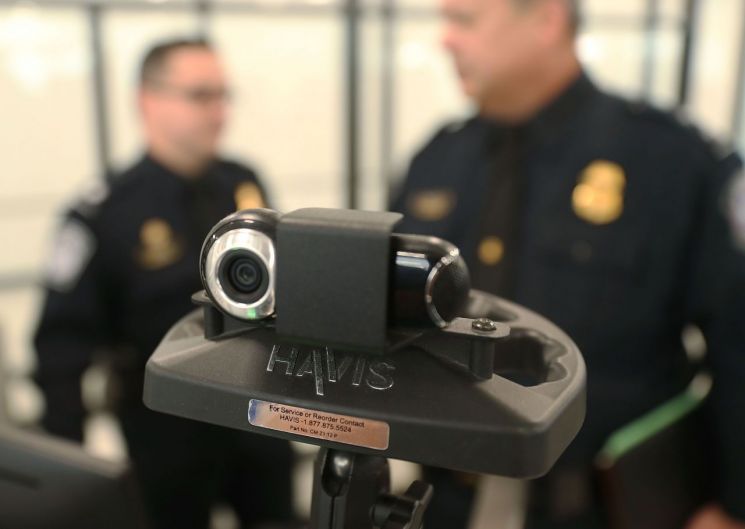 Facial recognition device. The photo is not related to the specific content of the article.
 [Photo by AFP Yonhap News]
It turned out that the police had already identified Reed as a prime suspect by analyzing the face of the culprit captured on the store's surveillance camera using facial recognition technology.
The facial recognition algorithm determined that the suspect's image from the surveillance camera was similar to Reed's photos posted on Facebook, LinkedIn, and other platforms.
To prove his innocence, Reed had no choice but to hire a lawyer at the cost of thousands of dollars. Through his lawyer, he was able to directly review the closed-circuit (CC) TV footage from the store that reported the theft, which ultimately cleared his name. The suspect in the footage had a similar face shape to Reed but was larger in build and had much thicker arms. Five days after the arrest, the police informed that they would withdraw the warrant because they found a facial mole on Reed that the thief did not have. Coincidentally, this happened about an hour after Reed's lawyer submitted related evidence.
After six days of wrongful imprisonment, Reed expressed his frustration, saying, "I was locked up in a detention center for something I did not commit, and I had to spend thousands of dollars." He is considering filing a lawsuit against the police and others for wrongful arrest.
The NYT stated that this incident highlights the risk that various technologies developed to help accurately track criminals can instead lead to the arrest of the wrong person. Hoan Ton-That, CEO of Clearview AI, a U.S. facial recognition technology company, also emphasized, "Arrests should not be made solely based on facial recognition technology," adding, "This technology should only serve a supplementary role, and it is necessary to investigate whether the identification was correctly made based on other factors."
There are also concerns that the damage caused by errors in facial recognition technology by judicial authorities is disproportionately reported among people of color. According to facial recognition expert Claire Garvie, there are four other publicly known cases of wrongful arrests, and all four, including Reed, were Black men.
Rashad Robinson, head of the organization Color of Change, which campaigns against racial discrimination, criticized, "AI facial recognition technology exacerbates the problem known as 'racialized policing,'" and said, "If facial recognition had misidentified a white person, it would no longer be in use."
© The Asia Business Daily(www.asiae.co.kr). All rights reserved.

















