Increased Trading Volume, Unsold Houses Slow Down
27,831 Houses Released This Month
As the real estate market shows signs of recovery mainly in the Seoul metropolitan area, the supply of pre-sale units, which had been postponed, is pouring out this month. The announced general pre-sale supply alone amounts to 27,831 units, more than double compared to the same period last year.
There are voices of concern in the market regarding the surge in pre-sale supply. This is because the real estate market remains unstable, and only some areas such as Seoul and the metropolitan area are showing recovery, raising the possibility that unsold units may surge again, especially in the outskirts of the metropolitan area and regional areas.
According to a survey by Real Today, a real estate research firm, a total of 36,733 units (including rental, excluding officetels, based on the first priority subscription application date) are scheduled to be supplied in 38 locations nationwide this month. Among these, the general pre-sale supply (excluding undecided) is 27,831 units nationwide. Of these, 17,538 units (63%) are in the metropolitan area, and 10,293 units (37%) are in regional areas. This is more than double (136.5%) the 11,767 general pre-sale units from last year.
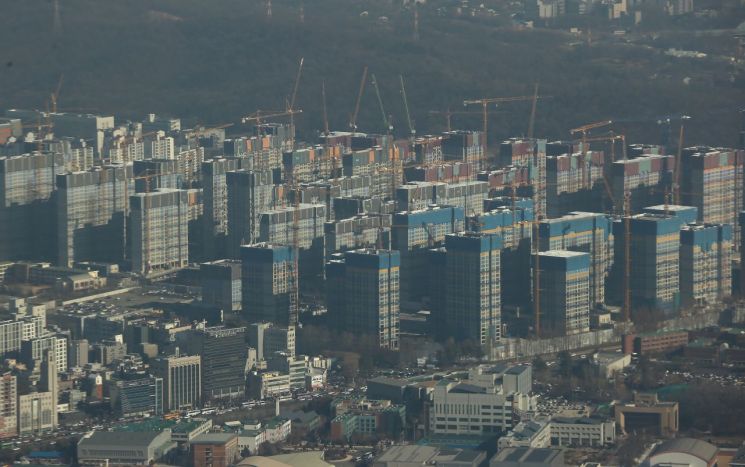
The reason for the sharp increase in April's pre-sale supply is analyzed to be that developers and construction companies had postponed pre-sale schedules due to the real estate slump since last year, but as the market has recently revived, they are rushing to start pre-sales.
In fact, various indicators appearing in the recent real estate market are positive compared to last year. According to the Korea Real Estate Board and others, the apartment sales supply-demand trend in the metropolitan area rose by 4.21 points from 65.37 last year to 69.58 this year (as of February). Gyeonggi Province increased the most by 4.64 points, while Incheon and Seoul rose by 4.44 points and 3.35 points respectively.
The consumer sentiment index for the housing sales market also increased. According to the "2023 Real Estate Market Consumer Sentiment Survey," the consumer sentiment index for the metropolitan housing sales market was 104.3 last month. It exceeded 100 for the first time in eight months since June last year (101.0), shifting from a declining phase (below 95) to a stable phase (95 or above but below 115).
The frozen transactions are also showing signs of revival. According to the Ministry of Land, Infrastructure and Transport's actual transaction price disclosure system, the number of apartment sales transactions in the metropolitan area in the first quarter of this year was 29,789. This is more than double compared to 14,329 transactions in the fourth quarter of last year.
As transactions recover, the occupancy rate of new apartments has also risen. According to the "March 2023 Apartment Occupancy Outlook Index," the occupancy rate in Seoul increased by 0.5 percentage points from 79.2% to 79.7%, and the Incheon-Gyeonggi area rose by 2.6 percentage points from 73.2% to 75.8%.
The increasing trend of unsold houses nationwide, which had raised concerns about a hard landing in the real estate market, has also slowed. According to the Ministry of Land's February housing statistics, the number of unsold houses nationwide was 75,438 units, an increase of only 0.1% (79 units) compared to the previous month. Particularly, regional areas, which had relatively high unsold risks, recorded 62,897 units, a 0.3% (205 units) decrease compared to the previous month. This marks the first decline in regional unsold units in eight months since June last year.
However, post-construction unsold units, known as "malignant unsold," have increased. Nationwide, there are 8,554 units, up 13.4% (1,008 units) from the previous month. This is the first time in 32 months since June 2020 that post-construction unsold units have increased by more than 1,000 units in a single month. This is attributed to the large number of complexes completed and starting occupancy in February. The nationwide occupancy volume in February was 23,808 units, 67% more than the same period last year.
Nevertheless, developers and construction companies remain tense. Although the subscription market atmosphere has recently recovered mainly in Seoul and the metropolitan area, it is still considered difficult. In particular, some point out that the lack of increase in unsold units last month is not due to revived suppressed demand but rather an optical illusion caused by construction companies postponing many pre-sale schedules.
A representative from a construction company said, "Except for some areas in Seoul and the metropolitan area, the real estate market atmosphere remains difficult," adding, "The decrease in the increase of unsold houses announced by the government in February is mainly due to the overall reduction in pre-sale supply and projects being concentrated in some areas with high buyer interest." He added, "There is a high possibility that unsold units will increase significantly again in April, when pre-sale supply increases."
In fact, the cumulative (January-February) pre-sale performance of multi-family housing nationwide (10,945 units) decreased by 75.3% compared to the same period last year (44,233 units). The metropolitan area (8,002 units) decreased by 67.3% compared to the same period last year (24,478 units), and regional areas (2,943 units) sharply dropped by 85.1% compared to the same period last year (19,755 units).
© The Asia Business Daily(www.asiae.co.kr). All rights reserved.
![Clutching a Stolen Dior Bag, Saying "I Hate Being Poor but Real"... The Grotesque Con of a "Human Knockoff" [Slate]](https://cwcontent.asiae.co.kr/asiaresize/183/2026021902243444107_1771435474.jpg)
















