Regulatory Adjudication Division Recommends Regulatory Improvements
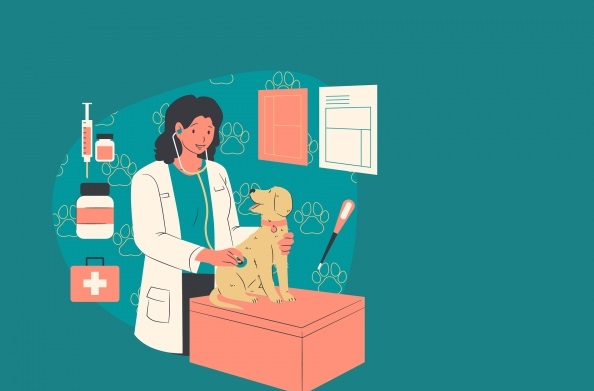
The Regulatory Adjudication Committee announced on the 30th that it held a meeting and recommended the Ministry of Agriculture, Food and Rural Affairs and other relevant bodies to improve the system to allow human pharmaceutical manufacturers to produce pet medicines using existing manufacturing facilities.
This regulatory improvement is expected to resolve the biggest obstacle as pharmaceutical and bio companies have recently been entering the pet market one after another as part of securing new growth engines. Currently, human pharmaceutical manufacturers must install separate dedicated manufacturing facilities for animal medicines. Since installing new facilities requires costs ranging from tens of billions to hundreds of billions of Korean won, the burden of duplicate investment is inevitably high.
The Regulatory Adjudication Committee explained, "Most advanced countries such as the United States, the European Union (EU), and Japan already allow the production of animal medicines in human pharmaceutical manufacturing facilities," adding, "Strict Good Manufacturing Practice (GMP) standards are applied to thoroughly manage and operate manufacturing facilities to ensure there are no safety issues for humans and animals."
Accordingly, the Regulatory Adjudication Committee recommended the Ministry of Agriculture, Food and Rural Affairs and the Ministry of Oceans and Fisheries to improve the system to enable the production of pet medicines using human pharmaceutical manufacturing facilities. However, the medicines that can be produced are limited to ▲medicines containing active ingredients that have been approved for human use domestically but not yet approved for animal use, ▲and medicines containing 22 active ingredients approved for both human and animal use that have minimal impact on the existing industry.
This is a measure for coexistence reflecting the domestic industry's situation. The domestic animal medicine industry has developed mainly around livestock medicines, which account for 91% of domestic production. In contrast, pets rely on imports for about 73.9% of their medicines.
The Regulatory Adjudication Committee explained that this restriction was set to minimize the impact on the existing livestock-centered animal medicine industry, which is mainly composed of small and medium-sized enterprises. Regarding this, it said, "The purpose is to allow pharmaceutical companies to focus on developing high-quality medicines and to upgrade the domestic animal medicine industry qualitatively and quantitatively through coexistence with the existing industry."
Recently, the animal medicine market has been attracting attention as a field with great growth potential due to ▲increased interest in pets and ▲the rise of zoonotic infectious diseases such as COVID-19.
Market research firm Grand View Research projected that the global animal medicine market size will grow from about 62 trillion Korean won this year to 108 trillion Korean won by 2030. The domestic animal medicine market has also shown steady growth, increasing from 735.1 billion Korean won in 2017 to 922.9 billion Korean won in 2021.
© The Asia Business Daily(www.asiae.co.kr). All rights reserved.

















