Announcement of Administrative Audit Innovation Direction... Selective and Focused Audits
The Ministry of Education will change its administrative audit approach by focusing on key areas such as admissions and accounting.
On the 30th, the Ministry of Education announced the 'Administrative Audit Innovation Direction' centered on this content.
First, the Ministry will conduct 'selective and focused audits' concentrating on areas that significantly impact the accountability and fairness of education.
This year's key audit areas are △Accounting (accounting, contracts, financial support projects) △Admissions (fairness) △Recruitment (public institution recruitment status, university recruitment corruption cases), etc.
The Ministry plans to allow institutions to autonomously improve minor issues such as trivial mistakes, but will respond with a zero-tolerance principle to serious matters such as organized misconduct at the school level, in line with public expectations.
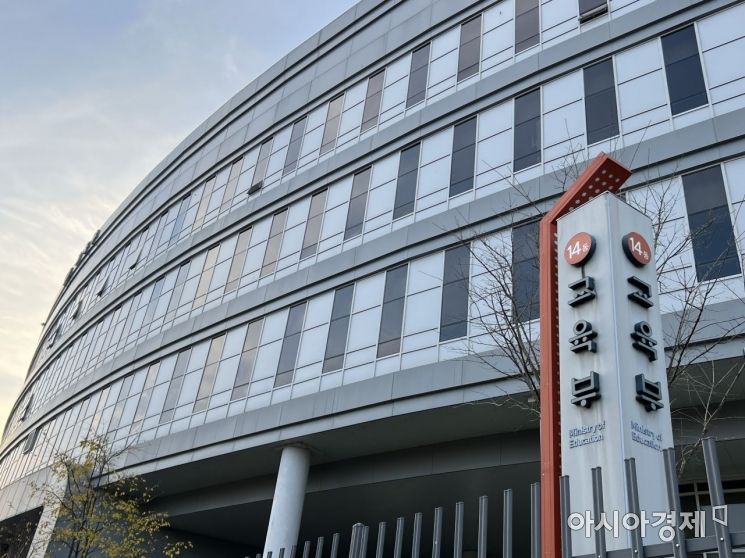
Additionally, the Ministry will promote customized audits considering the characteristics of each university.
For national universities, audit personnel from the Ministry of Education and other universities will be dispatched to support the university's own audits, and this method will be pilot-applied as a comprehensive audit for some universities.
Although the audit cycle for national universities is three years according to the Ministry's audit regulations, this measure considers the current situation where the cycle has extended to about 7.5 years due to a shortage of audit personnel.
For private universities, the Ministry will decide the target and type (comprehensive audit or financial audit, etc.) by comprehensively considering past audit history and the scale of financial support, prioritizing universities that have not undergone comprehensive audits or have not been audited for a long time.
Separate from comprehensive audits, institutions flagged through various reports will be subject to investigations, and specific audits focusing on vulnerable areas will also be conducted to strengthen the ongoing audit system.
Furthermore, to increase the reliability of audit dispositions, the Ministry will expand the participation of external experts in disposition deliberations, and the reconsideration committee will be composed of external experts who did not participate in the original disposition deliberations.
Separately, the Ministry plans to eliminate about 50 types of paper documents required for audits by utilizing electronic information systems to reduce the burden of data preparation for universities, and for national university hospitals and metropolitan/provincial offices of education, it will prevent duplicate audits by conducting joint audits with external experts from their own audit organizations.
Lee Ju-ho, Deputy Prime Minister for Social Affairs and Minister of Education, stated, "Administrative audit innovation will serve as a driving force to support university regulatory reform and educational reform and strengthen the accountability of education," adding, "We also plan to present a mid- to long-term development direction for administrative audits that meet international standards through international comparative research and field communication."
© The Asia Business Daily(www.asiae.co.kr). All rights reserved.

















