Development of Active Control Technology for Space Objects Underway
Versatile Use Possible in Security and Economy
South Korea is finally developing the 'Active Space Object Control Technology,' which is crucial for space security and economy. This technology can protect important space assets, be used as an offensive weapon, and be applied to space exploration and space debris removal. It is multipurpose, including securing safety on Earth from asteroid space objects. Similar to the US space shuttle, it can also provide economic orbital services such as repairing malfunctioning satellites and refueling.
On the 31st, the government held the 46th Space Development Promotion Working Committee meeting and approved the plan to develop preliminary technologies for active space object control. This is a follow-up to the strategy to develop key technologies for asteroid exploration and orbital service market creation, established in last year's 4th Basic Plan for Space Development Promotion. Specifically, the goal is to develop and demonstrate in space the 'Active Space Object Control Technology,' which involves rendezvous-docking with satellites and space debris or capturing and moving them using robotic arms. The core strategic technologies for asteroid exploration and orbital services will be secured step by step.
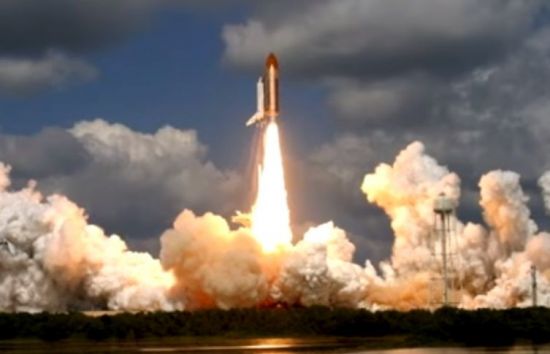
The technology aims to approach space objects such as asteroids, space debris, and satellites to change their position and orbit, as well as to refuel, repair, or tow malfunctioning or fuel-depleted satellites and probes to extend their mission life through orbital services. When linked with reusable next-generation launch vehicles currently being developed as a follow-up to the Nuri rocket, it could become a 'Korean version of the space shuttle,' similar to the US National Aeronautics and Space Administration (NASA) operated space shuttle.
The Ministry of Science and ICT stated, "We expect to expand the space industry sector by strengthening space exploration capabilities for asteroids, extending mission life, and enhancing the utilization of expensive space assets," adding, "We will set detailed technologies step by step and promote demonstration projects to implement them."
First, by 2027, the plan is to develop preliminary technologies for active space object control and conduct space demonstrations, including close-proximity flight and position control. The detailed goals include developing space thrusters, thrust control, rendezvous, proximity sensors, identification and status estimation, and position control technologies. From 2028 to 2032, space robotics and sample capsule return projects will be pursued. Docking, multi-joint robotic arms, multiple object control, capsule devices, atmospheric re-entry, and recovery will be demonstrated. After the 2030s, the goal is to apply these technologies practically to new space industries such as asteroid and Mars exploration missions and orbital service businesses. The government also plans to demonstrate these technologies on South Korea’s space assets whose missions have already ended, such as UriByul 1.
On the 27th, Oh Tae-seok, the 1st Vice Minister of the Ministry of Science and ICT, told reporters, "We aim to develop space object response technologies that can be applied broadly, including the retrieval operation of UriByul 1," and explained, "Since these are time-consuming research projects, we decided to start preliminary research to understand what is needed and how to develop them."
© The Asia Business Daily(www.asiae.co.kr). All rights reserved.
![Clutching a Stolen Dior Bag, Saying "I Hate Being Poor but Real"... The Grotesque Con of a "Human Knockoff" [Slate]](https://cwcontent.asiae.co.kr/asiaresize/183/2026021902243444107_1771435474.jpg)










