The Supreme Court has ruled that the progressive electricity tariff system for residential electricity, as stipulated in the terms and conditions by Korea Electric Power Corporation (hereinafter KEPCO), cannot be considered invalid under the Act on the Regulation of Terms and Conditions.
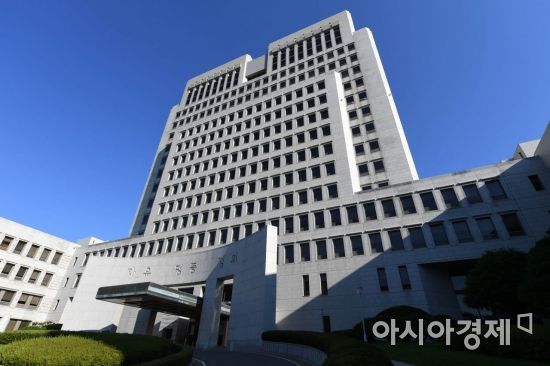
The Supreme Court's Second Division (Presiding Justice Lee Dong-won) on the 30th upheld the lower court's ruling that dismissed the lawsuit filed by Mr. Park and others against KEPCO seeking the return of undue profits from electricity bills.
The progressive electricity tariff system, where the price increases with higher electricity consumption, was first introduced at the end of the year following the first oil shock in 1973. Since then, it has undergone several adjustments in the number of progressive stages, including 12, 9, and 6 stages, before being reorganized into a 3-stage system from 2016.
However, negative public opinion such as "electricity bill bombs" and "luck-based charges" has persisted every summer when electricity demand rises. In particular, the progressive tariff system has not been applied to industrial electricity rates, which account for more than half of domestic electricity consumption, raising fairness concerns.
This lawsuit began in 2014 when Mr. Park and others claimed that "KEPCO unlawfully collects electricity fees through illegal terms and conditions" and demanded the return of the difference in appropriate fees. They argued that KEPCO's related terms and conditions were "unfairly disadvantageous clauses to customers" and thus invalid under Article 6 of the Act on the Regulation of Terms and Conditions.
However, both the first and second trials ruled in favor of KEPCO. They found that the electricity tariff terms were not unfairly disadvantageous to users and that the progressive tariff system was necessary for social policy purposes such as inducing electricity conservation and appropriate resource allocation for the "limited essential public utility" of electricity.
The court judged that ▲ KEPCO did not abuse its superior bargaining position procedurally, ▲ the progressive tariff system itself is not unfairly disadvantageous to electricity users, and ▲ the set progressive rates for each consumption bracket were not calculated opaquely or excessively to be considered unfairly disadvantageous.
The first trial court stated, "This progressive tariff system was introduced as necessary for the rational allocation of electricity while maintaining fairness in the burden among electricity users."
The Supreme Court also agreed that the lower courts' judgments were correct.
However, the Supreme Court pointed out that "depending on policy, various types of electricity tariff systems such as time-of-use and seasonal differential rates could be used alongside the progressive tariff system," and criticized the lower court's conclusion that introducing time-of-use and seasonal differential rates for residential electricity was inappropriate.
So far, there have been 14 lawsuits nationwide regarding the progressive tariff system, with 7 cases reaching the Supreme Court. Although the Incheon District Court ruled in favor of consumers in the first trial in 2017, the decision was overturned in the second trial, and other lower courts have consistently ruled against the plaintiffs.
With the Supreme Court's final ruling affirming the legitimacy of the progressive tariff system after 9 years, it is expected that the remaining cases will also likely result in rulings against the plaintiffs.
© The Asia Business Daily(www.asiae.co.kr). All rights reserved.

















