The loss of the anti-nuclear group that filed an administrative lawsuit demanding the cancellation of the operating license for Shin-Kori Nuclear Power Plant Unit 4 has been finalized.
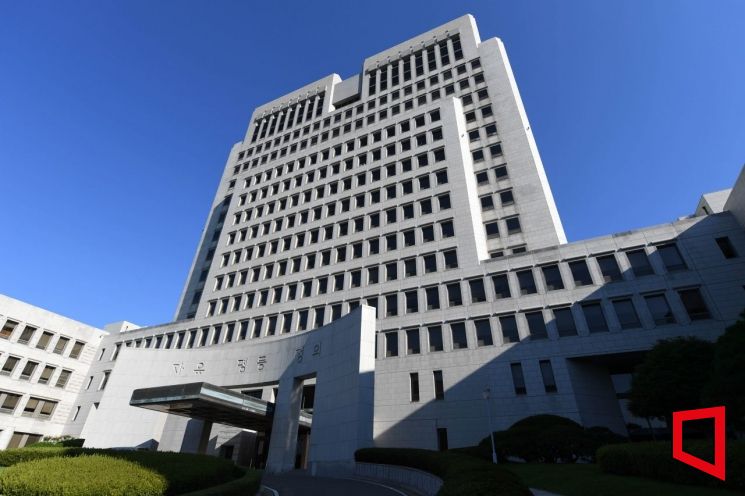
On the 30th, the Supreme Court Division 2 (Presiding Justice Lee Dong-won) upheld the lower court's ruling that dismissed the appeal in the case where 730 members of the 'Anti-Nuclear Ulsan Citizens' Joint Action' filed a lawsuit against the Nuclear Safety and Security Commission seeking cancellation of the operating license.
The Supreme Court stated, "The plaintiffs residing outside an 80 km radius from the nuclear power plant site do not have standing," and added, "It is difficult to see that the defendant omitted or insufficiently reviewed the radiation environmental impact assessment, accident management plan, and other matters related to major accidents at the time of the decision."
Previously, Shin-Kori Unit 4, with a capacity of 1.4 million kW, received operating approval from the Nuclear Safety and Security Commission in February 2019, underwent a seven-month trial operation, and began commercial operation in September of the same year.
The Anti-Nuclear Ulsan Citizens' Joint Action filed the administrative lawsuit claiming that the Nuclear Safety and Security Commission granted the operating license without considering that Shin-Kori Unit 4 is located in a densely populated area. Their reason was that the commission approved operation without taking into account the plant's location in a densely populated area.
The Nuclear Safety and Security Commission argued that, following U.S. regulations, the distance between Shin-Kori Unit 4 and the population center exceeds 4 km, so operation is not problematic, while the Anti-Nuclear Ulsan Citizens' Joint Action pointed out that applying U.S. regulations was incorrect.
The first-instance court dismissed the claims of those residing outside an 80 km radius from the Shin-Kori Unit 4 site, ruling they lacked standing to sue. It also dismissed all other plaintiffs' claims.
The appellate court upheld the first-instance ruling, stating, "'It is difficult to recognize the standing of plaintiffs residing outside an 80 km radius from the nuclear power plant site.' Furthermore, it judged that 'the defendant did not omit or insufficiently review the matters to be examined before granting the operating license as stipulated by the Nuclear Safety Act and related laws at the time of the decision.'
The Supreme Court also agreed with this judgment. A Supreme Court official stated, "A third party who files a cancellation lawsuit on the grounds that their environmental interests have been or may be infringed by an administrative disposition must prove that their environmental interests are legally protected to be recognized as having standing," adding, "Residents outside the affected area must prove that they have suffered or may suffer environmental damage exceeding the permissible limit due to the disposition, or that their environmental interests have been or may be infringed, to be recognized as having legally protected interests and thus standing."
© The Asia Business Daily(www.asiae.co.kr). All rights reserved.
![Clutching a Stolen Dior Bag, Saying "I Hate Being Poor but Real"... The Grotesque Con of a "Human Knockoff" [Slate]](https://cwcontent.asiae.co.kr/asiaresize/183/2026021902243444107_1771435474.jpg)
















