The crisis triggered by the mid-sized U.S. bank Silicon Valley Bank (SVB) has spread from major European banks to U.S. securities firms, prompting the initiation of a financial order restructuring effort to proactively address numerous weak links. Strong measures by governments and financial authorities worldwide are expected to follow to address the limitations revealed during the unprecedented rapid spread of the crisis, which saw a bank run (massive withdrawal of deposits) and the collapse of even large banks within just two days.
On the 29th (local time), The Wall Street Journal (WSJ) reported, citing sources, that the White House is expected to recommend that related agencies, including the U.S. Federal Reserve (Fed), prepare strong regulatory proposals for mid-sized banks with assets ranging from $100 billion to $250 billion (approximately 131 trillion to 327 trillion KRW). The White House’s recommendations are expected to include strengthening capital regulations and liquidity standards, lowering the asset threshold for banks required to undergo annual stress tests to eliminate regulatory blind spots, and other measures. The recommendations may be released as early as this week.
This move by the White House is seen as an indication of a major overhaul of the 'Dodd-Frank Act,' whose limitations were fully exposed by the SVB incident. The Dodd-Frank Act, a financial regulatory reform law, was established during the global financial crisis recovery process to force banks to sufficiently increase capital, but it had many loopholes. Notably, during the Trump administration in 2018, the asset threshold for banks required to undergo annual stress tests was significantly raised from $50 billion to $250 billion, resulting in many mid-sized banks falling outside the scope of financial supervision.
SVB, with assets of $209 billion, benefited from this regulatory relaxation, and there has been strong criticism that the essence of the SVB crisis lies in this deregulation. Although the Fed currently has regulatory authority, including stress tests for banks with assets over $100 billion under existing law, sources say the White House’s internal sentiment is that this alone is insufficient.
President Joe Biden is reported to have ordered the preparation of tough measures, including establishing grounds for punishing executives responsible for poor management. Earlier, President Biden emphasized that losses incurred during the process of fully guaranteeing SVB deposits would not be covered by taxpayers and highlighted the accountability of SVB’s management. Initially preparing to announce his re-election bid last month, Biden’s momentum was dampened first by the discovery of classified documents and then by the SVB crisis, raising concerns among his close aides about growing skepticism toward bailout measures perceived as protecting the wealthy.
Additionally, proposals to reform deposit insurance are expected to be included in the recommendations. The Federal Deposit Insurance Corporation (FDIC) is preparing a report containing policy changes related to the deposit insurance system, which is scheduled to be submitted to the White House by May 1. Possible reforms under discussion include raising the current $250,000 deposit insurance limit or temporarily protecting deposits exceeding that limit.
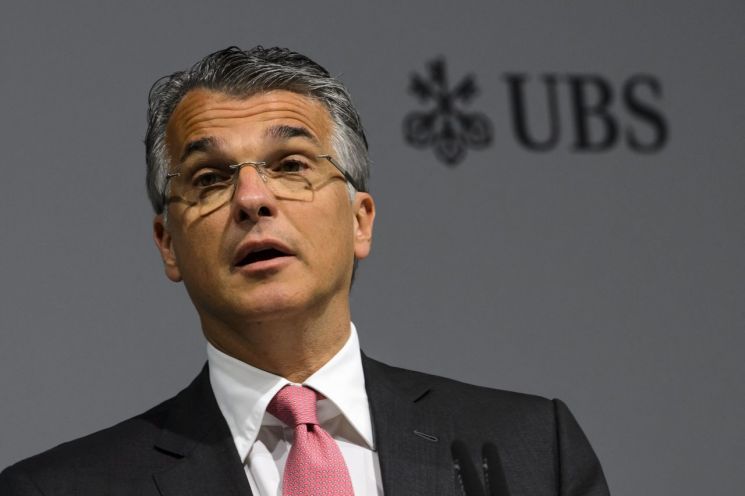 Sergio Ermotti, Chairman of the Board of Swiss Reinsurance Company Swiss Re and former CEO of UBS.
 [Photo by AFP Yonhap News]
The resolution of the crisis spreading to Europe is being led by veteran banker Sergio Ermotti, chairman of the reinsurer Swiss Re’s board and former CEO of UBS. Ermotti will officially join UBS as CEO on the 5th of next month. He will be entrusted with the critical task of integrating and normalizing management of Credit Suisse (CS), which is facing financial difficulties due to successive investment failures, under the intervention of the Swiss government. His mission is directly linked not only to the integration of competing firms but also to restructuring the Swiss financial industry and restoring lost external credibility.
Ermotti served as UBS CEO for nearly ten years until 2020, successfully overcoming the financial crisis and restructuring the investment banking division. It is reported that Colm Kelleher, chairman of UBS, personally called Ermotti the day after signing the CS acquisition deal, saying, "Securing the optimal person for the successful integration of UBS and CS is crucial," and actively recruited him.
© The Asia Business Daily(www.asiae.co.kr). All rights reserved.

















