GIST Research Finds Increased Uncertainty in Warm Arctic-Cold Continent Connectivity
"They say it's global warming, so why has it gotten colder?"
As global warming intensifies, the Earth's temperature is rising and Arctic ice is melting. However, conversely, severe cold waves and heavy snowfall have recently occurred in mid-latitude regions such as East Asia and North America during winter. This phenomenon, where Arctic warming leads to cold winters in mid-latitude regions, is called the "Warm Arctic Cold Continent" pattern. A recent study has found that as global warming progresses, the correlation between Arctic warming in winter and temperatures in mid-latitude regions becomes more uncertain than it is now.
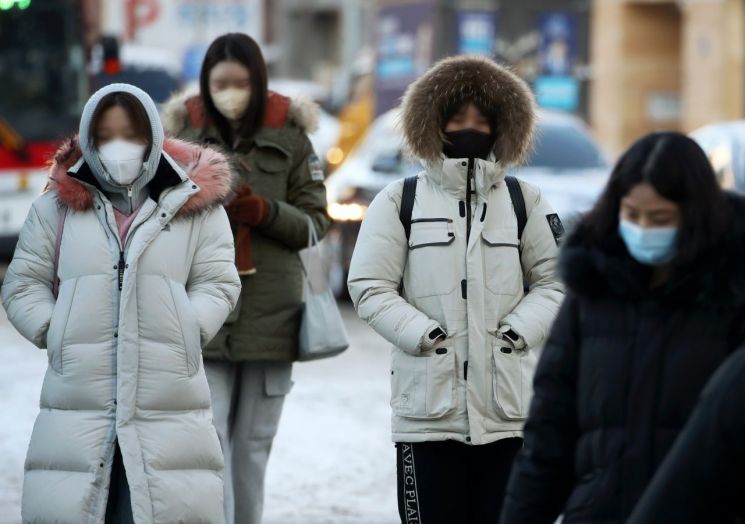
The Gwangju Institute of Science and Technology (GIST) announced on the 29th that a joint Korea-US research team comprehensively analyzed past climate data from the last 40 years and future climate projection data forecasting global warming of 1.5 and 2.0 degrees Celsius. They found that although Arctic-origin cold waves in winter will still occur despite global warming, their correlation is expected to decrease.
In South Korea, abnormal high temperatures and extreme cold alternated during the winters of 2022 and 2023. From December last year to January 27 this year, cold-related illnesses increased by 66% compared to the same period last year. When comparing Seoul’s temperatures in the winter of 2023 to previous years, mid-December was reported as the coldest since weather observations began, while early January was the warmest on record.
In fact, the research team’s analysis showed that due to climate change, the Arctic region’s temperature is warming on average more than twice as much as other regions. This phenomenon is related to the reduction of glaciers and the rise in atmospheric and ocean temperatures. The rapidly rising Arctic temperature significantly affects not only the Arctic region but also the climate of mid-latitude areas.
The research team confirmed through data analysis that the "Warm Arctic Cold Continent" climate pattern exists every year, but its intensity varies annually. They interpreted this as meaning that this phenomenon occurs repeatedly in winter regardless of whether global warming is present.
The team projected that even if the Earth warms by 1.5 or 2.0 degrees Celsius, this pattern will persist but with increased variability. Until now, Arctic warming has been used as a predictor for winter cold waves, but under future warmer conditions, Arctic warming may become less useful as an indicator for forecasting mid-latitude cold spells.
Professor Yoon Jin-ho stated, “Amid extensive research on the causes of abnormal high temperatures and cold waves occurring multiple times during the winters of 2022 and 2023 (December to February each year), Arctic-origin cold waves are recognized as a major pattern. This study revealed that Arctic-origin cold waves will still exist in a warmer future, but forecasting them may become more difficult.”
The research results were published online on the 27th in 'npj Climate and Atmospheric Science,' a sister journal of Nature in the field of meteorology.
© The Asia Business Daily(www.asiae.co.kr). All rights reserved.
![Clutching a Stolen Dior Bag, Saying "I Hate Being Poor but Real"... The Grotesque Con of a "Human Knockoff" [Slate]](https://cwcontent.asiae.co.kr/asiaresize/183/2026021902243444107_1771435474.jpg)
















